Diplomatie & Gouvernance
Zelensky says he is ready to meet Putin at the Miami G20, the Kremlin replies “impossible”
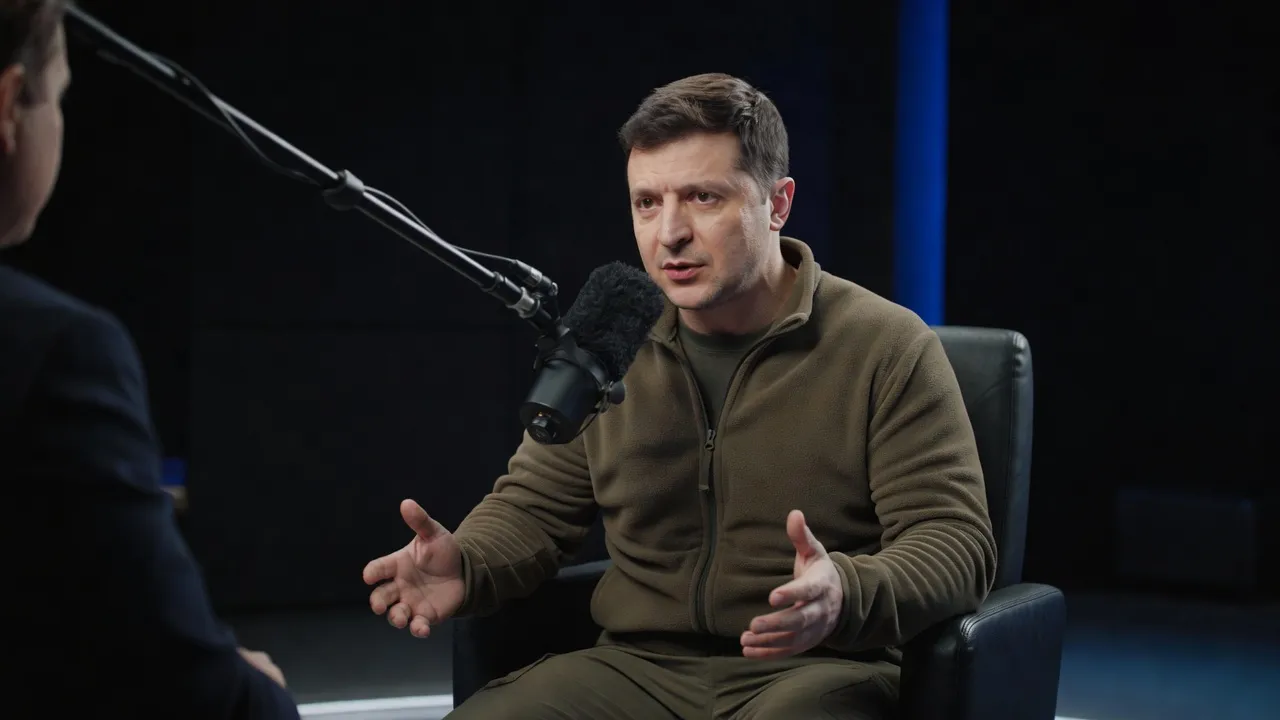
In an interview with German channel Deutsche Welle broadcast on Saturday, September 12, 2026, Ukrainian President Volodymyr Zelensky said he was ready to meet Vladimir Putin on the sidelines of the G20 summit, scheduled to take place in Miami on December 14 and 15, 2026. On the same day, Kremlin spokesman Dmitri Peskov, who was in New Delhi for the BRICS summit, deemed such a meeting "impossible" to AFP, specifying that Moscow had not yet decided on Vladimir Putin's participation in the G20 and that the Russian president would only consider receiving Volodymyr Zelensky in Moscow. Kyiv also indicated that it was preparing for a resumption of trilateral talks with Russia and the United States in October, after the last session held in Geneva.
Neither the location nor Vladimir Putin's presence at the G20 has been finalized: the Kremlin says it has not yet decided on its participation in the Miami summit.
Latest face-to-face meeting
Their only direct meeting dates back to December 9, 2019, in Paris, in the Normandy format.
The Ukrainian decree
According to Lavrov, Kyiv has still not repealed the decree banning any direct contact with Putin.
American mediation
Witkoff and Kushner shuttled between Moscow and Kyiv before a Putin-Trump call on September 8.
Understand the context
- DEC 9, 2019Last direct meeting between Putin and Zelensky, in Paris, in the Normandy format
- SEP 8, 2026Putin and Trump discuss the conflict in Ukraine over the phone
- SEP 12, 2026Zelensky says he is ready to meet Putin at the G20; the Kremlin deems it "impossible"
- DEC 14, 2026G20 summit in Miami, where Putin's presence remains uncertain
What the comparison reveals
Common ground and differences in coverage across the media analysed.
What the media report in common
In an interview with Deutsche Welle broadcast on Saturday, Volodymyr Zelensky said he was ready to meet Vladimir Putin at the G20 in Miami in December, stating that they had to 'meet, talk and make decisions'.
Kremlin spokesperson Dmitri Peskov, speaking to AFP from New Delhi on the sidelines of the BRICS summit, called such a meeting 'impossible' on the same day.
According to Peskov, Moscow has not yet decided whether Vladimir Putin will attend the G20 in Miami, and the Russian president only considers receiving Volodymyr Zelensky in Moscow.
Where media coverage diverges
Feasibility of the meeting
The Ukrainian side presents Zelensky's offer as a still open test of good faith, while the Russian side immediately qualifies it as impossible and demands that any meeting be held on its own soil.
Military balance of power
Ukrainian coverage advances Russian monthly losses presented as justifying a negotiating position favorable to Kyiv, while Russian coverage disputes the consistency of Zelensky's offer by recalling his decree prohibiting any official contact with Putin.
Location of the meeting
While Moscow excludes any site other than its capital, some of the press relays alternative venues mentioned by Zelensky (Turkey, United Arab Emirates, Switzerland) in addition to the G20 in Miami.
The full text, country by country
 Finland
DOMINANT ANGLE
Helsinki sees Zelensky's offer and the Kremlin's refusal as a new episode in a diplomacy of posturing, where the choice of location — Miami, Moscow or Geneva — is just as important as the substance of the negotiations.
KEY POINTS
- Zelensky, in an interview with Deutsche Welle broadcast on Saturday, says he is ready to meet Putin at the G20 in Miami in December: "We must come. We must meet, discuss and make decisions"
- Kremlin spokesman Dmitri Peskov responded "Se on mahdotonta" (it's impossible) to AFP from New Delhi, adding that Moscow has not yet decided if Putin will attend the G20 and that Putin is only willing to receive Zelensky in Moscow
- Kyiv is preparing for a resumption in October of trilateral talks with Russia and the United States, the last session having taken place in February in Geneva; US emissaries Witkoff and Kushner visited Moscow and Kyiv this week for the first time since February
ANALYSIS
Helsinki, September 14, 2026. Just a few kilometers from the Russian border, the Finnish press is closely following the latest episode in the diplomatic stalemate between Kyiv and Moscow. In an interview with German channel Deutsche Welle broadcast on Saturday, Volodymyr Zelensky stated that he is ready to meet Vladimir Putin on the sidelines of the G20 summit in Miami in December, if both leaders are invited. "Yes, of course. We must come. We must meet, discuss and make decisions," he said, according to Iltalehti.
The Kremlin's response was not long in coming. From New Delhi, where he is accompanying Putin to the BRICS summit, spokesman Dmitri Peskov deemed the meeting "impossible" in comments to AFP, while specifying that Moscow had not yet made a decision on Putin's participation in the G20. The only location considered by the Kremlin remains Moscow: "We are ready to receive him in Moscow," Peskov repeated. Russian Foreign Minister Sergei Lavrov drove the point home on Saturday, recalling that an invitation had already been sent to Zelensky: "If he wants to meet, let him come."
Zelensky himself has ruled out this option: "He [Putin] can come to Kyiv. I cannot go to Moscow, when my country is targeted every day by missiles and attacks. I cannot go to the capital of this terrorist." Helsingin Sanomat recalls that Putin had already declined a similar proposal in June.
Beyond the exchange of statements, the Finnish press reports that Kyiv is preparing for a resumption of trilateral talks with Russia and the United States in October - the last session dating back to February in Geneva. US emissaries Steve Witkoff and Jared Kushner visited Moscow and then Kyiv this week, a first since February. Helsingin Sanomat also notes that Narendra Modi and Xi Jinping, who met with Putin on the sidelines of the BRICS summit in New Delhi, have offered their mediation, which was received "positively" according to Peskov, cited by the Tass agency.
For the Finnish press, the question of the location - Miami, Moscow or Geneva - crystallizes both the political impasse and the substance of the upcoming negotiations.
 France
DOMINANT ANGLE
Paris sees Zelensky's offer as a test aimed at Moscow rather than a genuine overture, the Kremlin's immediate refusal confirming that Miami will remain a missed meeting.
KEY POINTS
- Dmitri Peskov, from New Delhi, deemed a meeting between Putin and Zelensky at the G20 in Miami "impossible", only considering a meeting in Moscow
- The Kremlin has not yet decided on Vladimir Putin's participation in the G20: "We do not know yet if we will go to Miami or not", according to Peskov to TASS
- US emissaries Steve Witkoff and Jared Kushner traveled to Moscow and then to Kiev the weekend prior to Zelensky's interview with Deutsche Welle
ANALYSIS
Paris, September 14, 2026. The French press first notes the mechanics of refusal: a public offer from the Ukrainian side, followed by an immediate rejection from the Russian side. In an interview with the German channel Deutsche Welle broadcast on Friday, September 11, Volodymyr Zelensky said he was ready to meet Vladimir Putin at the G20 summit in Miami in December. "Yes, of course. We must come. We must meet, talk and make decisions," he declared, before adding: "It's not the words that count. (...) Only the result counts."
The Kremlin's response, reported by AFP on Saturday from New Delhi where Dmitri Peskov is accompanying Vladimir Putin to the BRICS summit, leaves little room for doubt: "It's impossible." The Russian spokesman repeats Moscow's demand, which only considers a meeting in Moscow itself. He also specifies that Vladimir Putin's participation in the G20 in Miami is not yet decided: "We don't know yet if we'll go to Miami or not," he told the TASS agency. Diplomatic advisor Iouri Ouchakov confirms to Izvestia that the question "has not been discussed".
French headlines put this exchange into the context of relaunched American diplomacy: emissaries Steve Witkoff and Jared Kushner visited Moscow and then Kiev the previous weekend, a trip hailed by Zelensky as "a good signal" and "a mark of respect for our people". Washington, which is chairing the G20 this year, had already hosted Russian Finance Minister Anton Silouanov at a G20 meeting in North Carolina at the beginning of September, causing "discomfort" among Ukraine's European allies. Moscow has also announced that it will send officials to a G20 meeting on energy in Houston next week.
This diplomatic sequence is nonetheless read in France in the light of the ongoing war on the ground: on Saturday, Russia launched 410 attack drones against Ukraine, 336 of which were shot down by air defense; nighttime strikes killed four people, including two employees of an ArcelorMittal plant in Kryvyi Rig. The Miami offer thus appears to the French press less as a breakthrough than as a diplomatic move whose outcome remains suspended on Moscow's sole will.
 Hungary
DOMINANT ANGLE
Budapest sees the impasse in Miami as proof that Ukrainian-Russian diplomacy remains stuck on the protocol of the location, rather than on the substance of the discussions.
KEY POINTS
- Kremlin spokesman Dmitri Peskov described a potential Putin-Zelensky meeting at the G20 in Miami as "impossible" on Saturday in New Delhi, demanding that any meeting take place in Moscow.
- Volodimir Zelensky told Deutsche Welle: "Találkoznunk kell, beszélnünk kell, döntéseket kell hoznunk" (we must meet, we must talk, we must make decisions).
- Sergei Lavrov stated, according to TASS, that Russia is ready to negotiate with Kyiv without stopping its military operations, calling the invitation to Moscow a "huge gesture".
ANALYSIS
Budapest, September 14, 2026. In Budapest, the press sums up the state of Ukrainian-Russian diplomacy in one sentence: everyone says they want to talk, but no one agrees on the location. On Saturday, in New Delhi where he accompanied Vladimir Putin to the BRICS summit, Kremlin spokesman Dmitry Peskov deemed a meeting between the Russian president and Volodymyr Zelensky at the G20 summit in Miami in December "impossible". Moscow, he specified, has not even decided yet whether Putin will attend the summit, and only considers a meeting in Moscow itself.
The announcement is a response to an interview given by Zelensky on the same day to the German channel Deutsche Welle, in which the Ukrainian president said he was ready to meet Putin in Miami: "We must meet, we must talk, we must make decisions," he stated.
Hungarian media outlets 444 and HVG recall that this deadlock over the location is not new. In 2025, Zelensky had proposed a trilateral summit with the United States in Istanbul; Putin had refused to attend, sending only a subordinate delegation. In the fall, Putin had in turn proposed Moscow as the meeting location, an offer that Kyiv had rejected, demanding that the Russian president travel to Kyiv himself. Since then, Kyiv has repeated that security and principle reasons rule out any trip by Zelensky to Moscow.
On the sidelines of the BRICS summit, Russian Foreign Minister Sergey Lavrov asserted, according to the TASS agency, that Russia was ready to negotiate with Kyiv without suspending its military operations. "Goodwill exists within the Russian government," he assured, adding that the invitation to come to Moscow was in itself "an enormous gesture" from Russia.
Budapest also notes that Kyiv is preparing to resume trilateral discussions with Washington and Moscow in October, after the Geneva session, while Donald Trump deemed his recent phone call with Putin "fantastic" and does not rule out a tripartite summit. For the Hungarian press, this diplomatic ballet illustrates less a step towards peace than a negotiation over symbols, with each side seeking to shift the burden of travel to the other.
 Poland
DOMINANT ANGLE
Warsaw is gauging the gap between Volodymyr Zelensky's public offer and the Kremlin's calculated caution regarding a potential meeting at the G20 in Miami.
KEY POINTS
- Zelensky to Deutsche Welle: "Of course. We have to go. We have to meet, talk and make decisions", on the condition that Putin attends the G20 in Miami (December 14-15, 2026) in person
- Peskov, Kremlin spokesperson: "We don't know yet if we'll go to Miami"; his advisor Ushakov clarified that the issue "hasn't even been discussed" in Moscow
- The last direct meeting between Zelensky and Putin dates back to December 9, 2019, in Paris, during the Normandy format summit with Angela Merkel and Emmanuel Macron
ANALYSIS
Warsaw, September 14, 2026. Warsaw is measuring the gap between Volodymyr Zelensky's public offer and the Kremlin's calculated caution. In an interview granted on Saturday to the German channel Deutsche Welle, the Ukrainian president stated that he is ready to meet Vladimir Putin at the G20 summit, scheduled to take place in Miami on December 14 and 15, 2026. "Of course. We have to go. We have to meet, talk and make decisions," he said, when asked about his presence if Putin also attends. Zelensky set one condition: that his Russian counterpart attend the summit in person. He added that the content of the exchanges is of little importance — "what he will tell me or what I want to tell him is not important. Only the results matter" — and believes that Kyiv is negotiating from a better position today than it was a year ago.
On the Russian side, the Polish press notes a response that is clearly more evasive than suggested by the Ukrainian interview. Kremlin spokesman Dmitri Peskov indicated on Saturday: "We do not know yet if we will go to Miami." His diplomatic advisor, Iouri Ouchakov, had earlier the same day specified that the question of Putin's personal participation in the G20 "had not even been discussed" in Moscow. So, no formal refusal, but no commitment either.
The Polish media recall that Putin has not attended a G20 summit in person since 2019, and that the last direct meeting between the two presidents dates back to December 9, 2019, in Paris, during the Normandy format summit, in the presence of Angela Merkel and Emmanuel Macron — which was then dedicated to the Donbass. Since then, contacts at the highest level have been almost non-existent.
Another element noted is that in August, Russian Finance Minister Anton Siluanov participated, at the invitation of the United States, in a meeting of G20 finance ministers in Asheville, North Carolina — a presence that had caused irritation among European delegations. For Warsaw, this precedent illustrates the difficulty of anticipating a possible trip by Putin to Miami: no date for resuming direct contact has been confirmed, and the announcement of a location and schedule does not guarantee the presence of the main person concerned.
 Portugal
DOMINANT ANGLE
Lisbon relays the Kremlin's refusal outright, basing its coverage on the AFP dispatch published from New Delhi rather than a national reading of the file.
KEY POINTS
- Kremlin spokesperson Dmitri Peskov told AFP from New Delhi that a meeting between Putin and Zelensky at the G20 in Miami is "impossible" and that Moscow will only consider receiving Zelensky in Moscow.
- Peskov specified, citing the Tass agency, that Putin's participation in the Miami summit in December has not been decided yet: "We do not know yet if we will go to Miami or not."
- In an interview with Deutsche Welle, Zelensky said he is ready to meet Putin at the G20, stating that "only the result matters", following the visit to Moscow and Kyiv by US emissaries Witkoff and Kushner.
ANALYSIS
Lisbon, September 14, 2026. The Portuguese press virtually reproduces word for word the dispatch from Agence France-Presse: "It's impossible," the Kremlin's spokesperson, Dmitri Peskov, said on Saturday, when questioned in New Delhi, where he is accompanying Vladimir Putin to the BRICS summit. RTP Notícias and SAPO Notícias publish the same account, without adding any commentary — a coverage that mirrors the international wire rather than a national reading of the file.
The starting point is an interview given by Volodymyr Zelensky to the German channel Deutsche Welle, in which the Ukrainian president says he is ready to meet Vladimir Putin at the G20 summit scheduled to take place in Miami in December. When asked about the possibility of a one-on-one meeting if the two leaders were invited, he responds straightforwardly: "Yes, of course. We have to go. We have to meet, talk, and make decisions." Only the results matter, he adds, not the words exchanged.
On the Russian side, the rejection is immediate but nuanced. Peskov reaffirms Moscow's requirement: any meeting could only take place in Moscow itself. He specifies, after citing the Tass agency, that Putin's participation in the G20 in Miami has not been decided yet: "We don't know yet if we will go to Miami or not."
The Portuguese headlines link the episode to the diplomatic efforts relaunched by Washington, "which have been at a standstill for a long time" in their words. They recall the visit to Moscow and Kyiv, the previous weekend, by American emissaries Steve Witkoff and Jared Kushner — a "good signal," according to Zelensky — as well as a call between Putin and Donald Trump that the Kremlin described as a conversation of "extreme frankness."
None of the available articles develop the track of the tripartite talks announced for October between Kyiv, Washington, and Moscow after the Geneva session. The Lisbon reading remains focused on the exchange of statements between Miami and Moscow, without broadening to the negotiation schedule or the military context on the ground.
 Russia
DOMINANT ANGLE
Moscow rules out any meeting in Miami and puts its capital as the only possible location for a Putin-Zelensky summit, denouncing in the process the inconsistency of the Ukrainian leader on the Donbass.
KEY POINTS
- Dmitri Peskov, Kremlin spokesperson, told AFP on Saturday, September 12, 2026, that a meeting between Putin and Zelensky at the G20 in Miami was "impossible", such a meeting only being able to take place in Moscow.
- Yuri Ushakov, diplomatic advisor to Vladimir Putin, stated that the Russian president's participation in the G20 in Miami (December 14-15) "has not even been discussed" in Moscow.
- Sergei Lavrov, on the sidelines of the BRICS summit in New Delhi, said that a visit by Zelensky to Moscow would be "an enormous gesture of goodwill", the Ukrainian leader having not repealed his decree banning any contact with Putin.
ANALYSIS
Moscow, September 14, 2026. The Kremlin outright dismisses the idea of a summit in Miami. Asked on Saturday, September 12, 2026, by AFP about a possible meeting between Vladimir Putin and Volodymyr Zelensky on the sidelines of the G20 in December, presidential spokesman Dmitry Peskov replied: "It's impossible." He recalled Moscow's consistent position: if the Ukrainian leader wants to meet his Russian counterpart, the meeting can only take place in Moscow.
Vladimir Putin's participation in the summit itself remains uncertain. "We don't know yet if we'll go to Miami," Dmitry Peskov specified, as quoted by Interfax. His colleague, Yuri Ushakov, diplomatic advisor to the Russian president, went further, stating that the question of Vladimir Putin's presence in Miami "has not even been discussed" in Moscow, despite a previous gesture of openness in April, when the Kremlin mentioned a possible trip after a suggestion from Donald Trump.
On the sidelines of the BRICS summit in New Delhi, Foreign Minister Sergei Lavrov took a tougher tone against the Ukrainian head of state, reproaching him for "not being present in his own country," while "the Russian leadership has enough to do at home." According to him, a visit by Volodymyr Zelensky to Moscow would already be "an enormous gesture of goodwill," since the Ukrainian leader has still not abolished his decree prohibiting direct contact with Vladimir Putin.
On the Ukrainian side, Volodymyr Zelensky's statement has sparked skepticism. Historian Marta Havryshko, interviewed by RIA Novosti, judged Kiev's position "absurd," pointing out the inconsistency of a leader who refuses any concessions on the Donbass while demanding a tête-à-tête with Vladimir Putin: "He thinks Ukraine is in a favorable position. What is he going to accept there?"
This diplomatic standoff is part of a broader context: a phone call between Vladimir Putin and Donald Trump took place on Tuesday, September 8, 2026, while American envoy Steve Witkoff and businessman Jared Kushner shuttled between Moscow and Kiev in early September. The G20 summit will be held on December 14 and 15 in Miami.
 Singapore
DOMINANT ANGLE
Singapore is eyeing the diplomatic machinery of the G20 in Miami, between Zelensky's offer to meet and a tight American schedule
KEY POINTS
- Zelensky to Deutsche Welle: "We have to come. We have to meet, to speak, and make decisions. It's not about words. What I will tell him or what he wants to tell me, it doesn't matter"
- US negotiators Steve Witkoff and Jared Kushner visited Moscow the previous weekend, and Trump and Putin spoke by phone this week in an exchange deemed "extremely frank" by the Kremlin
- The Russian Finance Minister has already attended a G20 meeting, causing discomfort among some of Ukraine's allies, and a Russian diplomat announced on Saturday the sending of representatives to a G20 energy meeting in Houston next week
ANALYSIS
Singapour, 14 September 2026. As a global financial hub accustomed to navigating the intricacies between major powers, the city-state is closely monitoring the diplomatic machinery unfolding around the G20 summit scheduled for December in Miami. According to consistent reports from the Straits Times and Channel News Asia, Ukrainian President Volodymyr Zelensky confided in German channel Deutsche Welle, in an interview broadcast on Saturday, that he was ready to meet Vladimir Putin on the sidelines of the summit if both leaders were invited. "We have to come. We have to meet, to speak, and make decisions. It's not about words. What I will tell him or what he wants to tell me, it doesn't matter," he stated, adding that only the outcome mattered.
The Singaporean press is framing this offer within a tight American schedule. Washington, which is chairing the 2026 G20 presidency - a bloc of 19 countries plus the European Union and the African Union - dispatched its emissaries Steve Witkoff and Jared Kushner to Moscow the previous weekend, while Donald Trump and Vladimir Putin spoke by phone this week, an exchange the Kremlin described as "extremely frank" and constructive. Both publications note that Moscow has already sent its Finance Minister to a G20 meeting, a move that caused discomfort among some of Kyiv's allies, and that a Russian diplomat indicated on Saturday that Moscow would also send representatives to a G20 energy meeting in Houston next week.
For Singapour, a small open economy whose prosperity depends on the stability of global trade and energy circuits, this ballet of meetings - even uncertain ones - is first and foremost an indicator of the geopolitical temperature ahead of a major multilateral summit. The articles also recall that Zelensky, while extending an olive branch, has demanded more interceptor missiles in the face of intensified Russian strikes, a sign that the diplomatic offer does not suspend military efforts. Neither of the two texts reports a direct quote from a Russian spokesperson on the hypothesis of a meeting in Miami; the focus remains on the agenda and American intermediaries.
 Ukraine
DOMINANT ANGLE
Kyiv is distancing the meeting offer displayed by Volodymyr Zelensky at the G20 in Miami from the actual negotiation schedule, betting on the resumption in October of trilateral talks with Washington rather than a summit that Moscow has just deemed "impossible".
KEY POINTS
- Zelensky to DW: "Yes, of course. We have to come. We have to meet, talk, and make a decision."
- Kremlin spokesperson Dmitri Peskov to AFP: the meeting is "impossible", Putin being willing to receive Zelensky only in Moscow
- Zelensky claims that Russia loses more than 30,000 men per month and produces 140 ballistic missiles per month, versus the 100 to 120 Patriot interceptors requested by Kyiv for the winter
ANALYSIS
Kyiv, Monday, September 14, 2026. In Kyiv, Volodymyr Zelensky's offer to meet Vladimir Putin at the G20 summit in Miami in December is seen as a demonstration of availability, not a bet on immediate success. In an interview with the German channel DW, the Ukrainian president was direct: "Yes, of course. We have to come. We have to meet, talk, and make a decision." He emphasized substance over form: "It's not about words... Results matter. That's it." This would be the first direct meeting between the two men since Paris, in December 2019, under the Normandy format.
The Kremlin's response, which came on the same day, confirms Kyiv's cautious reading. Asked by AFP on the sidelines of the BRICS summit in New Delhi, spokesman Dmitri Peskov was clear: "It is impossible" for such a meeting to take place, adding that Vladimir Putin is only willing to receive Volodymyr Zelensky in Moscow. A Putin advisor, Iouri Ouchakov, even told the Russian press that the Russian president's participation in the G20 in Miami, scheduled for December 14 and 15 at a golf complex owned by Donald Trump, had not yet been discussed internally.
For the Ukrainian press, this double refusal - the location, the presence itself - does not close the matter: it puts the file back in the format that really counts, trilateral discussions with Washington. Kyiv indicates that it is preparing for a resumption of these three-way talks in October, after the session held in Geneva, and is expecting an American delegation as early as the end of September to discuss energy and food security. The recent visit to Kyiv by emissaries Steve Witkoff and Jared Kushner is described as a "good sign" by Volodymyr Zelensky.
The Ukrainian president is basing his diplomatic availability on a balance of power that he considers favorable: Russia is losing more than 30,000 men per month for marginal gains on the front, while producing 140 ballistic missiles per month - against the 100 to 120 Patriot interceptors that Kyiv is demanding for the winter. These are elements that, for the local press, justify negotiating from a position considered strong, rather than from weakness.
Explore every perspective on this subject across 8 countries.
Compare viewpoints and see where they diverge.