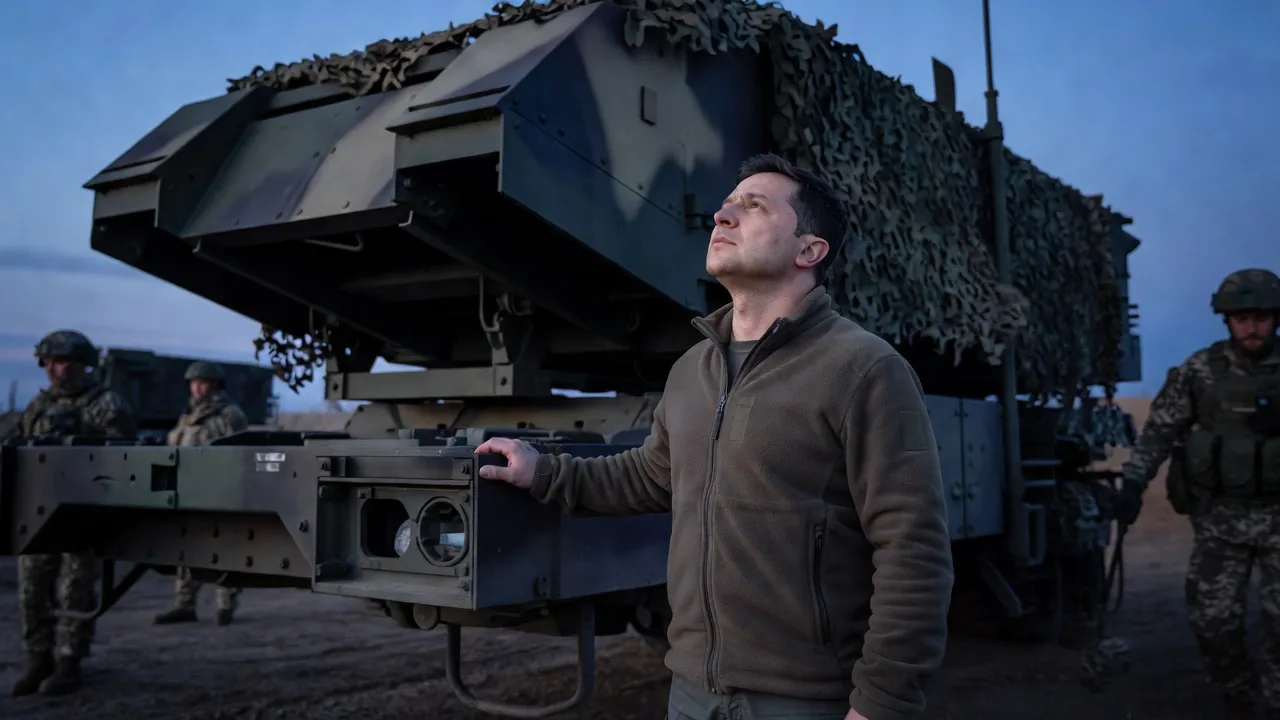
Zelensky says Trump has made a "final decision" to let Ukraine produce Patriot missiles
published on
countries
sources
articles
Zelensky did not specify whether the license mentioned by Trump refers to the PAC-2 interceptors, produced in the United States under German license, or the more advanced PAC-3, reserved for the United States and Japan. On the same day, he also mentioned an American proposal for a trilateral summit with Russia in the United Arab Emirates, at a technical level.
No direct confirmation from Washington has been reported: the State Department was still mentioning ongoing discussions on September 23, two days before Zelensky's announcement.
The uncertainty surrounding the targeted missile
The Ukrainian president did not indicate whether the announced agreement covers PAC-2 or PAC-3 interceptors, according to Kyiv Post.
The PAC-2 systems are produced in the United States and under license in Germany; some are set to arrive in Ukraine starting from 2027. The more advanced PAC-3 systems are manufactured only in the United States and Japan.
Trump's words, before and after
On July 8, at the NATO summit in Ankara, Trump had promised, according to the Ukrainian press: "We're going to give them the right to manufacture Patriots. We're going to show them how to do it." At the time, he believed Kyiv could produce them "fairly quickly".
On July 31, in a cabinet meeting, he backtracked, according to Le Monde and Sud Ouest: "You give them this technology and one day they can turn against you."
In early September, according to the Portuguese press, Secretary of State Marco Rubio indicated that Washington was negotiating this license with Kyiv.
A proposal for a trilateral summit
On the same day, according to G1 Globo Mundo, Zelensky indicated that the United States had proposed a trilateral meeting with Russia, scheduled to take place in the United Arab Emirates, at a solely technical level, without the leaders of the two countries.
G1 also notes a reaction from the Kremlin on the same day, without specifying its content.
A deadly night, quantified needs
According to Aftonbladet, two people died in Odessa in a fire at a postal terminal, the same night as the strike on Kiev. Moscow accuses Kiev of a strike that killed three people in Zaporijjia, which is under Russian control.
« We have learned to intercept cruise missiles and drones. But against ballistic missiles, for now, the only effective solution is the Patriot interceptors, which we need almost every day. »
In August, still according to Aftonbladet, Zelensky estimated Ukraine's needs at 5% of the US stock of Patriot missiles to get through the winter, and at 10% to neutralize all Russian ballistic missiles.
On September 23, Washington was still saying that discussions were ongoing without a final decision.
The $400 million package announced in late September, with $307 already committed, includes no Patriots.
Outside of the United States, only Germany holds a Patriot production license.
The EU must discuss on September 28 which countries would give up their turn to deliver Patriot.
How each country reads it
6 perspectives, each in the voice of that country's press.
 Brazil
Brasília is primarily concerned with the instability of Trump's words: approved in July, then immediately put on hold, and later validated in September, the Patriot license depends on a reversible presidential decision more than a finalized agreement.
2 sources
 France
Paris is scrutinizing Trump's about-face on Patriot licenses, an announcement that came from Kiev rather than Washington, following months of American wavering.
3 sources
 Poland
Warsaw is weighing the actual impact of Zelensky's announcement: the license promised by Trump will change Ukraine's antimissile defense, but not before one to eighteen months.
2 sources
 Portugal
Lisbon notes particularly the discrepancy between Trump's U-turns since July and the "final decision" Zelensky attributes to him on Friday, an announcement Washington has not directly confirmed.
2 sources
 Sweden
Stockholm interprets Zelensky's announcement first as a signal sent to the Kremlin on the American line, before seeing it as an industrial advance for Kiev.
2 sources
 Ukraine
Kyiv is weighing Trump's words against his reversals since July, between the promise of Patriot licenses on Friday and the State Department's persistent silence two days earlier.
5 sources
What the comparison reveals
Common ground and differences in coverage across the media analysed.
What the media report in common
Zelensky stated on Friday, September 25, in a voice message to journalists, that Trump had confirmed having made a 'final decision': Ukraine will receive licenses for the production of Patriot missiles.
In July, during the NATO summit, Trump had initially mentioned this authorization before backing down, citing caution in sharing sensitive military technology.
The Patriots remain presented as the only weaponry capable of reliably intercepting Russian ballistic missiles targeting Ukraine, in a context of global shortage of interceptors.
Where media coverage diverges
Status of the US decision
The coverage does not respond in the same way to the question of whether the Trump decision should be presented as definitively finalized: some relay Zelensky's announcement without particular reserve, others emphasize the absence of official confirmation from Washington or recall a previous statement from the State Department mentioning ongoing discussions.
Dominant angle of the announcement
The editorial offices do not emphasize the same aspect of the announcement to answer the question of what it changes concretely: some read it first through the industrial calendar and the global shortage of interceptors, others through the reliability of Trump's word and his reversals since July.
This grouping describes the publications analysed, not the position of these countries’ populations or of their governments.
The full text, country by country
Brazil
DOMINANT ANGLE
Brasília is primarily concerned with the instability of Trump's words: approved in July, then immediately put on hold, and later validated in September, the Patriot license depends on a reversible presidential decision more than a finalized agreement.
KEY POINTS
- Zelensky stated on Friday, September 25, in a voice message to journalists: "Ukraine will receive licenses for the production of Patriot missiles."
- In July, during the NATO summit, Trump initially mentioned this authorization before backtracking, citing caution regarding the sharing of sensitive military technology.
- G1 reports that Zelensky mentioned a US proposal for a trilateral meeting with Russia, which would take place in the United Arab Emirates at a technical level.
ANALYSIS
Brasília, September 26, 2026. The Brazilian press reports that Ukrainian President Volodymyr Zelensky stated on Friday, September 25, in a voice message sent to journalists, that Donald Trump gave him his "final approval" for Ukraine to produce Patriot missiles under license. According to Zelensky, quoted by Veja and G1, the statement was made during their last meeting on the sidelines of the United Nations General Assembly in New York: "During our last meeting, President Trump emphasized that yes, he made a final decision. Ukraine will receive licenses for the production of Patriot missiles."
The two publications put the announcement into a series of reversals that began in July, during the NATO summit, when Trump first mentioned this authorization before backing down, citing the need to act with caution in sharing sensitive military technology. G1 recalls that Kiev has been pressuring Washington for months to obtain this authorization, in a context of shortage of air defense systems: Ukrainian stocks, replenished over the past four years of war by the United States and Europeans, have been depleted in the face of daily Russian strikes.
Veja emphasizes that the missiles of the Patriot system, one of the most advanced in the world, remain complex and expensive to produce, which explains their persistent rarity despite the demand. G1 adds that these technological negotiations are part of a crisis in Ukraine's air defense, which has been unable to reliably intercept Russian ballistic missiles for months.
On the same day, according to G1, Zelensky mentioned an American proposal for a trilateral meeting with Russia, which would take place in the United Arab Emirates, specifying that these discussions would remain at a technical level, without the leaders of the two countries. G1 also notes a reaction from the Kremlin on the same day, without detailing its content.
For the Brazilian press, the episode illustrates above all the instability of American presidential speech on this issue: approved in July, slowed down immediately, then validated again in September, the Patriot license remains conditioned to the changing will of Washington rather than a stabilized agreement.
France
DOMINANT ANGLE
Paris is scrutinizing Trump's about-face on Patriot licenses, an announcement that came from Kiev rather than Washington, following months of American wavering.
KEY POINTS
- Zelensky, in a September 25 audio message: "During our last meeting, President Trump confirmed to me that, yes, he had made a final decision: Ukraine will receive licenses for the production of Patriot missiles"
- Trump had announced on July 8 his intention to authorize production after the NATO summit in Ankara, before saying at the end of July that we need to be "very careful", adding: "You give them this technology and one day they can turn against you"
- Zelensky estimates that launching production on Ukrainian soil would take "a year to a year and a half", while the global shortage of PAC-3 interceptors has worsened since the war between the United States and Iran began in February
ANALYSIS
Paris, Saturday, September 26, 2026. The French press first notes the source of the announcement: it was Volodymyr Zelensky, not the White House, who made public on Friday, September 25, Donald Trump's "final decision" to authorize Ukraine to produce its own Patriot missiles. In a voice message addressed to journalists after their meeting in New York this week, the Ukrainian president quoted his American counterpart's words: "During our last meeting, President Trump confirmed to me that, yes, he had made a final decision: Ukraine will receive licenses for the production of Patriot missiles."
Le Monde and Sud Ouest put this statement into a chronology of American reversals that have been unfolding since the summer. On July 8, following the NATO summit in Ankara, Donald Trump had announced his intention to grant these licenses. By the end of July, he had backtracked, calling for caution: "You give them this technology and one day they can turn against you." At the beginning of September, his Secretary of State Marco Rubio had also intervened in the matter, without the French articles detailing the content of his statements.
The newspapers also highlight the industrial calendar announced by Kiev: Zelensky himself had estimated, a few days before the announcement, that launching production on Ukrainian soil would take "one to one and a half years". This deadline contrasts with the urgency described on the ground: Russian ballistic missiles, which are more difficult to intercept than drones, are being used increasingly against major Ukrainian cities, and the PAC-3 interceptors, which are the only ones considered reliable by Kiev, remain expensive and rare. Their global shortage, the two newspapers note, has worsened since the United States and Iran went to war in February, which has diverted part of the available stocks to other theaters.
By repeating the phrase "final decision" without a direct confirmation from Washington being reported at the time of publication, the French press highlights an imbalance: for now, it is Kiev that is setting the narrative of this announcement.
Poland
DOMINANT ANGLE
Warsaw is weighing the actual impact of Zelensky's announcement: the license promised by Trump will change Ukraine's antimissile defense, but not before one to eighteen months.
KEY POINTS
- "President Trump confirmed to me that he made a final decision. Ukraine will receive licenses for the production of Patriot missiles," Zelensky said on Friday (Gazeta Prawna, RMF24).
- Patriot systems remain the only weaponry capable of effectively intercepting Russian ballistic missiles targeting Ukraine, due to the insufficient availability of PAC-3 interceptors.
- According to Zelensky, setting up Ukrainian production of Patriots would take "a year to a year and a half"; in July, he estimated that at least 300 missiles would be needed to get through the winter.
ANALYSIS
Warsaw, September 26, 2026. The Polish press is cautiously reporting the announcement made by Volodymyr Zelensky on Friday: according to the Ukrainian president, Donald Trump has made a "final decision" (ostateczna decyzja) authorizing Ukraine to produce its own Patriot missiles. "President Trump confirmed to me that he had made a final decision. Ukraine will receive licenses for the production of Patriot missiles," Zelensky said in a recorded message after his meeting with the American president in New York last week, as reported by Gazeta Prawna and RMF24, citing the PAP agency. The two articles, which are very similar, are based on the same dispatch and recall an assessment by the AFP agency that if the project materializes, it would be a significant breakthrough for Kiev.
The two titles emphasize the same technical fact: the Patriot systems remain, to this day, the only armament capable of effectively intercepting Russian ballistic missiles targeting Ukraine. Kiev has been demanding more PAC-3 interceptors for months, but their availability has proven limited. RMF24 notes that experts consider the American decision "a huge step," while also stressing that it will not result in an immediate strengthening of Ukraine's air defense: launching local production takes time.
On this point, Zelensky himself had previously estimated that it would take "a year to a year and a half" for Ukrainian Patriot production to become operational. Gazeta Prawna recalls that in July, the Ukrainian president estimated that his country would need at least 300 Patriot missiles to get through the winter - a need that the mere announcement of a license does not immediately address.
Neither of the two articles mentions an official Polish reaction or comment from Warsaw on the impact of this decision on its own air defense, even though Poland shares a border with Ukraine and hosts Patriot batteries on its soil. The coverage remains focused on Zelensky's statement and the technical analysis of the implementation deadline, without details on the exact schedule for transferring the license or the Polish industries that could be involved in future regional production.
Portugal
DOMINANT ANGLE
Lisbon notes particularly the discrepancy between Trump's U-turns since July and the "final decision" Zelensky attributes to him on Friday, an announcement Washington has not directly confirmed.
KEY POINTS
- Outside of the United States, only Germany had held a Patriot missile production license until the announcement made to Ukraine.
- Zelensky estimates that the start of Ukrainian Patriot production could take "a year to a year and a half".
- Secretary of State Marco Rubio had indicated early September that Washington was negotiating the license with Kiev, a file on which Trump seemed to have changed his mind several times since July.
ANALYSIS
Lisbon, 26 September 2026. The Portuguese press reported on Friday, 25 September, the announcement by Ukrainian President Volodymyr Zelensky: Donald Trump allegedly confirmed to him, during their last meeting in New York this week, having made a "final decision" on Ukrainian production of Patriot missiles. "During our last meeting, President Trump confirmed to me that he had made a final decision and that Ukraine will receive licenses for the production of Patriot missiles," Zelensky said in a voice message to journalists, as reported by Observador and SAPO Notícias.
SAPO Notícias places the announcement after "months of negotiation" and emphasizes that, outside of the United States, only Germany had held a production license for these air defense systems until now. The media outlet notes that the multiplication of conflicts worldwide has created unprecedented pressure on global Patriot interceptor stocks. According to Zelensky, the start of Ukrainian production could nonetheless take "one year to a year and a half".
Portuguese articles recall the winding path of the dossier on the American side: at the beginning of September, Secretary of State Marco Rubio had indicated that Washington was negotiating this license with Kiev, a dossier on which Donald Trump had seemed to "change his mind several times" since July, when he judged the idea "rather cool" before calling for caution. Observador also recalls Zelensky's meeting with NATO Secretary-General Mark Rutte, during which the Ukrainian president had insisted on the urgent need for these interceptors: "We have learned to intercept cruise missiles and drones (...) But against ballistic missiles, for now, the only effective solution is Patriot interceptors, which we need almost every day," he had written on X.
The entirety of the Portuguese information relies on Kiev's sole statement: none of the articles cite direct confirmation from the White House, the "final decision" remaining, for the time being, the one that Zelensky attributes to Trump. The treatment, essentially industrial, focuses on licenses and production capacity rather than the military situation on the Ukrainian ground.
Sweden
DOMINANT ANGLE
Stockholm interprets Zelensky's announcement first as a signal sent to the Kremlin on the American line, before seeing it as an industrial advance for Kiev.
KEY POINTS
- Zelensky quotes Trump confirming he made a "final decision": "Ukraine will receive licenses to produce Patriot missiles," in a voice message sent to journalists on Friday.
- Aftonbladet notes that no official confirmation has come from the American administration at this stage.
- In July, Trump had found the idea of granting these licenses "rather cool" before backtracking, calling for being "very cautious".
ANALYSIS
Stockholm, Saturday, September 26, 2026. The Swedish press reported on Friday the announcement by Volodymyr Zelensky: in a voice message sent to journalists, the Ukrainian president claims that Donald Trump confirmed to him, during their last meeting, having made a "final decision": "Ukraine will receive licenses to produce Patriot missiles," quotes Aftonbladet. According to the daily, the meeting took place on the sidelines of the opening of the UN General Assembly in New York earlier in the week.
Aftonbladet recalls that Kiev currently relies on Patriot systems provided by other countries, the only means considered truly effective against Russian ballistic missiles, while Ukraine has made significant progress in intercepting drones and cruise missiles. The newspaper also highlights the acute shortage that Kiev has been experiencing since stocks were redirected during the war waged by Israel and the United States against Iran.
Svenska Dagbladet, which headlines with "a direct signal to the Kremlin about the American line," notes that obtaining this license has been at the top of Ukraine's requests for a long time, and that Zelensky hastened to make the announcement public through a statement.
Both newspapers report the same American hesitation: in July, Trump had already deemed the idea "rather cool" before backing down, calling for being "very cautious" before yielding this type of technology - "It's a difficult thing to give this kind of technology," he had then said. Aftonbladet specifies that no official confirmation has come from the American administration at this stage. The experts cited estimate that a license would change Ukraine's air defense in the long term, with production still at least a year away.
The Swedish press links the announcement to the day's news: a 14-year-old boy was killed overnight by Russian drones that struck a residential building in Kiev, two people died in Odessa where a post office burned down, and Moscow accuses Kiev of a strike that killed three people in occupied Zaporijjia. Aftonbladet finally recalls the figures put forward by Zelensky in August: Ukraine claimed to need 5% of the American stock of Patriots to get through the winter, and 10% to neutralize all Russian ballistic missiles.
Ukraine
DOMINANT ANGLE
Kyiv is weighing Trump's words against his reversals since July, between the promise of Patriot licenses on Friday and the State Department's persistent silence two days earlier.
KEY POINTS
- Zelensky quotes Trump: "Yes, I made the final decision: Ukraine will receive the licenses to produce Patriot missiles," remarks made during their meeting in New York on Tuesday.
- On September 23, the US State Department had told German channel DW that discussions were ongoing and no final decision had yet been made on these licenses.
- According to Reuters, the new US aid package of nearly $400 million, with $307 million already committed, will not include any Patriot missiles, as global stocks have been depleted by wars in Ukraine and against Iran.
ANALYSIS
Kyiv, Saturday, September 26, 2026. Volodymyr Zelensky revealed on Friday, September 25, in a voice message shared with journalists, that Donald Trump had announced to him during their meeting in New York on Tuesday that he had made a "final decision": "Yes, I've made the final decision: Ukraine will receive the licenses to produce Patriot missiles." The Ukrainian president did not specify whether the agreement concerns the PAC-2 interceptors, produced in the United States and under license in Germany — some of which are expected to arrive in Ukraine starting in 2027 — or the more advanced PAC-3, manufactured exclusively in the United States and Japan.
This announcement contrasts with the caution displayed two days earlier by Washington: on September 23, the State Department had indicated to the German channel DW that discussions were ongoing and that no final decision had yet been made on the granting of these licenses. The Ukrainian press recalls the winding trajectory of the dossier since the NATO summit in Ankara on July 8, where Trump had promised: "We're going to give them the right to manufacture Patriots. We're going to show them how to do it," judging that Kyiv could produce them "fairly quickly." On July 31, during a cabinet meeting, he had backtracked, explaining that the United States had not approved anything and that it was necessary to "be very cautious" before transferring sensitive technology that its recipients could one day turn against Washington.
Zelensky's optimism comes on the same day that Reuters reveals, with sources to back it up, that the new American military aid package of nearly $400 million — of which $307 million has already been committed — will not include any Patriot missiles, as global stocks of interceptors have been depleted by the war in Ukraine and the American war against Iran. The initial deliveries, which began this month, only concern offensive weapons and spare parts for armored vehicles.
Kyiv is also watching Brussels, where EU defense ministers are to discuss on September 28 the possibility that certain states will cede their place in the Patriot waiting list with Lockheed, with Spain or Greece being cited as candidates for a transfer of interceptors, to be financed later by the €90 billion loan.
Explore every perspective on this subject across 6 countries.
Compare viewpoints and see where they diverge.