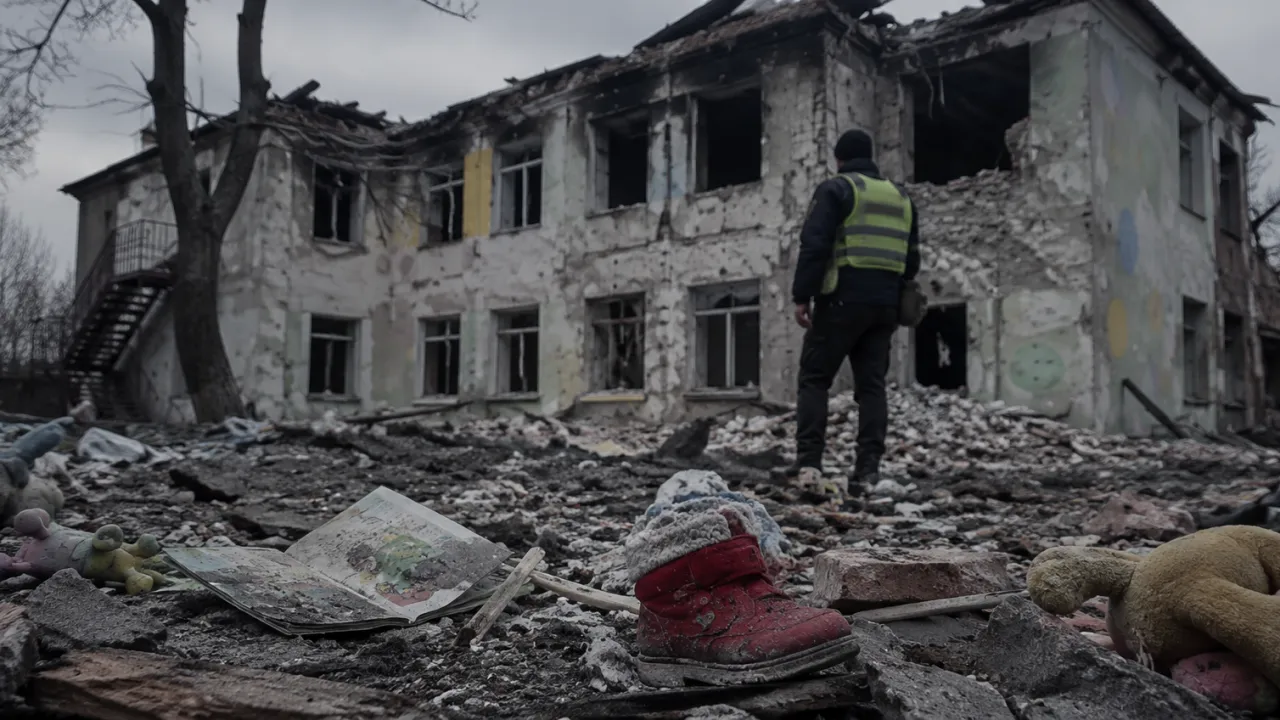
As 9 May approached, Kyiv declared a unilateral ceasefire meant to suspend hostilities for the commemoration of the end of the Second World War. Even before the truce was due to take effect, strikes killed at least 27 people. Once the period was supposed to begin, Ukrainian authorities logged 1,820 violations attributed to Russian forces.
One incident stood out in particular: a drone struck a kindergarten in Sumy, killing two people and wounding seven others. A strike on a facility for children crystallised attention on the gap between the announcement of a truce and conditions on the ground. In response, Kyiv raised the possibility of a "mirror response" timed to the military parade held in Moscow on the same date.
The significance of this episode goes beyond a single incident. The 9th of May holds major symbolic weight in Russia, where it marks the commemoration of the 1945 victory, which politically charges any military action carried out around that date. The sequence fits into a broader diplomatic deadlock, in which the question of who bears responsibility for the stalled dialogue remains sharply contested, with some pointing to outside disengagement and others to a refusal to negotiate in good faith.
Readings of the event diverge widely. On one side, the Ukrainian account of a proposed truce later violated is foregrounded; on the other, that version is disputed, with some actors reversing the charge and accusing Kyiv of prior breaches and of attacks targeting journalists. Still in dispute are the legitimacy of a ceasefire declared by one side alone, the real scope of the "mirror response" threat, and each party's share of responsibility for the diplomatic impasse. Several third parties stick to a factual account without taking sides.