N°22
The Week When Truces Break and Get Stitched Back Together
+3.75%in Brent overnight, to $97.83
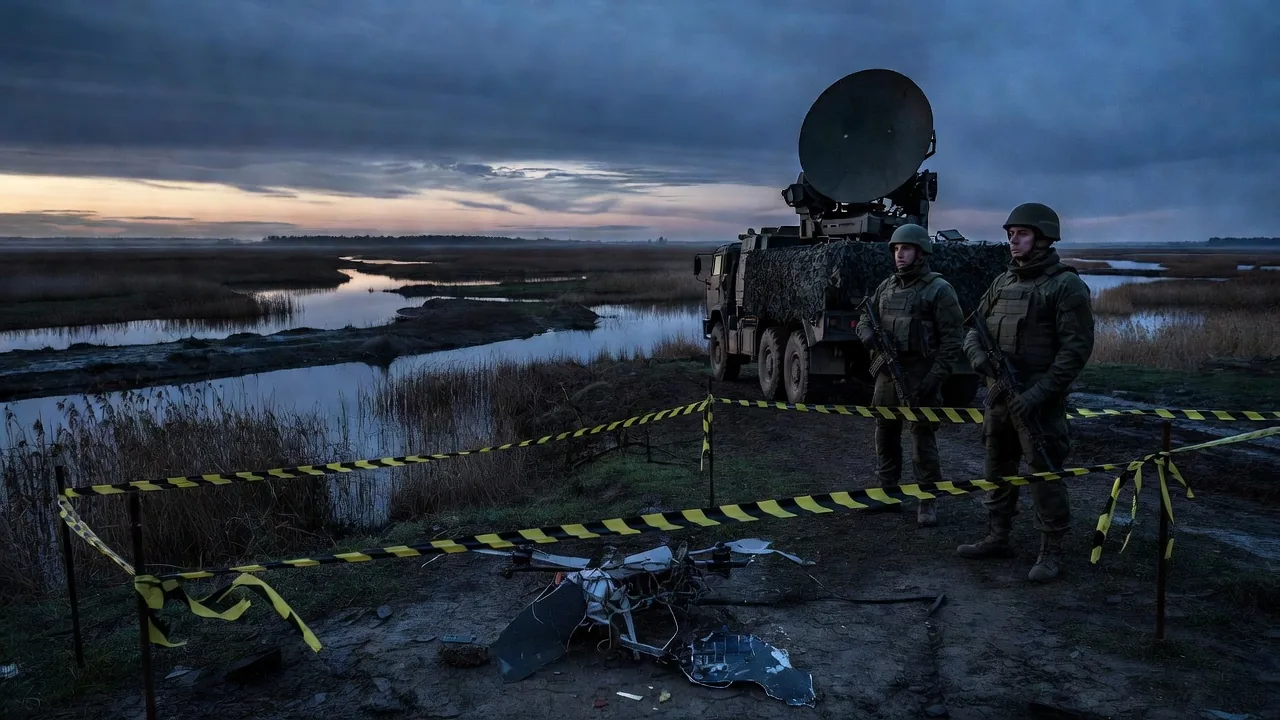
Overnight on May 27-28, US forces shot down four Iranian drones and struck a base near Bandar Abbas, the IRGC retaliated on a US base, and Brent crude jumped 3.75% to $97.83. Forty-eight hours later, a 60-day extension of the April 8 ceasefire was announced, pending Trump's approval. The figure captures the week's mechanics: the breaking and the patching of the same truce, two days apart, read everywhere first through its energy risk premium.Sources — Reuters · Al Jazeera · Tasnim
18
Subjects analysed
34
Countries compared
21%
Owned track-record
The week's three acts
01What divides — free02Under the radar — weak signals03What we bet — predictionsAct 1Free · open access
What divides
The divergence score measures the framing gap between the world’s newsrooms on the same event. The higher the score, the more the narrative fractures along borders.
↑ Most divergent
84/100
Iran/États-Unis : escalade des 27-28 mai et rupture de la trêve d'avril
78/100
Israël annonce l'élimination d'un chef militaire du Hamas (Al-Qassam) — couverture mondiale du 28 mai
71/100
Trump face aux revers judiciaires : le redécoupage des circonscriptions du Sud rejeté à 6 mois des midterms
↓ Least divergent
Convergences — what every newsroom tells without connecting
The Iran-US truce broken then patched within forty-eight hours
May 24: Trump announces that Washington and Tehran have agreed on the basic terms of a deal to end nearly three months of war and reopen the Strait of Hormuz.May 25: Trump tempers expectations, asking his negotiators not to "rush" things despite the ceasefire observed since April.May 27-28: US forces shoot down four Iranian drones and strike a base near Bandar Abbas, the IRGC retaliates, Trump rejects the Hormuz framework and sanctions the Persian Gulf Strait Authority.May 30: Washington and Tehran agree on a 60-day extension of the April 8 ceasefire, pending Trump's formal approval, under pressure from Gulf states and the E3 mediators.
In six days, the Iran-US ceasefire went from a deal in principle to an armed rupture and then to a provisional extension. The sequence reads identically from Doha to New Delhi: the Gulf locks down its mediation and prices the exposure of its sea lanes, New Delhi reads every swing through its oil bill, London and Paris position themselves as E3 guarantors of the sanctions sequencing. The common thread across more than fifteen capitals: the truce now works as a renewable 60-day instrument, not as a peace — every rupture calls for a calibrated patch, and every patch leaves intact the possibility of the next rupture.
Confidence 88% · US · IR · QA · SA · FR · UK · IN · RU · IL
NATO's eastern flank tested by the fragments of the Ukraine war
May 24: Russia strikes Kyiv with an Oreshnik hypersonic missile and hundreds of drones, two dead and 86 wounded, Kyiv demands an emergency UN meeting.
Act 2◆ Signals & shifts locked
Under the radar
Weak signals and narrative shifts are the Prism’s deep analysis: what newsrooms have not yet named. Subscribers only. The blind spots stay free.
Weak signals ◆ Locked
Article 4 chosen over Article 5, or escalation managed from below
The Gulf as silent guarantor of the patch
The judicial setbacks read from the Global South as a democratic mirror
Narrative shifts ◆ Locked
Posture on the deal with Iran
Theater of strikes moving westward
Tempo of the regional offensive during the Iran-US truce
Blind spots Free · open access
Democratic Republic of the Congo
The Ebola epidemic crossing 900 suspected cases beneath the media strikes
With more than 900 suspected cases in the eastern DRC, health workers fighting international aid cuts and burned-down health centers, the epidemic was probed by only seven capitals, including Paris, Berlin and Abuja. The capitals absorbed by the Iran-US truce, NATO's eastern flank and the US judicial setbacks almost entirely ignored it, even though the health-logistics breakdown — care interrupted in a zone of violence — is a long-term security issue left in the week's blind spot.
Covered: FR · DE · NGIgnored: US · RU · IL · QA
Pakistan
The suicide bombing of a train in Quetta, Balochistan
The car-bomb suicide attack targeting a commuter train near Chaman Phatak in Quetta, with at least 14 dead and 20 wounded, was covered by seven mostly regional perspectives. The major capitals treated it as a local security item rather than a signal of persistent Baloch insurgency, even though Balochistan's instability directly touches regional energy corridors. The subject stays in the blind spot of the capitals focused on Hormuz and NATO.
Covered: PK · FR · RUIgnored: US · IL · QA · IN
Spain
The maritime health alert over hantavirus aboard the MV Hondius
The second confirmed hantavirus case linked to the MV Hondius expedition cruise, with a Spanish passenger quarantined in Madrid after deaths on board, was followed by only six mostly Mediterranean or coastal capitals. The cross-border management of repatriated passengers and the maritime health risk were eclipsed by the week's geopolitical agenda, leaving a multi-country quarantine precedent largely unexplored outside the directly concerned capitals.
Covered: ES · FR · GRIgnored: US · RU · IL · QA
Act 3◆ Reasoning locked
What we bet
Dated, falsifiable predictions, judged publicly. The statement and deadline are free — the reasoning behind them is for subscribers. We settle them later, won and lost alike.
13
Jun 2026
The 60-day extension of the Iran-United States ceasefire will receive Trump's formal approval before June 13, 2026.
Reasoning: Continuation of the observed trajectory: despite the May 27-28 rupture, both camps returned to a framework within 48 hours under pressure from…
🔒 Full reasoning for subscribers
60%
Confidence
12
Jun 2026
Brent will remain below 100 dollars per barrel at the close on June 12, 2026.
Reasoning: The jump to $97.83 after the Bandar Abbas strike shows a real but contained risk premium, with no effective closure of Hormuz.
🔒 Full reasoning for subscribers
55%
Confidence
13
Jun 2026
NATO will not invoke Article 5 in response to the Galați drone before June 13, 2026.
Reasoning: Continuation of the observed posture: Warsaw and the Baltics called for Article 4 (consultation) rather than Article 5, Bucharest summoned without invoking…
🔒 Full reasoning for subscribers
80%
Confidence
13
Jun 2026
No Southern redistricting map rejected this week will be reinstated in favor of the Trump administration before June 13, 2026.
Reasoning: Continuation of the observed state: maps rejected in cascade by federal courts, the Louisiana v.
🔒 Full reasoning for subscribers
65%
Confidence
Our track-record — free, owned, verifiable
21%
of predictions confirmed across all settled editions. We publish everything: bets won and bets lost. Transparency is the contract — not infallibility.
04
ConfirmedPredictions that landed
15
DeniedOwned publicly
19
Settled totali.e. 21% success — won and lost
Unlock
edition N°22
The statement is free. Reading the world, less so. Access the weak signals, the narrative shifts and the full reasoning behind every prediction.
- 3 weak signals decrypted in full
- 3 narrative shifts with their evidence
- The reasoning of each of the 4 predictions
- Full access to the 18 subjects of the week
- All archives, from the start to today
Subscribe to the Prism
Secure payment · Cancel anytime
— The newsroom that bets on the future
Complete weak signals, narrative shifts with evidence, and the reasoning behind every prediction.
$4.99/month$39.99 /year · save 33%
The Prism is published every Saturday. The in-depth analysis is for subscribers.
SHARE THIS RECAP
SHARE THIS COMPARISON
Show your friends how the world sees the same news differently.
Subscribe to the newsletter
Get the Weekly every Saturday morning. Free.