N°23
The week the press releases outlasted the ceasefires — and the world called for an AI pause while chasing a trillion
100days
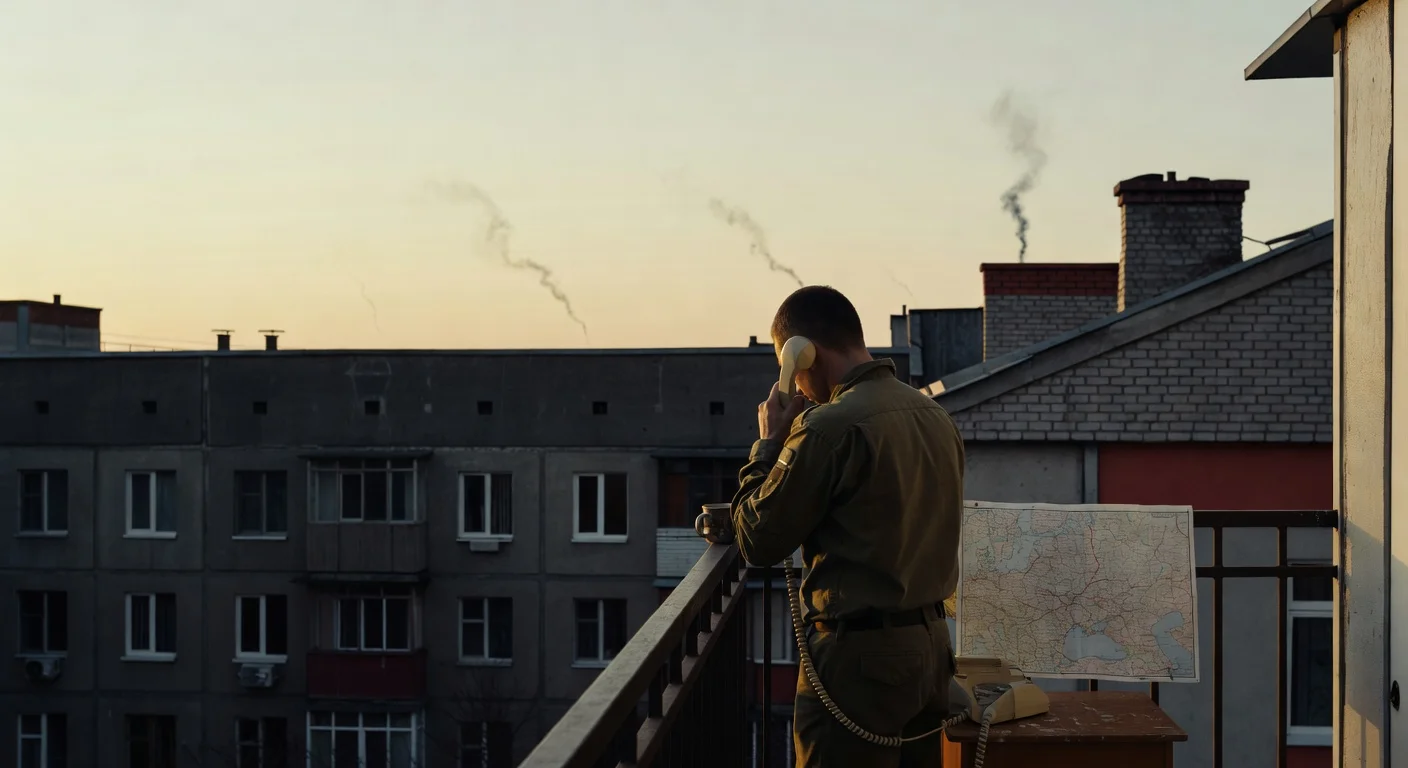
June 7 marked the hundredth day of the Iran–United States war, opened in early March and repeatedly described as close to a settlement. Over those 100 days, at least four de-escalation or ceasefire announcements were made publicly, including one delivered by Trump on June 2 after the capture of Beaufort. None held more than a few hours on the ground: Iranian missiles on Bahrain, a strike on Kuwait's civilian airport on June 4, the first direct Iran→Israel strike since April on June 8. The Strait of Hormuz, the theoretical economic tipping point, stayed open but under constant military tension. The gap between the diplomacy announced and the war lived is now measured in full days.Sources — AFP · Reuters · Al Jazeera · RFI · Bloomberg · Times of Israel
23
Subjects analysed
46
Countries compared
21%
Owned track-record
The week's three acts
01What divides — free02Under the radar — weak signals03What we bet — predictionsAct 1Free · open access
What divides
The divergence score measures the framing gap between the world’s newsrooms on the same event. The higher the score, the more the narrative fractures along borders.
↑ Most divergent
76/100
Iran frappe l'aéroport civil de Koweït
75/100
Hezbollah rejette le cessez-le-feu « capitulation »
74/100
Israël reprend Beaufort, Trump annonce une trêve
↓ Least divergent
Convergences — what every newsroom tells without connecting
The chain of ceasefires that collapse within hours
June 2: Israel retakes the Beaufort fortress, tanks toward Beirut, then Trump announces a ceasefire with HezbollahJune 3: Trump–Netanyahu call, "You're fucking crazy," Iran talks suspendedJune 4: 13 Iranian missiles and 17 drones on Kuwait's civilian airport, 1 dead, 63 injuredJune 5: Naim Qassem (Hezbollah) rejects the ceasefire he calls a "capitulation," an IDF officer killed, a Serbian UNIFIL peacekeeper shot deadJune 7: day 100 of the Iran–US war, Iranian missiles on Bahrain, tension at HormuzJune 8: first direct Iran→Israel strike since April, missiles on Beirut
On June 2, the ceasefire announcement immediately follows an Israeli military advance — a communiqué calibrated to freeze a battlefield gain. Within six days, every tier of the arrangement contradicted it: the party meant to accept it refused, the central ally disputed it in private, and the borders kept burning. The sequence reveals a recurring mechanism in which the diplomatic announcement precedes the fighting rather than ending it. At Hormuz, the rent stays theoretical: an open strait is worth more to every actor than its closure, which is why escalation shifts toward symbolic targets — a Kuwaiti civilian airport, a Bahrain base — rather than the maritime chokepoint.
Confidence 82% · IL · IR · LB · US · KW · BH
The Global South foots the bill for decisions made in the North
June 2: Ebola in the DRC, 1,100+ suspected cases, 263 confirmed, visit by Tedros (WHO)June 3: Ebola quarantine center for Americans in Laikipia/Nanyuki, Kenya — the town erupts, deaths in the protestsJune 4: Trump revives the tariff war via "forced labor" (Section 301), 60 countries targeted, pushback from Lula/China/EU
Act 2◆ Signals & shifts locked
Under the radar
Weak signals and narrative shifts are the Prism’s deep analysis: what newsrooms have not yet named. Subscribers only. The blind spots stay free.
Weak signals ◆ Locked
Armenia and Kosovo synchronize an anti-Russian pivot at the ballot box
Xi in Pyongyang: a nuclear axis advancing without a thunderous communiqué
2026 World Cup visas become a diplomatic lever
Narrative shifts ◆ Locked
From the Trump peace framework to direct war with Iran
From Petro's center-left to the pro-Trump far right
Blind spots Free · open access
Kenya
Ebola quarantine center for Americans in Laikipia/Nanyuki: deadly riots gone uncovered
A quarantine setup meant to protect American nationals against Ebola triggered deadly protests in Laikipia and Nanyuki. The event embodies the gap between the announced and the real: biosecurity presented in the North translates into deaths in the South. With only 7 country perspectives, the episode stays nearly invisible in Western capitals, even though it implicates their own nationals. The silence of those who issued the decision contrasts with the intensity of local Kenyan coverage.
Covered: KE · CDIgnored: US · FR · DE · UK · JP
DRC
Ebola in the DRC: 1,100+ suspected cases and denial of the Kenya-Brazil-Italy corridor
The DRC outbreak counts more than 1,100 suspected cases and 263 confirmed, with a visit by Tedros (WHO). Suspected cases ruled out in Brazil and Italy hint at an intercontinental diffusion corridor that few capitals connect to the Congolese epicenter. Coverage stays fragmented: isolated alerts are handled without naming the chain that links them. The announced — an epidemic contained at a distance — masks the reality of an already global circulation within health suspicions.
Covered: CD · KEIgnored: US · FR · DE · UK
Cuba
Cuba choked: expanded sanctions, Visa/Mastercard suspended, garbage in Havana
The expanded sanctions on Diaz-Canel, the Castro family and 95 hotels, compounded by the suspension of Visa and Mastercard services, translate concretely into unusable bank cards and uncollected garbage in the capital. The official narrative speaks of targeted political pressure on leaders; the bill reads in the material daily life of a population. With only 9 country perspectives, the human dimension of the measure stays largely off the radar of the capitals observing it from afar.
Covered: CUIgnored: US · FR · DE · UK
Act 3◆ Reasoning locked
What we bet
Dated, falsifiable predictions, judged publicly. The statement and deadline are free — the reasoning behind them is for subscribers. We settle them later, won and lost alike.
18
Jun 2026
At least one new armed cross-border incident between Lebanon and Israel (a claimed strike or fire) will be reported before June 18
Reasoning: Naim Qassem's explicit rejection of the ceasefire on June 5, the death of an IDF officer and a UNIFIL peacekeeper, then the…
🔒 Full reasoning for subscribers
75%
Confidence
16
Jun 2026
Anthropic or OpenAI will announce a quantified funding or valuation operation before June 16
Reasoning: The June 6 IPO sequence and the near-trillion valuation target floated on June 8, combined with Google's monthly $920M payment to SpaceX,…
🔒 Full reasoning for subscribers
60%
Confidence
22
Jun 2026
Petro's contestation of the Colombian result will lead to an official decision (appeal, recount or confirmation by the electoral authority) before June 22
Reasoning: Petro publicly contested a result placing De la Espriella in the lead as early as June 2.
🔒 Full reasoning for subscribers
55%
Confidence
15
Jun 2026
A joint communiqué or coordinated Xi–Kim statement on cooperation will be published before June 15
Reasoning: Xi's visit to Pyongyang on June 8, the first in seven years, and Kim's unveiling of the enrichment plant create the expectation…
🔒 Full reasoning for subscribers
45%
Confidence
Our track-record — free, owned, verifiable
21%
of predictions confirmed across all settled editions. We publish everything: bets won and bets lost. Transparency is the contract — not infallibility.
04
ConfirmedPredictions that landed
15
DeniedOwned publicly
19
Settled totali.e. 21% success — won and lost
Unlock
edition N°23
The statement is free. Reading the world, less so. Access the weak signals, the narrative shifts and the full reasoning behind every prediction.
- 4 weak signals decrypted in full
- 2 narrative shifts with their evidence
- The reasoning of each of the 4 predictions
- Full access to the 23 subjects of the week
- All archives, from the start to today
Subscribe to the Prism
Secure payment · Cancel anytime
— The newsroom that bets on the future
Complete weak signals, narrative shifts with evidence, and the reasoning behind every prediction.
$4.99/month$39.99 /year · save 33%
The Prism is published every Saturday. The in-depth analysis is for subscribers.
SHARE THIS RECAP
SHARE THIS COMPARISON
Show your friends how the world sees the same news differently.
Subscribe to the newsletter
Get the Weekly every Saturday morning. Free.