N°29
The week the leading power tried everything, then walked it back
25% tariff imposed on Brazil with a single signature
Twenty-five percent: that is the rate Washington applied to Brazil on July 17, by decree, with no law and no negotiating window. The number is modest against the trade flows, but it embodies the thread of the week. In seven days, the same capital pulled a military lever (a third wave of strikes on Iran, a Hormuz blockade), an economic lever (this 25% on Brasília) and a domestic lever (ICE checks) — then released several of them. A round figure, decided fast, reversible fast: the summary of a power wielded by decree rather than by treaty.Sources — Reuters · AFP · Agência Brasil · Folha de S.Paulo
15
Subjects analysed
38
Countries compared
52%
Owned track-record
The week's three acts
01What divides — free02Under the radar — weak signals03What we bet — predictionsAct 1Free · open access
What divides
The divergence score measures the framing gap between the world’s newsrooms on the same event. The higher the score, the more the narrative fractures along borders.
↑ Most divergent
36/100
Crise au Golfe : Washington rétablit le blocus d'Ormuz, le pétrole s'envole
34/100
Troisième vague de frappes américaines sur l'Iran, les États du Golfe touchés
29/100
Trump renonce au péage sur le détroit d'Ormuz alors que le blocus et les frappes sur l'Iran reprennent
↓ Least divergent
0/100
Meurtre d'Ann Widdecombe : la piste de l'extrême droite secoue le Royaume-Uni
9/100
États-Unis : Trump revient sur la suspension des contrôles de l'ICE
11/100
Naufrages au large du Myanmar : plus de 500 réfugiés rohingyas portés disparus
Convergences — what every newsroom tells without connecting
Hormuz: the military lever ratchets up, then gets priced in barrels
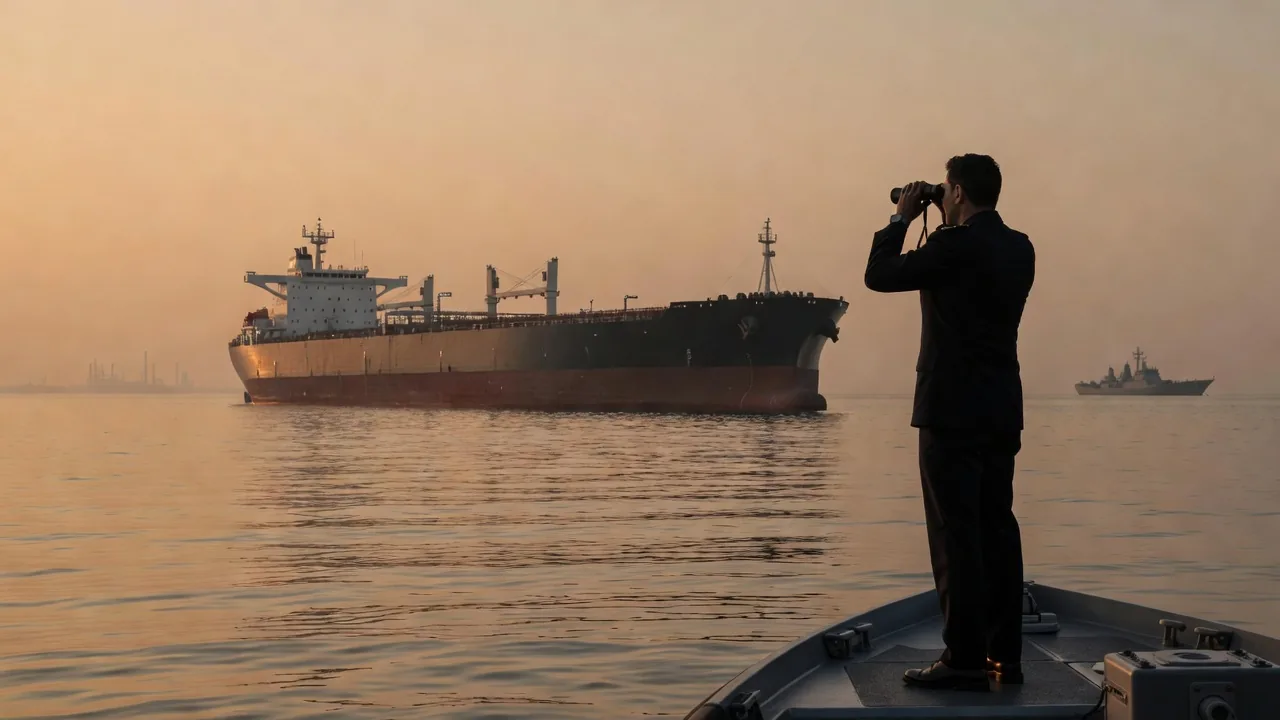
July 13: a third wave of U.S. strikes hits Iran, with neighboring Gulf states caught in the fallout.July 14: Washington reinstates a blockade of the Strait of Hormuz, and crude jumps on Asian and European markets.July 15: Trump announces he is dropping the toll he had just attached to the strait, while the blockade and strikes go on.July 16: Russian strikes on Odessa are a reminder that a second maritime chokepoint, the Black Sea, also turns on naval balance of power.
Three distinct stories — strikes, blockade, reversal — actually describe a single gesture stretched over seventy-two hours. Riyadh and Abu Dhabi greet the escalation with cautious relief the moment the toll is dropped, because a costly but open Hormuz is worth more to them than a closed, toll-free one. New Delhi and Beijing, the most exposed importers, first count the risk premium added to every cargo. The convergence across a dozen capitals is clear: no one reads dropping the toll as de-escalation, everyone reads it as a price adjustment. The force stays on the strait; only its posted price has moved.
Act 2◆ Signals & shifts locked
Under the radar
Weak signals and narrative shifts are the Prism’s deep analysis: what newsrooms have not yet named. Subscribers only. The blind spots stay free.
Weak signals ◆ Locked
The soldier's body becomes an instrument of doctrine
When the leading power rations its own appeal
Smoke turns two allies into a climate dispute
Narrative shifts ◆ Locked
The Strait of Hormuz
Domestic immigration checks
The murder of Ann Widdecombe
Blind spots Free · open access
Qatar
The human cost, in the Gulf states, of the third wave of strikes
The headline says it — "the Gulf states caught in it" — yet most of the world's coverage tracked the price of crude rather than the fallout on the civilian populations of Iran's neighboring monarchies. The oil market has an instant thermometer; the residents of the struck areas do not. This blind spot is structural: when a strait conditions global energy, the suffering along its shores becomes a secondary variable of the story, eclipsed by the price curve.
Covered: QA · IRIgnored: US · CN · RU · FR
Bangladesh
The shipwrecks of more than 500 Rohingya refugees
More than five hundred missing on a single migration route mobilized only a few Southeast Asian capitals, while the major powers treated the wreck as a distant humanitarian matter. The Rohingya route has no state to claim it and no table to regulate it, which leaves it politically orphaned. The raw toll converges everywhere it is covered, but it is covered almost nowhere: it is the blind spot par excellence, a disaster with no camp and therefore no agenda.
Covered: MY · PHIgnored: US · FR · CN · RU
DR Congo
The Ebola outbreak spreading "faster than ever"
An accelerating epidemic and striking health workers tick every box of a cross-border emergency, but the story stayed confined to a few African capitals while global attention followed Hormuz and Washington's reversals. The underfunding of the response flows directly from that lack of attention: what is not watched is not funded, and what is not funded worsens off-screen, until the threshold where the outbreak forces the world to look.
Covered: CD · UG · NGIgnored: US · CN · RU
Act 3◆ Reasoning locked
What we bet
Dated, falsifiable predictions, judged publicly. The statement and deadline are free — the reasoning behind them is for subscribers. We settle them later, won and lost alike.
01
Aug 2026
No formal, signed agreement between the United States and Iran on the Strait of Hormuz will be announced before August 1, 2026.
Reasoning: As of July 18, the blockade and strikes continue and the only diplomatic gesture observed — dropping the toll — has not…
🔒 Full reasoning for subscribers
76%
Confidence
31
Jul 2026
The 25% tariff imposed on Brazil will remain in force, with no repeal or suspension by Washington, as of July 31, 2026.
Reasoning: The tax was just set on July 17 and Brasília responded with its reciprocity law rather than a climbdown.
🔒 Full reasoning for subscribers
78%
Confidence
01
Aug 2026
The official Ebola death toll in the DRC will keep rising and no end of outbreak will be declared before August 1, 2026.
Reasoning: The outbreak was described on July 18 as spreading "faster than ever," with striking health workers weakening the response.
🔒 Full reasoning for subscribers
74%
Confidence
28
Jul 2026
ICE roadside checks will remain in force, with no new national suspension, through July 28, 2026.
Reasoning: Having reinstated the setup on July 16, the executive signaled a return to firmness; a second about-face within ten days would be…
🔒 Full reasoning for subscribers
68%
Confidence
Our track-record — free, owned, verifiable
52%
of predictions confirmed across all settled editions. We publish everything: bets won and bets lost. Transparency is the contract — not infallibility.
22
ConfirmedPredictions that landed
20
DeniedOwned publicly
42
Settled totali.e. 52% success — won and lost
Unlock
edition N°29
The statement is free. Reading the world, less so. Access the weak signals, the narrative shifts and the full reasoning behind every prediction.
- 4 weak signals decrypted in full
- 3 narrative shifts with their evidence
- The reasoning of each of the 5 predictions
- Full access to the 15 subjects of the week
- All archives, from the start to today
Subscribe to the Prism
Secure payment · Cancel anytime
— The newsroom that bets on the future
Complete weak signals, narrative shifts with evidence, and the reasoning behind every prediction.
$4.99/month$39.99 /year · save 33%
The Prism is published every Saturday. The in-depth analysis is for subscribers.
SHARE THIS RECAP
SHARE THIS COMPARISON
Show your friends how the world sees the same news differently.
Subscribe to the newsletter
Get the Weekly every Saturday morning. Free.