The week counting became a choice
What divides
The divergence score measures the framing gap between the world’s newsrooms on the same event. The higher the score, the more the narrative fractures along borders.
The death toll depends on which tier of the state you ask
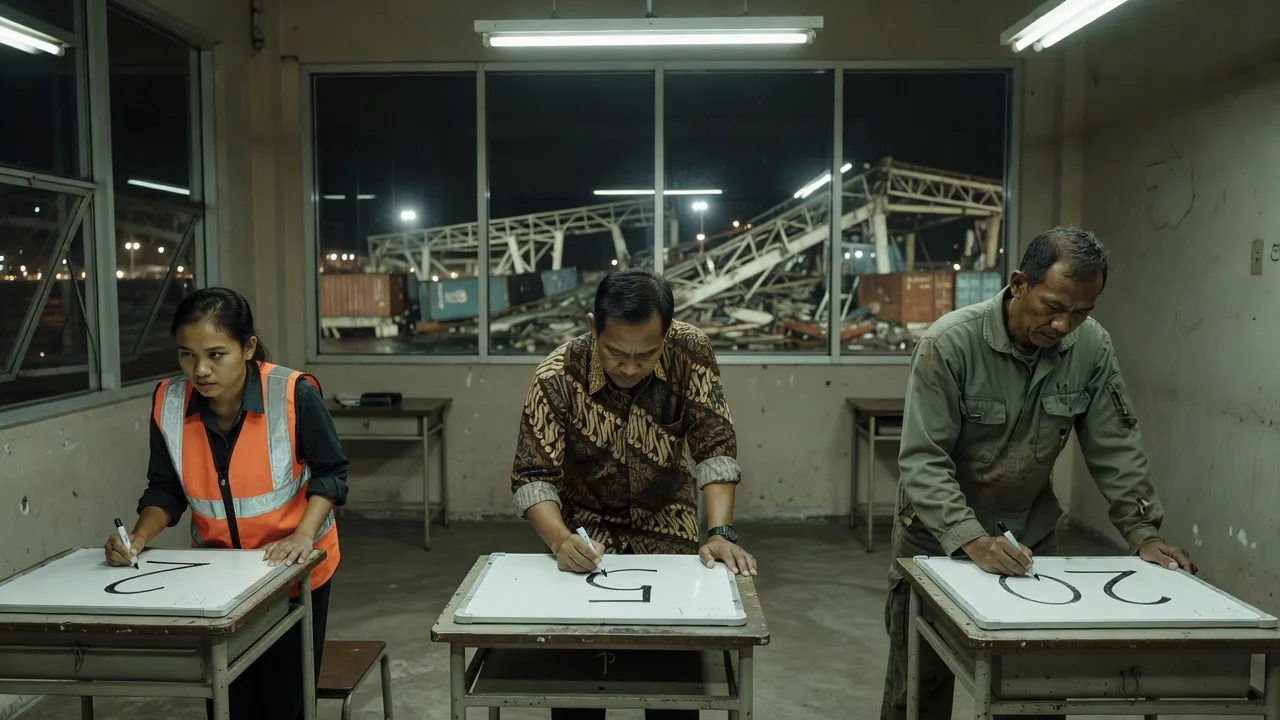
Three of the week's disasters produce the same mechanism. Off Flores, four tolls coexist, from one to twenty dead, each issued by a different level of the Indonesian administration. In Colombia, the 10 August earthquake is reported at between 71 and 138 dead depending on filing time, with the German press adding more than 2,000 missing and the Indian press relaying a USGS warning of a possible toll above 1,000; the magnitude itself moves from 6.6 to 7.4 depending on whether the Colombian or the American institute is cited. In DR Congo, Ebola tolls range from 1,900 deaths and 4,200 cases to 2,061 and 4,449. None of these gaps stems from a political disagreement: they measure the distance between the place where people die and the office that records it.
Under the radar
Weak signals and narrative shifts are the Prism’s deep analysis: what newsrooms have not yet named. Subscribers only. The blind spots stay free.
The outbreak was three months older than its own birth date
A sponsor left before the rule arrived
An American naval strike, and almost no counterpoint
Six written conditions: a blockage becomes an invoice
Israeli settlement in the West Bank
The 15-point plan for Gaza
Closure of the Strait of Hormuz
The fact that structures coverage of the Qusra siege is a sentence spoken by a United States ambassador, and the United States is the only country absent from the nine perspectives: the American pool collected contains a single article on the subject, which excluded it at the threshold of two distinct outlets. Australia reconstructs the siege from wire copy alone, mentioning neither the American statement nor the United Nations condemnation. Singapore omits the long-running land and water dispossession that France and Turkey document, including the diversion in June of an irrigation system at Fasayil to supply a tourist swimming pool.
A Texan company linked to Donald Trump's circle landed fifteen containers of drilling equipment on the east coast of Greenland without authorisation, and Nuuk issued a firm warning on 30 July. Neither the Danish, nor the British, nor the American press clears the threshold of two distinct outlets. It is the Nordic neighbours who carry the story, each from its own Arctic experience — icebreakers for Finland, oil concessions for Norway and Sweden — and the estimates of the deposit they report differ by three orders of magnitude without being reconciled.
Eighteen countries cover the Clacton by-election, and the corpus contains only one British outlet that treated it, which excludes the United Kingdom at the plurality threshold. An Essex constituency is thus narrated from Buenos Aires, Kuala Lumpur and Helsinki, with no local voice. Malaysia omits the undeclared five-million-pound donation affair that triggered the vote; the United States omits the resumption of the parliamentary inquiry, hours after the result was declared.
More than 2,000 dead for 4,381 confirmed cases in DR Congo, in an outbreak the WHO describes as the fastest ever recorded, and only eight countries cover it. Uganda, a bordering and exposed country, is not among them, nor are the United States, a historic funder of this kind of response, nor Germany. The Congolese pool is the only one, alongside South Africa, to document the unpaid salaries of response workers and the place of communities; Qatar and China, which relay the WHO alert, make no mention of it.
What we bet
Dated, falsifiable predictions, judged publicly. The statement and deadline are free — the reasoning behind them is for subscribers. We settle them later, won and lost alike.
Unlock
edition N°33
The statement is free. Reading the world, less so. Access the weak signals, the narrative shifts and the full reasoning behind every prediction.
- 4 weak signals decrypted in full
- 3 narrative shifts with their evidence
- The reasoning of each of the 4 predictions
- Full access to the 20 subjects of the week
- All archives, from the start to today
An in-depth feature, international insights and developments to follow in upcoming editions.
$4.99/month$39.99 /year · save 33%
SHARE THIS RECAP
SHARE THIS COMPARISON
Show your friends how the world sees the same news differently.
Subscribe to the newsletter
Get the free Prism summary every Saturday.