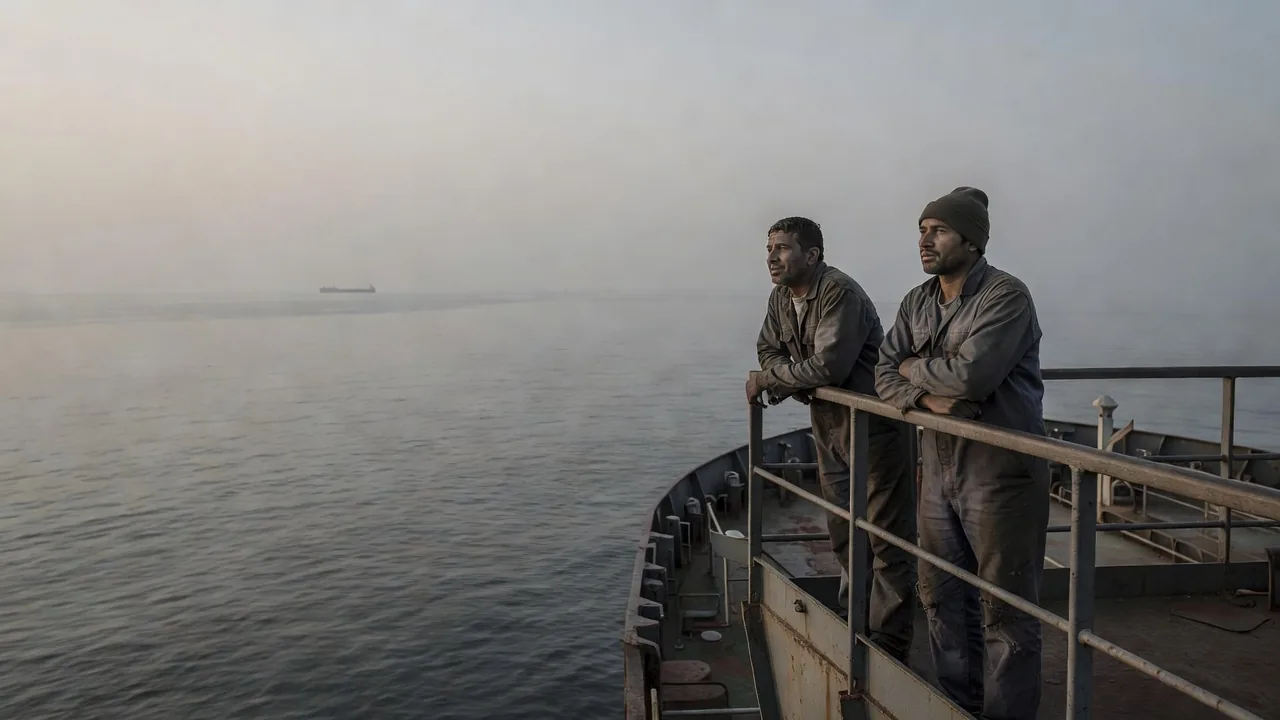
Six ships through the Strait of Hormuz, six dollars more per barrel
What divides
The divergence score measures the framing gap between the world’s newsrooms on the same event. The higher the score, the more the narrative fractures along borders.
Hormuz: the escalation changes target, and the Gulf capitals hit do not break ranks
This week the escalation changed target: it began with American strikes on Iranian positions and ended with Iranian strikes on four states hosting US bases — Kuwait, the United Arab Emirates, Jordan and Bahrain. The Gulf capitals that were hit condemn without breaking ranks: the Gulf Cooperation Council, Qatar and Jordan call for the strait to reopen unconditionally, Saudi Arabia calls the attack on the SIDR Iranian, and none steps away from the American alignment. The effects extend beyond the region: the rise in fuel prices is recorded as far as the pumps of Kaduna, Nigeria, at 1,330 naira, and by the Pakistani press. Thirteen countries cover the escalation in this week's corpus, and not one quotes a Kuwaiti or Emirati official at first hand — the two states struck on September 3 are commented on, never heard.
Under the radar
Weak signals and narrative shifts are the Prism’s deep analysis: what newsrooms have not yet named. Subscribers only. The blind spots stay free.
Nepal asks for climate compensation; three other countries read the flood through climate
Uber leaves two African countries, and the exit drops out of the business coverage
A ballistic analysis attributes the wedding strike to American munitions
Morocco's responsibility in the mass entry into Ceuta
Attribution of the attempted drone attack at Leipzig airport
China's share in the Bhote Koshi disaster
The plan approved on September 3 does not settle Seat's fate, forty years after it joined the Volkswagen group. German coverage keeps the supervisory board's unexpected unanimity and the count of 50,000 jobs; Belgian coverage distinguishes the new plan from the cumulative 100,000 cuts since 2024; Swedish coverage makes the same addition; South African coverage stays with the share-price reaction. Madrid is the only capital to separate the global plan from Seat's fate, left conditional, with its works council putting the electrification investment at stake at 10 billion euros. The German press notes its own silence on the subject.
Tim Cook's succession by John Ternus was read in Paris, Berlin and Madrid as a make-up exam on artificial intelligence — an acknowledged lag, dependence on Google, financial health taken for granted. New Delhi and Beijing read it as an industrial question: relocating iPhone assembly to the subcontinent on one side, industrial ties and tariff pressure on the Asian supply chain on the other. The new chief executive's first public act was to open an account on the Chinese network Weibo, which passed 24,000 followers overnight — a gesture only Chinese coverage records.
82 deaths were recorded on the Spanish side during the crossing of July 30 and 31, a figure present in the August 29 subject. In the coverage of the September 3 debate in Congress, the Spanish, Argentine and Dutch perspectives treat Pedro Sánchez's political isolation without taking up that count, while the Hungarian, Mexican, Romanian and British perspectives mention it. Mexico is the only country to set the fate of African migrants against the reception Spain gave Ukrainian and Venezuelan refugees. Morocco's official reaction is absent from three further coverages (Belgian, Swiss, Romanian), and the corpus contains no Moroccan perspective for want of a collected source: that absence cannot be attributed to an editorial choice.
Canada, Brazil, Germany and Nigeria covered September 3 without mentioning the Iranian strike on the Emirati base at Al Minhad, though it was one of the day's two escalation points alongside Ahmed Al Jaber in Kuwait. The Canadian, German and French framing is technical and military — a costed figure for the war to Washington, ballistic analysis, an inventory of the systems targeted — and leaves little room for the Gulf capitals themselves. None of the thirteen perspectives published on this subject quotes a Kuwaiti or Emirati official at first hand; the Pakistani and Nepali press note that absence in their own coverage.
What we bet
Dated, falsifiable predictions, judged publicly. The statement and deadline are free — the reasoning behind them is for subscribers. We settle them later, won and lost alike.
Unlock
edition N°36
The statement is free. Reading the world, less so. Access the weak signals, the narrative shifts and the full reasoning behind every prediction.
- 3 weak signals decrypted in full
- 3 narrative shifts with their evidence
- The reasoning of each of the 5 predictions
- Full access to the 20 subjects of the week
- All archives, from the start to today
An in-depth feature, international insights and developments to follow in upcoming editions.
$4.99/month$39.99 /year · save 33%
SHARE THIS RECAP
SHARE THIS COMPARISON
Show your friends how the world sees the same news differently.
Subscribe to the newsletter
Get the free Prism summary every Saturday.