Common ground and differences in coverage across the media analysed.
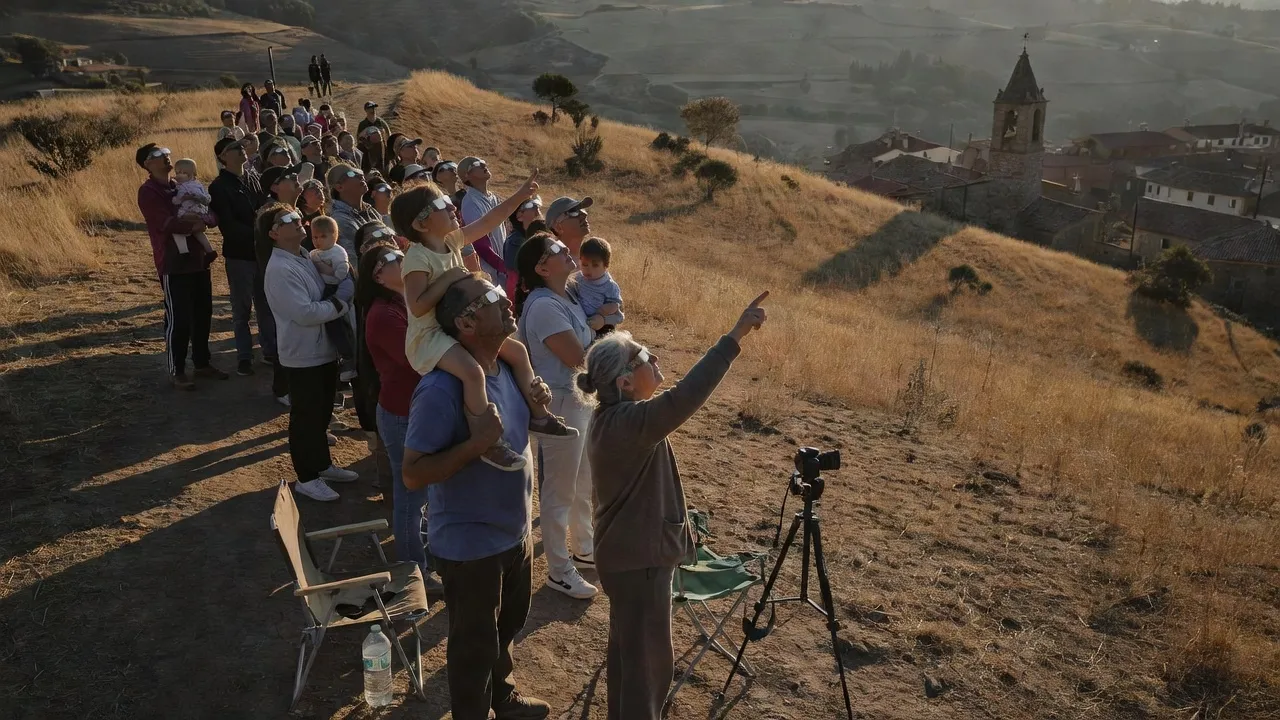
A total solar eclipse will occur on August 12, 2026, with a path of totality that crosses mainland Spain, Greenland, Iceland, and the Arctic.
This will be the first total eclipse visible from mainland Spain since 1905, and the first visible from central or western Europe since 1999.
Outside the path of totality, each country in the dataset will experience only a partial eclipse, with varying rates of coverage depending on latitude and region.
Spain and Romania treat the event as a practical management issue (tourist traffic, fire risk, consular warnings to travelers), while other countries in the corpus describe it primarily as a distant astronomical phenomenon, measured in percentages of eclipse and time.
Almost the entire corpus adopts a strictly scientific framework, while the Argentine press publishes a parallel astrological reading of the event, without explicitly distinguishing between the two approaches in its columns.
Pakistan, whose territory is not affected by a notable eclipse, covers the eclipse by relaying the British experience and an American scientific puzzle, while other countries in the corpus first document their own national visibility, even if partial.
This grouping describes the publications analysed, not the position of these countries’ populations or of their governments.
What the coverage of each country leaves aside, while others put it forward.
Spain
France
Argentina
Preview: 3 of 9 media perspectives. Syntheses of the media analysed — not direct quotations. Method & limitations
Spain's capital, Madrid, is gauging the impact of a rare astronomical event not seen since 1905, amid concerns over a tourist rush, overcrowding in Ibiza, and wildfire risks in rural Spain.
4 sources · View sources
France is experiencing the frustration of almost witnessing a total solar eclipse: up to 99% of the Sun will be obscured in the Southwest on August 12, but outside the path of totality that neighboring Spain will see.
5 sources · View sources
Algiers details, province by province, a partial eclipse that comes close to totality and recalls the eye precautions required by the CRAAG.
2 sources · View sources
DOMINANT ANGLE
Spain's capital, Madrid, is gauging the impact of a rare astronomical event not seen since 1905, amid concerns over a tourist rush, overcrowding in Ibiza, and wildfire risks in rural Spain.
ANALYSIS
Madrid, August 10, 2026.
DOMINANT ANGLE
France is experiencing the frustration of almost witnessing a total solar eclipse: up to 99% of the Sun will be obscured in the Southwest on August 12, but outside the path of totality that neighboring Spain will see.
ANALYSIS
Paris, August 10, 2026.
DOMINANT ANGLE
Algiers details, province by province, a partial eclipse that comes close to totality and recalls the eye precautions required by the CRAAG.
ANALYSIS
Alger, August 10, 2026.
DOMINANT ANGLE
Rome is gauging the difference between its partially veiled sky and the total spectacle promised to Spain, between Liguria which will nearly reach totality and Sicily which will only see 40 %.
ANALYSIS
Rome, August 10, 2026.
DOMINANT ANGLE
Warsaw is bracing for a partial eclipse: Poland will experience only a partial eclipse on August 12, with noticeable regional variations, and is counting on the peak of the Perseid meteor shower the same night to make the most of the spectacle.
ANALYSIS
Warsaw, August 10, 2026.
DOMINANT ANGLE
Bucharest is warning Romanians traveling to Spain: the Ministry of Foreign Affairs is cautioning against the risk of fire in the Valencia region on August 12, the day of the total eclipse.
ANALYSIS
Bucharest, August 10, 2026.
DOMINANT ANGLE
Buenos Aires is viewing the total eclipse on August 12 as an event to be followed from abroad, between scientific coverage from NASA and an astrological interpretation presented by Clarín.
ANALYSIS
Buenos Aires, August 10, 2026.
DOMINANT ANGLE
The United States is witnessing an eclipse with two distinct outcomes: a spectacular total eclipse for Europe, and a minimal 4% obscuration on American soil, from Alaska to North Carolina.
ANALYSIS
The United States will experience a partial eclipse on August 12, but it will be barely noticeable.
DOMINANT ANGLE
Islamabad views the August 12 eclipse through the British lens and an American scientific mystery, due to a lack of national experience in the path of totality or notable partiality.
ANALYSIS
Islamabad, August 10, 2026.
Explore every perspective on this subject across 9 countries.
Compare viewpoints and see where they diverge.
published on
countries
sources
articles
gap
On Wednesday, August 12, 2026, a total solar eclipse will pass through Greenland, Iceland, the Arctic, and northern Spain, where the total eclipse has not been observed since 1905. France will experience a partial occultation exceeding 99% in the Southwest, Italy will have an unequal partial eclipse across regions, and Algeria will have an occultation reaching up to 98.6% in certain wilayas according to the CRAAG. In Spain, the government anticipates around 446,000 additional visitors, between tourist influx in the Balearic Islands and preventive measures against the risk of fire in rural towns.
Measured with the previous method (distance between texts), on a different scale.