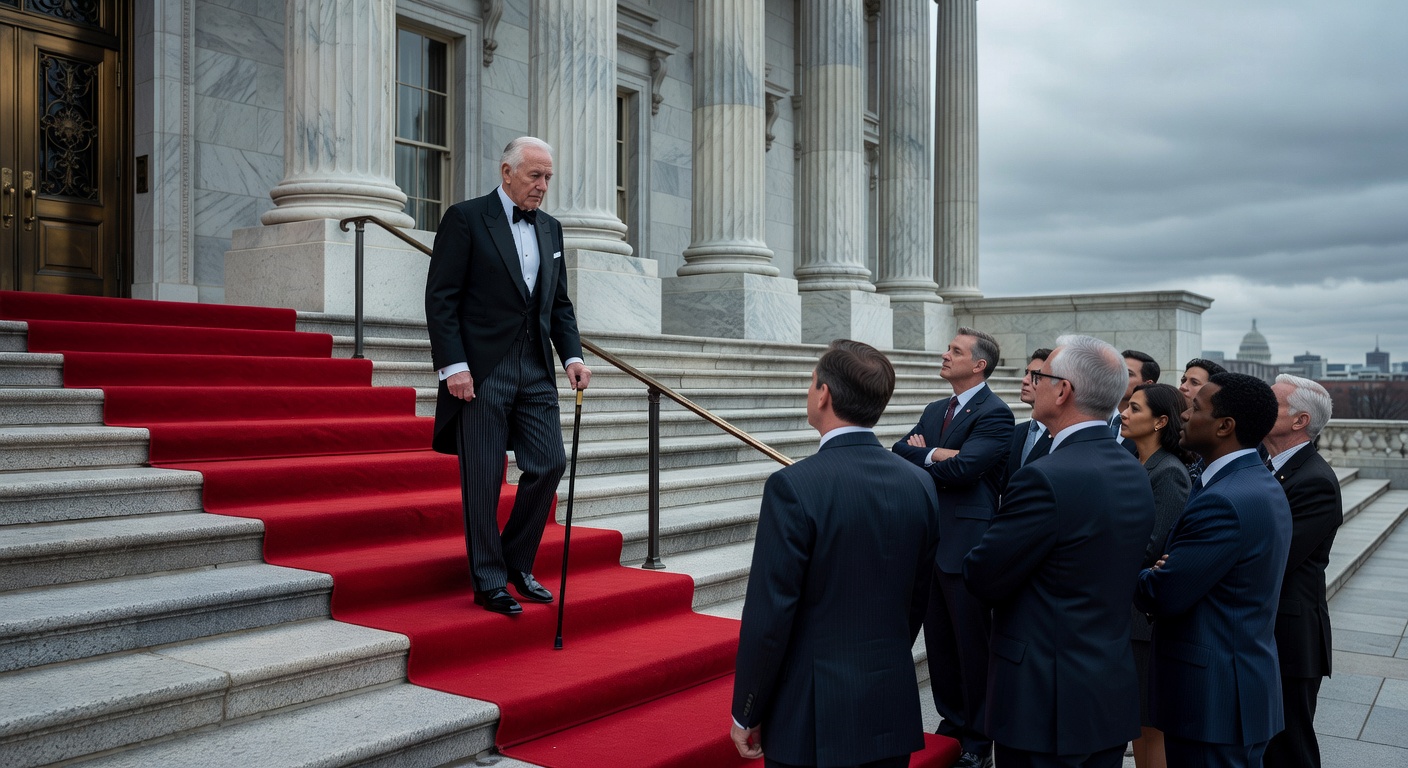
King Charles III addresses U.S. Congress: transatlantic alliance 'cannot rest on past achievements'
April 29, 2026·13 COUNTRIES
13countries·20sources·30articles
Asia (4)
Americas (2)
Russia & CIS (2)
Europe (2)
Other (1)
Oceania (1)
Middle East (1)
Asia
Americas
Russia & CIS
Europe
Other
Oceania
Middle East
Charles IIIdiplomatieOTANalliance transatlantiqueÉtats-UnisRoyaume-UniCongrès américainTrump
EXPLORE THIS STORY
Context
For the first time since 1991, a reigning British monarch addressed the United States Congress. Before the assembled lawmakers, Charles III recalled the foundations of the Western democratic order — separation of powers, the Atlantic alliance, support for Ukraine — in a speech met with a standing ovation. No reigning sovereign had delivered such an address to Congress amid tensions this acute. The event was diplomatically arranged to bypass governmental channels strained by frictions between London and Washington.
The visit comes as the transatlantic alliance is widely seen to be facing its most serious crisis in decades. Three issues overlap: an open disagreement over the line to take toward Iran, doubts about the American commitment within NATO, and support for Ukraine that some describe as now conditional on concessions. Against this backdrop, the royal address functioned as a stress test for the alliance.
The actors involved draw opposing readings. For some, the visit consolidates a historic partnership and affirms democratic values; for others, it amounts above all to a carefully staged communications operation. On Ukraine, some amplify the call for resolve as a strong signal, while others play down its reach.
One point remains disputed: the reference to Iran. The message was publicly linked to a hardline stance on the nuclear issue without that link being explicitly endorsed by the speaker, which has fed divergent interpretations.
In the end, the applause came and the images circulated, but none of the underlying divergences — Iran, NATO, Ukraine — was resolved by the visit.