SHARE THIS COMPARISON
Show your friends how the world sees the same news differently.
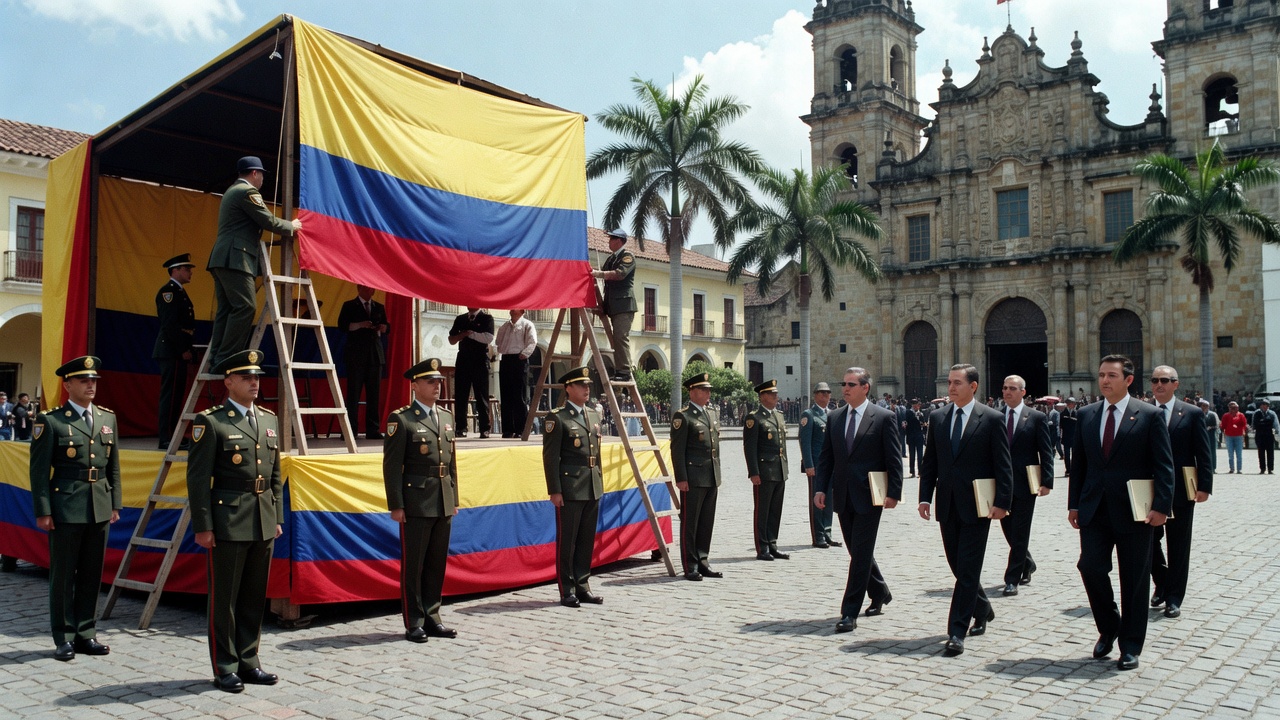
Far-right president-elect Abelardo De La Espriella announces closing 14 embassies and severing ties with Cuba and Nicaragua, aligning Bogota with the Trump-Milei axis. His August 7 inauguration, moved to Cali, divides opinion, while Western coverage of the story remains nearly absent.
FRAMING GAP
29/100LOW
Coverages are relatively similar
Here are the main framing differences identified between media coverages.
ANALYSIS BY COUNTRY
 ARGENTINA
DOMINANT ANGLE
Buenos Aires welcomes De La Espriella's diplomatic break with Cuba and Nicaragua as regional vindication of Javier Milei's anti-tyranny doctrine, while monitoring Medellín's potential role in the Trump-backed Shield of the Americas as a strategic arena for alignment with Washington.
Dominant angle identified — does not reflect unanimity of this country’s media
KEY POINTS
- •14 embassies closed, including complete diplomatic break with Cuba and Nicaragua termed 'tyrannies' by De La Espriella
- •Medellín will serve as Colombia's headquarters for the Shield of the Americas, Trump's anti-drug alliance comprising 16 countries including Argentina
- •Vice president-elect José Manuel Restrepo expressed interest to Washington in joining the security alliance
BIASES
Milei-centric framing: De La Espriella's diplomatic rupture is systematically linked to Argentina's anti-tyranny doctrine and positioned as validationPreference for regional geopolitical positioning (Shield of the Americas) over Colombian domestic political context and cabinet controversiesLimited coverage of Cuban and Nicaraguan official responses to Colombia's announced diplomatic break
 CHILE
CHILEDOMINANT ANGLE
Santiago reads De La Espriella's diplomatic overhaul as the opening salvo of a far-right reorientation: closing embassies to Cuba, Nicaragua, and other nations while reopening ties to Jerusalem.
Dominant angle identified — does not reflect unanimity of this country’s media
KEY POINTS
- •De La Espriella announces closure of 14 embassies—including Cuba, Haiti, and Nicaragua—plus approximately 15 consulates effective upon taking office August 7
- •Total diplomatic rupture reserved solely for Cuba and Nicaragua, justified by rejection of any 'ties with tyrannies'
- •Reopening the Colombian embassy in Jerusalem and shelving plans for a Palestinian mission, a reorientation branded 'diplomatic restructuring' by El Ciudadano
BIASES
Ideological framing: outlets associate the closures with an ultraconservative shift rather than administrative efficiency gainsReliance on official De La Espriella statements with limited independent diplomatic commentary or analysisMinimal coverage of responses from Cuba, Nicaragua, or Colombian opposition figures (Petro faction and left) to the announcement
 COLOMBIA
DOMINANT ANGLE
Bogota assesses the scope of the transition ahead for president-elect Abelardo De La Espriella, caught between accelerated diplomatic realignment and persistent controversy over the venue of his inauguration.
Dominant angle identified — does not reflect unanimity of this country’s media
KEY POINTS
- •Senator Iván Cepeda denounced the inauguration scheduled at a military garrison in Cauca: 'We fear repressive action, violent action against the civilian population.'
- •Vivian Aisen has been appointed Israeli ambassador to Colombia, restoring diplomatic ties severed by Gustavo Petro in May 2024.
- •Logistics and television broadcast contracts for the power transition total 5.95 billion pesos, according to the presidency office.
BIASES
Security-focused framing: heavy emphasis on public-order risks tied to the inauguration venue, at the expense of programmatic analysis of the incoming government's agenda.Reliance on institutional sources (Congress, presidency office, official appointments), with minimal representation from civil society or grassroots voices in Cauca.Limited coverage of the substance behind the announced diplomatic shift with Cuba and Nicaragua; available reporting focuses predominantly on the ceremony venue and cabinet appointments.
 ÉQUATEUR
DOMINANT ANGLE
Quito weighs Colombia's diplomatic shift through a practical lens: the bilateral electricity tariff agreement becomes the key lens through which Ecuador assesses the incoming administration.
Dominant angle identified — does not reflect unanimity of this country’s media
KEY POINTS
- •Daniel Noboa confirms an 'initial agreement' with De La Espriella on bilateral electricity tariff pricing, with up to 370-380 additional megawatts expected through the interconnection line
- •De La Espriella announces the closure of 14 embassies, including Cuba, Haiti, and Nicaragua, with diplomatic breaks limited primarily to Cuba and Nicaragua
- •The August 7 inauguration is relocated to Cali following the abandonment of the initial Popayan site, while Gustavo Petro sardonically proposes the ceremony take place in Miami
BIASES
Energy-centered framing: priority given to bilateral electricity supply issues over Colombian domestic politicsPreference for official Ecuadorian sources (Daniel Noboa's statements to Radio Centro) over independent Colombian counter-analysisLimited coverage of the regional scope of the rupture with Cuba and Nicaragua, treated factually without broader geopolitical analysis
 PÉROU
PÉROUDOMINANT ANGLE
Lima observes the regional implications of Colombia's incoming president's announced diplomatic break with Cuba and Nicaragua, ten days before an inauguration already shadowed by logistical and political tensions.
Dominant angle identified — does not reflect unanimity of this country’s media
KEY POINTS
- •De La Espriella announces the closure of at least 14 embassies, including Cuba, Haiti, and Nicaragua, plus roughly 15 consulates (RPP Noticias).
- •Total rupture only with Cuba and Nicaragua: the incoming president states there will be "no ties with tyrannies."
- •The August 7 inauguration is relocated from Popayan to Cali due to ash fallout from Purace volcano (Diario Correo).
BIASES
Diplomatic-institutional framing: emphasis placed on transition logistics and embassy listings rather than internal Colombian political debate.Preference for official sources: announcements reported via the incoming president's social media statements, without direct counterargument cited.Limited coverage of Colombian left's response: Petro's positions and his supporters' views on the Cuba rupture are not developed in available articles.
 VENEZUELA
DOMINANT ANGLE
Caracas monitors the announced break by Colombian president-elect Abelardo De La Espriella with Cuba and Nicaragua, read as a disavowal of the Bolivarian axis at the border.
Dominant angle identified — does not reflect unanimity of this country’s media
KEY POINTS
- •De La Espriella announces closure of at least 14 embassies (Cuba, Nicaragua, Haiti...) and 15 consulates, effective upon his August 7 swearing-in (Efecto Cocuyo, Contrapunto VE)
- •Formal diplomatic break only with Cuba and Nicaragua: 'there will be no link whatsoever with tyrannies' (Efecto Cocuyo)
- •The August 7 swearing-in could be held in Cauca rather than Bogota, in a claimed symbolic echo to Simon Bolivar's 1821 investiture (Analitica)
BIASES
Colombia-centered framing: articles analyze the decision from Bogota without citing official Venezuelan reactionPreference for analytical sources (Analitica) on the symbolism of Cauca over diplomatic reactions from CaracasLimited coverage of practical consequences for Venezuela itself, whose embassy does not appear in the list of announced closures
ARGENTINADOMINANT ANGLE
Buenos Aires welcomes De La Espriella's diplomatic break with Cuba and Nicaragua as regional vindication of Javier Milei's anti-tyranny doctrine, while monitoring Medellín's potential role in the Trump-backed Shield of the Americas as a strategic arena for alignment with Washington.
Dominant angle identified — does not reflect unanimity of this country’s media
KEY POINTS
- •14 embassies closed, including complete diplomatic break with Cuba and Nicaragua termed 'tyrannies' by De La Espriella
- •Medellín will serve as Colombia's headquarters for the Shield of the Americas, Trump's anti-drug alliance comprising 16 countries including Argentina
- •Vice president-elect José Manuel Restrepo expressed interest to Washington in joining the security alliance
BIASES
Milei-centric framing: De La Espriella's diplomatic rupture is systematically linked to Argentina's anti-tyranny doctrine and positioned as validationPreference for regional geopolitical positioning (Shield of the Americas) over Colombian domestic political context and cabinet controversiesLimited coverage of Cuban and Nicaraguan official responses to Colombia's announced diplomatic break
CHILEDOMINANT ANGLE
Santiago reads De La Espriella's diplomatic overhaul as the opening salvo of a far-right reorientation: closing embassies to Cuba, Nicaragua, and other nations while reopening ties to Jerusalem.
Dominant angle identified — does not reflect unanimity of this country’s media
KEY POINTS
- •De La Espriella announces closure of 14 embassies—including Cuba, Haiti, and Nicaragua—plus approximately 15 consulates effective upon taking office August 7
- •Total diplomatic rupture reserved solely for Cuba and Nicaragua, justified by rejection of any 'ties with tyrannies'
- •Reopening the Colombian embassy in Jerusalem and shelving plans for a Palestinian mission, a reorientation branded 'diplomatic restructuring' by El Ciudadano
BIASES
Ideological framing: outlets associate the closures with an ultraconservative shift rather than administrative efficiency gainsReliance on official De La Espriella statements with limited independent diplomatic commentary or analysisMinimal coverage of responses from Cuba, Nicaragua, or Colombian opposition figures (Petro faction and left) to the announcement
COLOMBIADOMINANT ANGLE
Bogota assesses the scope of the transition ahead for president-elect Abelardo De La Espriella, caught between accelerated diplomatic realignment and persistent controversy over the venue of his inauguration.
Dominant angle identified — does not reflect unanimity of this country’s media
KEY POINTS
- •Senator Iván Cepeda denounced the inauguration scheduled at a military garrison in Cauca: 'We fear repressive action, violent action against the civilian population.'
- •Vivian Aisen has been appointed Israeli ambassador to Colombia, restoring diplomatic ties severed by Gustavo Petro in May 2024.
- •Logistics and television broadcast contracts for the power transition total 5.95 billion pesos, according to the presidency office.
BIASES
Security-focused framing: heavy emphasis on public-order risks tied to the inauguration venue, at the expense of programmatic analysis of the incoming government's agenda.Reliance on institutional sources (Congress, presidency office, official appointments), with minimal representation from civil society or grassroots voices in Cauca.Limited coverage of the substance behind the announced diplomatic shift with Cuba and Nicaragua; available reporting focuses predominantly on the ceremony venue and cabinet appointments.
ÉQUATEURDOMINANT ANGLE
Quito weighs Colombia's diplomatic shift through a practical lens: the bilateral electricity tariff agreement becomes the key lens through which Ecuador assesses the incoming administration.
Dominant angle identified — does not reflect unanimity of this country’s media
KEY POINTS
- •Daniel Noboa confirms an 'initial agreement' with De La Espriella on bilateral electricity tariff pricing, with up to 370-380 additional megawatts expected through the interconnection line
- •De La Espriella announces the closure of 14 embassies, including Cuba, Haiti, and Nicaragua, with diplomatic breaks limited primarily to Cuba and Nicaragua
- •The August 7 inauguration is relocated to Cali following the abandonment of the initial Popayan site, while Gustavo Petro sardonically proposes the ceremony take place in Miami
BIASES
Energy-centered framing: priority given to bilateral electricity supply issues over Colombian domestic politicsPreference for official Ecuadorian sources (Daniel Noboa's statements to Radio Centro) over independent Colombian counter-analysisLimited coverage of the regional scope of the rupture with Cuba and Nicaragua, treated factually without broader geopolitical analysis
PÉROUDOMINANT ANGLE
Lima observes the regional implications of Colombia's incoming president's announced diplomatic break with Cuba and Nicaragua, ten days before an inauguration already shadowed by logistical and political tensions.
Dominant angle identified — does not reflect unanimity of this country’s media
KEY POINTS
- •De La Espriella announces the closure of at least 14 embassies, including Cuba, Haiti, and Nicaragua, plus roughly 15 consulates (RPP Noticias).
- •Total rupture only with Cuba and Nicaragua: the incoming president states there will be "no ties with tyrannies."
- •The August 7 inauguration is relocated from Popayan to Cali due to ash fallout from Purace volcano (Diario Correo).
BIASES
Diplomatic-institutional framing: emphasis placed on transition logistics and embassy listings rather than internal Colombian political debate.Preference for official sources: announcements reported via the incoming president's social media statements, without direct counterargument cited.Limited coverage of Colombian left's response: Petro's positions and his supporters' views on the Cuba rupture are not developed in available articles.
VENEZUELADOMINANT ANGLE
Caracas monitors the announced break by Colombian president-elect Abelardo De La Espriella with Cuba and Nicaragua, read as a disavowal of the Bolivarian axis at the border.
Dominant angle identified — does not reflect unanimity of this country’s media
KEY POINTS
- •De La Espriella announces closure of at least 14 embassies (Cuba, Nicaragua, Haiti...) and 15 consulates, effective upon his August 7 swearing-in (Efecto Cocuyo, Contrapunto VE)
- •Formal diplomatic break only with Cuba and Nicaragua: 'there will be no link whatsoever with tyrannies' (Efecto Cocuyo)
- •The August 7 swearing-in could be held in Cauca rather than Bogota, in a claimed symbolic echo to Simon Bolivar's 1821 investiture (Analitica)
BIASES
Colombia-centered framing: articles analyze the decision from Bogota without citing official Venezuelan reactionPreference for analytical sources (Analitica) on the symbolism of Cauca over diplomatic reactions from CaracasLimited coverage of practical consequences for Venezuela itself, whose embassy does not appear in the list of announced closures
CROSS-PERSPECTIVE ANALYSIS
CROSS-ANALYSIS
CONSENSUS POINTS
- 1Colombian president-elect Abelardo De La Espriella announces the closure of 14 embassies and approximately fifteen consulates effective upon his inauguration on August 7, 2026
- 2The formal and complete diplomatic break concerns only Cuba and Nicaragua, citing a refusal of any link with dictatorships
- 3The inauguration ceremony on August 7, initially planned in Popayan, has been moved to Cali for logistical and security reasons
- 4Official reactions from Cuba and Nicaragua to the announcement of the break remain poorly or undocumented in available perspectives
FRAMING DIFFERENCES
Ideological reading of the break
Argentine and Chilean press associate the break with a regional ideological shift (anti-dictatorship doctrine carried by Javier Milei, reorientation toward Israel), while Colombian, Ecuadorian and Peruvian press prioritize institutional and logistical framing without partisan interpretation.
Frame this way
Frame the opposite
Scope for the Bolivarian axis
Argentina reads the break as confirmation of a regional anti-dictatorship alignment alongside Washington, whereas Venezuela perceives it with concern as a disavowal of the Bolivarian alliance at its border.
Frame this way
Frame the opposite
Pragmatic vs geopolitical priority
Ecuador emphasizes immediate bilateral economic interest (electricity tariff agreement with Bogota) rather than the diplomatic scope of the break, whereas Argentina and Venezuela frame it as a major geopolitical regional key.
Frame this way
Frame the opposite
GEOPOLITICAL CLUSTERS
Anti-dictatorship ideological alignment
Shared narrative
The Colombian break with Cuba and Nicaragua is presented as the regional echo of an anti-dictatorship shift, associated with a rapprochement with Israel and security alliances promoted by Washington.
Institutional and pragmatic coverage
Shared narrative
Attention is focused on the logistics of the presidential transition, the venue of the inauguration and concrete bilateral agreements, rather than on the ideological or geopolitical scope of the diplomatic break.
Bolivarian axis vigilance
Shared narrative
The break is observed from Caracas as a disavowal of the Bolivarian alliance at the border, without direct consequences for Venezuela or an official Venezuelan reaction being documented yet.
OMISSIONS ANALYSIS
ColombiaOmitted topics
detailed content of the diplomatic break with Cuba and Nicaraguaofficial reactions from Cuba and Nicaragua to the announcement
Highlighted by
PeruOmitted topics
reaction from the Colombian left (Gustavo Petro and his supporters) to the break with Cuba
Highlighted by
VenezuelaOmitted topics
official reaction of the Venezuelan government to the breakstatus of the Venezuelan embassy in Bogota in the closure list
GEOPOLITICAL CONTEXT
The diplomatic break announced by Colombian president-elect Abelardo De La Espriella with Cuba and Nicaragua, combined with the closure of 14 embassies and an explicit rapprochement with Israel, reflects a regional realignment between governments aligned with the anti-dictatorship doctrine carried by Argentina's Javier Milei and the anti-drug alliance Shield of the Americas promoted by Washington, and a Bolivarian axis (Cuba, Nicaragua, Venezuela) weakened by this disavowal. Coverage remains almost exclusively Latin American: at the time of these perspectives, North American and European press have not yet relayed the event, even though the security alliance mentioned directly involves Washington.
AI-powered analysis