EXPLORE THIS STORY
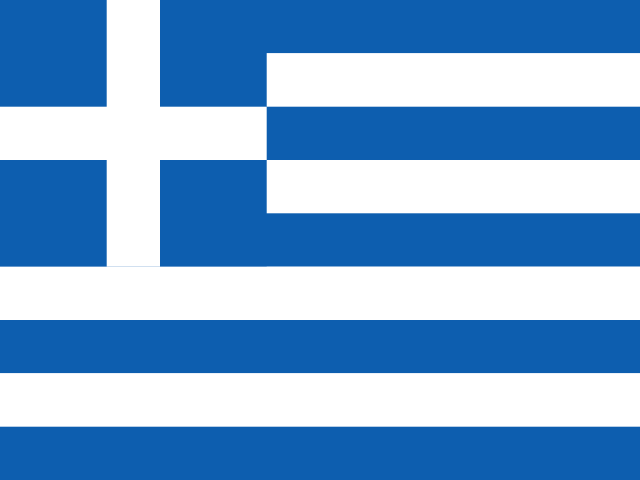
GREECE PERSPECTIVE
MIDDLE EAST CONFLICT: IRANIAN STRIKES ON ISRAEL AND INTERNATIONAL REACTIONS
Single source
DOMINANT ANGLE
Geo-economic approach emphasizing impacts on international maritime trade
Dominant angle identified — does not reflect unanimity of this country’s media
ANALYSIS
The Greek media coverage of the conflict in the Middle East reveals a pragmatic geopolitical approach, strongly influenced by Greece's strategic position in the eastern Mediterranean and its economic interests. The emphasis on the closure of the Strait of Hormuz and the coalition of twenty countries for its reopening indicates major concerns about global economic implications, particularly sensitive for a Mediterranean country dependent on international maritime trade. This focus on logistical and energy issues shows that Greek Reporter prioritizes the angle of practical consequences over pure geopolitical analysis.
The adopted tone remains largely factual but with accusatory nuances towards Iran, systematically portrayed as the aggressor in the narrative. The use of terms like 'criminal attacks' in Iranian citations are reported without balancing contextualization, while Israeli denials ('not aware of a strike') are presented neutrally. This asymmetry reveals an implicitly pro-Western framing, consistent with Greece's diplomatic alignment with NATO and the EU.
The silences are particularly revealing: no mention of the origins of the conflict, civilian casualties, or the historical context of Iranian-Israeli tensions. The nuclear dimension is treated technically, without exploring proliferation issues or past diplomatic negotiations. This depoliticized approach suggests a desire not to take a stance on the most controversial aspects of the Iranian dossier.
The narrative framing clearly positions Iran as the main antagonist of an expanded Western coalition, including traditional Greek allies. The explicit mention of French, British, and German participation in the coalition to reopen Hormuz reinforces the impression of a united Western front, in which Greece naturally aligns itself. This presentation reflects Greek diplomatic priorities: Atlantic solidarity, European integration, and protection of Mediterranean economic interests against regional disruptions.
KEY POINTS
- Emphasis on economic consequences (closure of the Strait of Hormuz)
- Implicit pro-Western framing in the presentation of the protagonists
- Silence on the origins of the conflict and the historical geopolitical context
- Focus on technical/logistical aspects rather than diplomatic ones
- Narrative alignment with NATO and EU positions
COGNITIVE BIASES IDENTIFIED
Mediterranean geo-economic bias favoring maritime commercial issues
Atlanticist bias reflecting Greek alignment with Western positions
European proximity bias in the selection of sources and perspectives
Does this analysis seem accurate?