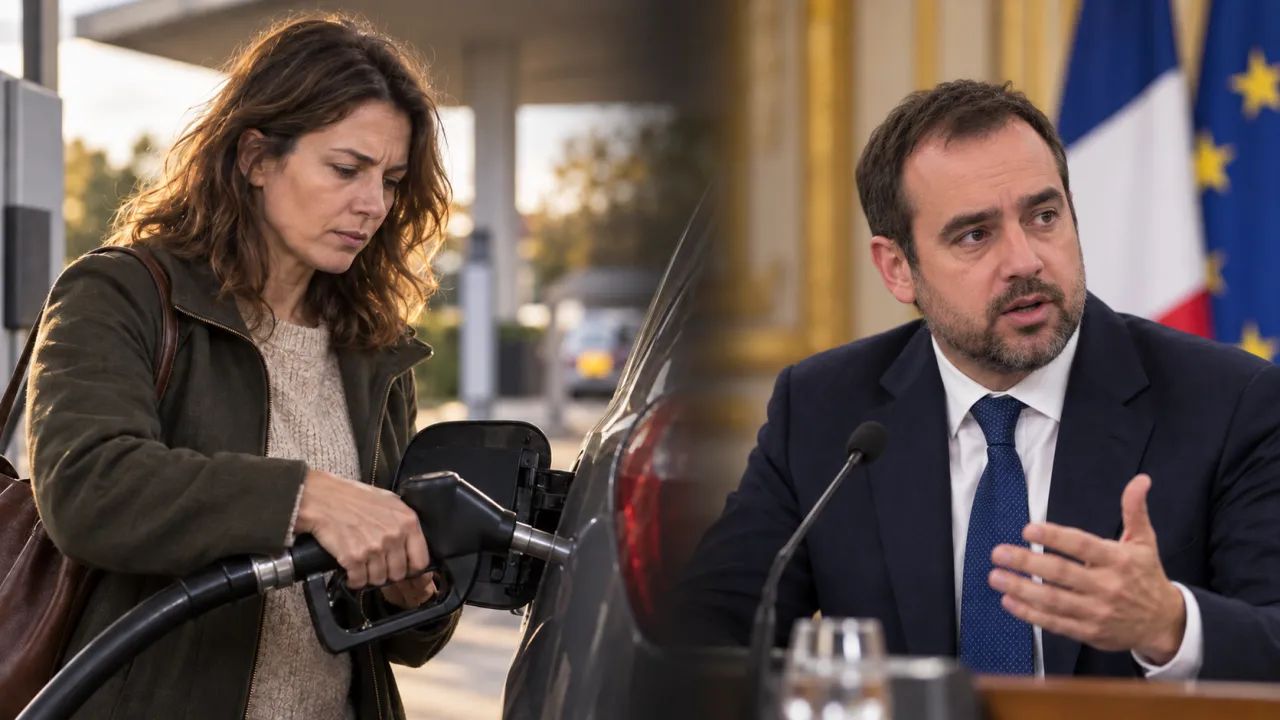
Diesel hits record highs on both sides of the Atlantic and every government improvises its own answer at the pump
published on
countries
sources
articles
From one continent to another, the surge in diesel prices does not elicit the same response: Greece and Hungary are helping their motorists while Bangladesh and Bolivia are cutting their subsidies, as Mexico sees it as a fuel theft problem and the United States, an internal Republican issue.
No international coordination has been decided: each state is acting alone, without a common measure decided to date.
Stolen fuel, elsewhere
In Mexico, the global surge is not the issue: stolen fuel is. El Financiero reports that the US Treasury Department has identified gas stations linked to the Jalisco New Generation Cartel (CJNG), founded by Nemesio Oseguera Cervantes and led, since the death of "El Mencho" on February 22, by his son-in-law Juan Carlos Valencia, aka "El 03".
The "huachicol" - the theft of fuel from Pemex oil pipelines - is one of the cartel's main sources of non-drug related revenue, according to the OFAC, cited by El Financiero. The network has been detected in Jalisco, Veracruz, and Michoacán, where Iván Cazarín Molina, aka "El Tanque", is accused of looting the pipelines before selling the fuel through eleven gas stations.
On the same day, the Fiscalía General de la República transferred the investigation into more than 59 million litres of unaccredited fuel seized in San José Iturbide, Guanajuato, to its organized crime unit, due to a lack of documents proving the origin of the hydrocarbon. Security Secretary Omar García Harfuch announced upcoming arrests.
Help or cut the subsidy
In Greece, Kyriakos Mitsotakis has chosen targeted subsidies over a general tax cut. In his weekly report on Sunday, the Prime Minister announced an intervention on domestic fuel to bring its starting price below 1.75 euros per liter, compared to around 2 euros without intervention, and extended the heating allowance to all households regardless of their energy source. He made a temporary reduction in road fuel taxation conditional on a green light from the European Union, which is still pending.
« This decision will cause more inflation, but it's the right decision, we had to make it »
In Hungary, the Public Treasury has been paying out an automatic compensation of 20,000 forints, in four installments, to owners of exclusively diesel vehicles with a maximum of 150 horsepower since Monday, without requiring any application: the tax administration draws directly from the vehicle register. The government calculates that this amount should cover a gap of around 5,000 forints per fill-up compared to the old protected price.
In contrast, Bangladesh raised its administered prices by 20 takas per liter on Monday, a second increase since the BNP government came to power in February, justified by the losses of the public company BPC. The decision triggered an internal ultimatum within the party: in Chittagong, the leadership of the Chhatra Dal, the BNP's student organization, summoned a local official to explain himself after he criticized the increase on Facebook.
In Bolivia, President Rodrigo Paz eliminated all diesel subsidies on Friday, bringing the price to 17.95 bolivianos per liter — now higher than in Brazil, Chile, and Argentina, with only Peru being more expensive in the region. Transporters in La Paz and Santa Cruz responded with threats of blockades, and the city of La Paz is already demanding an additional 63 million bolivianos to maintain its bus network.
A fracture among the Republicans
In the United States, the surge in diesel prices has reignited an internal debate within the ruling party, 45 days before the midterm elections. On Saturday evening, Iowa Republican Senator Chuck Grassley publicly urged Donald Trump to impose an embargo on American diesel exports, comparing the situation to the agricultural embargos of the 1970s, according to The Hill.
« why doesn't President Trump impose an embargo on diesel exports, like presidents in the 70s imposed embargos on agricultural products because food prices were inflated »
The Hill notes that the White House has not yet publicly ruled on this request, opening a line of fracture between protectionist elected officials and a silent executive, as the economic mood of voters deteriorates before the election.
On the ground, CNBC describes a triple vice gripping American companies: customs duties, fuel price hikes, and a rise in Federal Reserve rates, the first increase in three years. At Original Saw Co., a manufacturer of industrial saws with 25 employees in Iowa, boss Allen Eden explains that a motor saw support went from 42 to 87 dollars this summer, forcing him to stock more parts due to fear of a shortage.
Very different readings
In Nigeria, the NMDPRA regulator recalled on September 19 that it does not set pump prices, as the petroleum industry law only allows it to intervene in the event of a "formally declared" market failure — which has not been observed to date; in exchange, it promises enhanced surveillance against speculation. President Bola Tinubu is betting on another approach, conversion to compressed natural gas: more than 120,000 vehicles have already been converted, more than 90 stations have been opened, and an instruction has been given to governors to pass on these savings to transport tariffs as of October 1.
In Peru, without subsidies or taxes to adjust, the state is betting on transparency: the public platform Facilito, managed by the Osinergmin regulator, displays the declared prices station by station, with a gap that can reach 3.80 soles per gallon of diesel between neighborhoods in Lima. The same Peruvian press links the global surge to a drone strike by Ukrainians on the Moscow refinery of Kapotnia, which killed three people and forced Russia to ration gasoline in its capital.
In South Africa, the coverage does not mention any internal pump price: the tax authority (Sars) opens registration on Monday for a new system of diesel reimbursement, which is now detached from VAT, and for the first time requires sellers to register like users, under penalty of having their claims rejected.
In Abuja, ten litres of petrol at 1430 nairas absorb more than a fifth of the monthly minimum wage.
The Mexican press links the increase to fuel theft from Pemex pipelines, not to the global market.
Russia limits gasoline sales to 30 liters per vehicle after a drone strike on a refinery.
The South African tax authority (Sars) is opening on Monday a system for refunding diesel detached from VAT.
How each country reads it
10 perspectives, each in the voice of that country's press.
 Nigeria
Abuja is measuring the surge in lost wages: ten litres of fuel at 1,430 nairas swallow more than a fifth of the monthly minimum wage, while tricycles and taxis pass on the increase to every trip in the federal capital.
6 sources
 Peru
PeruLima is comparing, neighborhood by neighborhood, the cost of a full tank of gas while Moscow is rationing gasoline after a drone strike on a refinery.
2 sources
 United States
The United States is facing an internal split within the Republican camp: a senator allied with Trump is calling for an embargo on diesel exports, while the White House has not made a decision 45 days from the midterms.
2 sources
 South Africa
Pretoria is taking away from the diesel surge first its own fiscal plumbing: the overhaul of the Sars reimbursement system, rather than the political shock that is shaking Washington.
3 sources
 Bangladesh
Dhaka assumes a managed increase of 20 takas per litre and faces opposition even within the ranks of its own student party.
2 sources
 Bolivia
Bolivia is taking a contrarian approach: the government has eliminated its diesel subsidy while its neighbors are strengthening theirs, accepting the surge in prices and the transportation sector's outrage.
3 sources
 France
Paris is walking a fine line between targeted aid and budget constraints as record diesel prices make their way into the presidential campaign, prompting Emmanuel Macron to seek supply guarantees from New York
6 sources
 Greece
Athens is responding to the surge in fuel prices with targeted assistance and is reserving a tax cut for a green light from Brussels that is slow to come.
2 sources
 Hungary
Budapest opts for targeted automatic assistance rather than a return to protected prices, by paying out 20,000 forints in four instalments to diesel owners.
5 sources
 Mexico
Mexico City is separating the global diesel surge from its own issue: fuel stolen from Pemex pipelines and resold at gas stations linked to organized crime.
3 sources
What the comparison reveals
Common ground and differences in coverage across the media analysed.
What the media report in common
The ten perspectives place their file in the context of a rise or record in fuel prices that occurred over the last few days, either on their own domestic market or by reference to levels reached elsewhere.
In each of the countries covered, a public actor — government, regulator, elected official or tax administration — publicly intervenes in the debate on fuel prices, through a measure applied, a position taken or an action undertaken.
Where media coverage diverges
Subsidy or Administered Price
In the face of rising costs, some countries are extending or creating aid to cushion the price paid by consumers, while others are raising administered prices or eliminating an existing public subsidy.
Coverage that diverges
Domestic or Global Interpretation
Regarding the same price surge, some perspectives explicitly link it to an international context (war, strike on a refinery), while others treat it primarily as a separate domestic issue, without detailing these causes.
Coverage aligned with this reading
Coverage that diverges
This grouping describes the publications analysed, not the position of these countries’ populations or of their governments.
The full text, country by country
Nigeria
DOMINANT ANGLE
Abuja is measuring the surge in lost wages: ten litres of fuel at 1,430 nairas swallow more than a fifth of the monthly minimum wage, while tricycles and taxis pass on the increase to every trip in the federal capital.
KEY POINTS
- Gasoline was selling for between 1,410 and 1,450 nairas per liter in Abuja on September 20, after an 85-naira increase in the Dangote refinery's depot price, which rose from 1,265 to 1,350 nairas per liter
- Vanguard Nigeria calculates that ten liters of gasoline at 1,430 nairas cost 14,300 nairas, more than a fifth of the minimum monthly salary of 70,000 nairas
- The NMDPRA claims it does not set pump prices and promises increased surveillance against speculation, while Tinubu claims more than 120,000 vehicles have already been converted to compressed natural gas
ANALYSIS
Abuja, September 21, 2026. The global surge in diesel and gasoline prices has a very concrete face in Nigeria: that of the tricycle whose fare has doubled and the minimum wage that is no longer enough. On Sunday, September 20, gasoline was selling for between 1,410 and 1,450 nairas per liter in several cities, compared to 1,265 nairas a month earlier, after an increase of 85 nairas in the ex-refinery price set by Dangote Petroleum Refinery, which rose from 1,265 to 1,350 nairas per liter. Immediate consequence in Abuja: tricycles have increased their fares on several routes in the federal capital, from Gudu to Lokogoma the trip goes from 200 to 300 nairas, from Kabusa to Apo from 300 to 400, from Dutse to Tipper Garage from 400 to 500 nairas, reports Punch Nigeria.
Vanguard Nigeria's calculation is that of a salary that is dwindling: with a national minimum wage of 70,000 nairas per month, ten liters of gasoline at 1,430 nairas cost 14,300 nairas, "more than a fifth of a full monthly salary", even before rent, school or medical care. The newspaper insists, the question of fuel prices "can no longer be examined only from the point of view of deregulation, market forces" or the crude oil price, but first from the human point of view.
The regulator, the NMDPRA, disclaims any price fixing: "The Authority does not set pump prices and does not issue administrative tariffs," it recalled on September 19, citing the petroleum industry law which reserves any public intervention to cases of market failure "formally declared" — not observed to date. It promises in exchange enhanced surveillance against speculation, smuggling, and anti-competitive practices.
President Bola Tinubu proposes another way: accelerating the conversion to compressed natural gas. More than 120,000 vehicles have already been converted, more than 90 CNG stations opened, and 400 certified conversion centers, and governors are urged to pass on these savings to transport fares as of October 1. A sign that the market remains fragmented from one city to another, prices are falling at the same time in Calabar, Warri, and Port Harcourt — down to 1,330 nairas per liter — thanks to a more abundant Dangote offer outside of Lagos, where the liter remains firm around 1,350 nairas.
Peru
DOMINANT ANGLE
Lima is comparing, neighborhood by neighborhood, the cost of a full tank of gas while Moscow is rationing gasoline after a drone strike on a refinery.
KEY POINTS
- In Lima, the B5 S-50 UV diesel gallon was sold between 23.19 and 26.99 soles on September 20, according to Osinergmin's Facilito platform — a difference of 3.80 soles per gallon between the minimum and maximum price.
- The districts of Villa El Salvador, Comas, and Carabayllo had the lowest gasohol rates in Lima Metropolitana, according to prices reported by the stations themselves on Facilito.
- Russia limited gasoline sales to 30 litres per vehicle in Moscow after a Ukrainian drone attack on the Kapotnia refinery, which killed three people and injured more than twenty, according to El Comercio.
ANALYSIS
Lima, September 21, 2026. While France is breaking records for diesel and Washington is considering an embargo on its diesel exports, the Peruvian capital is facing the same fuel price hike through a different approach: price transparency, neighborhood by neighborhood.
This Sunday, September 20, a gallon of regular gasohol was sold between 19.49 and 22.49 soles in Lima Metropolitana, and diesel B5 S-50 UV between 23.19 and 26.99 soles, according to the data reported by gas stations on the Facilito platform of the Energy and Mines Investment Supervisory Body (Osinergmin), reports Infobae Peru. The difference between the minimum and maximum price of regular gasohol reaches 2.54 soles per gallon, and rises to 3.80 soles for diesel — a dispersion that the public body displays clearly so that each driver can compare before filling up.
Unlike France, where drivers are crossing the border to Andorra, Spain, or Belgium, or Greece and Hungary, which have chosen to subsidize, Peru is not implementing any budgetary measures here: the State is limited to publishing the rates reported by gas stations and indicating the cheapest station nearby, via the site facilito.gob.pe or its mobile application. The districts of Villa El Salvador, Comas, and Carabayllo had the lowest rates in the capital on Sunday, according to Infobae, illustrating an arbitration at the district level rather than at the national border level.
The origin of the global shock, however, is revealed in a different report from the Peruvian press: El Comercio reports that Russia has limited the sale of gasoline to 30 liters per vehicle in Moscow after a Ukrainian drone attack on the Kapotnia refinery, which killed three people and injured more than twenty. The same facility, owned by Gazprom Neft, had already been hit in June. The episode, which coincides with Russian legislative elections, illustrates for the Peruvian press the link between refinery strikes and pump shortages that Paris and Washington attribute to the Strait of Hormuz and the war.
Without a subsidy or tax lever to adjust in the short term, Lima is betting on consumer information as the only available response to a surge that the local press describes mainly in terms of its consequences elsewhere.
United States
DOMINANT ANGLE
The United States is facing an internal split within the Republican camp: a senator allied with Trump is calling for an embargo on diesel exports, while the White House has not made a decision 45 days from the midterms.
KEY POINTS
- Republican Senator from Iowa Chuck Grassley is pressing Donald Trump to impose an embargo on diesel exports, comparing the situation to the agricultural embargos of the 1970s (The Hill).
- The national average for diesel has jumped 42 cents in one week, with the increase largely attributed to the ongoing war with Iran, 45 days from the midterms (The Hill).
- At Original Saw Co. (Iowa), the price of a saw motor mount has gone from $42 to $87 this summer, while the Federal Reserve has raised its rates for the first time in three years (CNBC).
ANALYSIS
Washington, September 21, 2026. With forty-five days to go before the midterm elections, the surge in diesel prices is becoming a political headache for the Republican camp. Iowa Senator Chuck Grassley has publicly urged Donald Trump to impose an embargo on American diesel exports, comparing the situation to the agricultural embargos of the 1970s: "why doesn't President Trump impose an embargo on diesel exports, just like the presidents of the 70s imposed embargos on agricultural products because food prices were inflated," he wrote on social media Saturday evening, according to The Hill.
The national average diesel price has jumped 42 cents in one week, a increase that The Hill largely attributes to the ongoing American war against Iran. The media outlet notes that the surge constitutes a new economic headache for a Republican party already on the defensive, with voters' economic mood deteriorating forty-five days before the election.
On the ground, the pressure is translating into dollars and stocks. CNBC describes a triple squeeze hitting American businesses: tariffs are driving up raw material costs, the fuel surge is weighing on transportation, and the Federal Reserve's interest rate hike, the first in three years with another possible, is complicating stock financing. At Original Saw Co., a 25-employee industrial saw manufacturer based in Britt, Iowa, boss Allen Eden says a simple motor saw support has gone from $42 to $87 this summer. "It's terrible," he says, explaining that he is now stocking up on more parts "because I don't know if we'll be able to get them later."
This situation is drawing a line of fracture within the Trump camp: on one side, Republican lawmakers calling for protectionist intervention on exports, and on the other, a White House that, according to The Hill, has not publicly taken a stance. The issue is making its way into the midterm campaign as pump prices weigh on households and industrial supply chains alike. No decision has been announced so far from the executive branch, while other countries have already chosen the path of targeted subsidies rather than trade restrictions on fuel.
South Africa
DOMINANT ANGLE
Pretoria is taking away from the diesel surge first its own fiscal plumbing: the overhaul of the Sars reimbursement system, rather than the political shock that is shaking Washington.
KEY POINTS
- Sars opens registration on Monday, September 21, to a new diesel refund system detached from VAT, with sellers now required to register like users.
- Eight sectors remain eligible for the refund (agriculture, fishing, onshore and offshore mining, port transport, rail freight, electricity production), and subcontractors operating "on a wet basis" now also have access to it.
- In the United States, polls cited by the South African press show widespread frustration with the rise in diesel prices, Trump judging in North Carolina that it's "a very small price to pay" for the war with Iran, seven weeks before the midterm elections.
ANALYSIS
Pretoria, September 21, 2026. As diesel prices soar in Paris and reach a new threshold in the United States, the South African press first focuses on the tax mechanism that organizes the impact of diesel prices on productive sectors at home. The South African Revenue Service (Sars) opens registration on Monday, September 21, to a diesel refund system now detached from VAT, as part of its excise tax modernization project. New development: both sellers and users will have to register, whereas only users were concerned until now; any claim related to diesel purchased from an unregistered seller will be rejected. According to Amanda Nkwanyana, a partner at law firm Webber Wentzel, quoted by Moneyweb, this autonomous system "should in principle simplify administration and give Sars and taxpayers better visibility over registrations and claims". Eight sectors remain eligible for the refund: agriculture, fishing, terrestrial mining, offshore mining and maritime transport, port transport, rail freight, and electricity production — and subcontractors operating "on a wet basis" on behalf of a third party now also have access to it, whereas they were previously excluded. The retained calendar, outlined on Friday by senior tax officials, provides for a phased deployment over the coming months, the first being the registration of users and sellers. At the other end of the chain, the South African press also relays the American political malaise: in Trump's camp, the surge in diesel prices, a direct consequence of the war with Iran, fuels "widespread frustration" seven weeks before the midterm elections, according to polls cited by TimesLIVE and Business Day. The President himself downplayed the impact in North Carolina, judging that "it's a very small price to pay for what we've done". For Pretoria, the contrast is clear: while Washington manages the political shockwave of a war that weighs on voters, South Africa quietly adjusts the administrative plumbing of its own diesel tax, without any figures on domestic pump prices being mentioned in local coverage.
Bangladesh
DOMINANT ANGLE
Dhaka assumes a managed increase of 20 takas per litre and faces opposition even within the ranks of its own student party.
KEY POINTS
- Diesel prices are rising from 115 to 135 takas per liter (+17.4%) and gasoline from 140 to 160 takas (+14.3%), effective Monday, September 21, according to the Energy Division.
- The Chhatra Dal, the student organization of the ruling party (BNP), has given a local official, Sazzad Hossain Hridoy, a 48-hour ultimatum to explain himself after he protested the price hike on Facebook.
- Economist Selim Raihan (Sanem, University of Dhaka) warns that the increase will drive up transportation and production costs without the government showing an anti-inflation strategy.
ANALYSIS
Dhaka, Monday, September 21, 2026. The Bangladeshi government has raised the administered prices of diesel, petrol, octane, and kerosene by 20 takas per liter, effective Monday. Diesel prices have risen from 115 to 135 takas (+17.4%), octane from 145 to 165 takas (+13.8%), petrol from 140 to 160 takas (+14.3%), and kerosene from 135 to 155 takas (+14.8%), according to the notification published by the Energy and Mineral Resources Division on Sunday evening, September 20. This is the second price hike decided by the BNP government since it came to power in February, after a first increase in April.
The Energy Division justifies the measure by the ongoing war in the Middle East, which has driven up international oil prices and freight, and by the need to reduce the losses of the public company BPC — 22,875.66 crores of takas since March —, to save foreign exchange and limit smuggling.
The decision exposes the government to opposition that spills over into its own ranks. In Chittagong, the central leadership of the Chhatra Dal, the BNP's student organization, has summoned a local official, Sazzad Hossain Hridoy, after he posted a Facebook message on Saturday, September 19, saying he had protested against the price hike, recalling that he had always campaigned against fuel, gas, and electricity price increases. Ordered to explain himself within 48 hours to his hierarchy, he replied that he remains loyal to the organization.
On the economic front, Selim Raihan, executive director of Sanem and professor at the University of Dhaka, warned that the price hike would increase transportation, production, and supply costs, exacerbating inflationary pressure, without the government having presented a clear strategy to contain it. He also points to the lack of discussion on the institutional weaknesses of the energy sector and its taxation, as well as a growing dependence on public borrowing in the face of stagnant private investment.
The Dhaka Stock Exchange immediately reacted: the DSEX index lost up to 27 points in twenty minutes on Monday morning, before stabilizing around 5,569 points, and the DS30 index of blue-chip stocks gave up 9 points, in a market where 190 stocks fell against 118 that rose.
Bolivia
DOMINANT ANGLE
Bolivia is taking a contrarian approach: the government has eliminated its diesel subsidy while its neighbors are strengthening theirs, accepting the surge in prices and the transportation sector's outrage.
KEY POINTS
- Supreme Decree 5716, signed on Friday, September 18, eliminates all diesel subsidies and sets its price at 17.95 bolivianos (approximately 1.63 dollars) per liter.
- Spokesman José Luis Gálvez estimated the former subsidy cost at 55 million dollars per week, over 6 billion dollars per year.
- Brazil pays 1.28 dollars per liter, Chile 1.32, Argentina 1.52: only Peru (1.96 dollars) now exceeds the price, according to the Cámara de Agropecuarios de Cochabamba.
ANALYSIS
La Paz, Monday, September 21, 2026. In Bolivia, the debate is not about preserving a subsidy, but about managing its sudden disappearance. President Rodrigo Paz announced on Friday, September 18, the total elimination of public aid for diesel, whose price immediately jumped to 17.95 bolivianos per liter, approximately 1.63 dollars, set by Supreme Decree 5716 signed on Friday evening. Presidential spokesperson José Luis Gálvez acknowledged that the measure "will cause more inflation" but defended it as "the correct decision", recalling that the State spent 55 million dollars per week, more than 6 billion per year, to maintain the subsidy.
The new Bolivian price now exceeds almost all neighboring countries: according to a comparison cited by the Chamber of Agro-Entrepreneurs of Cochabamba, Brazil pays 1.28 dollars per liter, Chile 1.32, Argentina 1.52 - only Peru, at 1.96 dollars, remains more expensive. YPFB, on the other hand, assures that the price of gasoline remains unchanged and denies any shortage at service stations.
The street responded quickly. The tanker sector, which transports fuel from the Pacific and the Atlantic, threatened to paralyze unloading throughout the country; interprovincial transporters in La Paz announced a blockade of roads starting Monday; in Santa Cruz, 4,000 minibuses stopped circulating despite a municipal agreement maintaining the ticket price at 3 bolivianos. The Six Federations of the Tropics of Cochabamba, a union stronghold of former President Evo Morales, declared a state of emergency and linked the measure to "foreign interests".
The government opened dialogue tables on Sunday in Santa Cruz with transporters, obtaining an agreement with three departmental federations that avoids the stoppage of service on Monday. Municipalities are already calculating the bill: La Paz is demanding an additional 63 million bolivianos to maintain its PumaKatari bus network. Poultry farmers in Santa Cruz anticipate a price increase for chicken, from 15 to 22 bolivianos per kilo. On the ground, the National Hydrocarbons Agency seized more than 10,000 liters of fuel in a week of operations against resale and illegal storage, while customs is streamlining import procedures to secure supply in a country that remains under a state of exception.
France
DOMINANT ANGLE
Paris is walking a fine line between targeted aid and budget constraints as record diesel prices make their way into the presidential campaign, prompting Emmanuel Macron to seek supply guarantees from New York
KEY POINTS
- Diesel has reached 2.4097 euros per liter on average on Sunday, a new record according to AFP analysis based on over 8,700 gas stations from the site Prix-carburants.gouv.fr.
- Sébastien Lecornu is chairing two meetings at Matignon on Monday: one at 11am on fuel supply with nine ministers, the other at 3:30pm on support for individuals.
- The "gros rouleurs" bonus of 100 euros, extended beyond September 30, has been claimed by only 1.5 million of the 3 million potential beneficiaries.
ANALYSIS
Paris, September 21, 2026. Diesel fuel has hit a new record in France on Sunday, at 2.4097 euros per liter on average, according to an analysis by AFP based on prices displayed by over 8,700 gas stations on the Ministry of Economy's website, Prix-carburants.gouv.fr. Unleaded 95 gasoline is at 2.17 euros, and SP98 is at 2.28 euros. Since September 11, the average diesel fuel price has not fallen below 2.30 euros; on Thursday, nearly 700 gas stations were displaying prices over 2.50 euros per liter, including about 70 above 2.70 euros.
In the face of this surge, fueled according to the French press by tensions in the Middle East and disruptions to oil supplies, Sébastien Lecornu is chairing two meetings at Matignon on Monday: the first, at 11 am, with nine ministers and central administration directors, focused on fuel supplies; the second, at 3:30 pm, dedicated to "short- and medium-term support" for the French people. The government is considering extending or increasing the "gros rouleurs" bonus of 100 euros, which has been extended beyond September 30 according to Commerce Minister Serge Papin, although only 1.5 million of the 3 million potential beneficiaries have applied for it so far.
The crisis is making its way into the presidential campaign. Manuel Bompard, from La France insoumise, is denouncing a "denial of reality" by the government and calling for a price freeze at the pump. Marine Le Pen is proposing a 5.5% VAT, estimated to be worth between 12 and 15 billion euros, which the government deems "untenable". Raphaël Glucksmann is calling for the energy check to be tripled to 500 euros. Emmanuel Macron, who has acknowledged that the global energy market is "under tension", is set to be interviewed on Thursday at 8 pm on TF1 and France 2, after taking advantage of his trip to New York for the UN General Assembly, where he is meeting with Donald Trump and Volodymyr Zelensky, to discuss a G7 on energy and "secure" supplies.
On the ground, motorists are crossing borders: in Andorra, where diesel fuel was priced at 1.677 euros on Tuesday compared to over 2 euros in France, gas stations in the Pas de la Case area are seeing an influx of French drivers, like Olivier Perramond, for whom "the deal is done". Others are heading to Spain or Belgium. On Thursday, fishermen had blocked oil depots in the Mediterranean.
Greece
DOMINANT ANGLE
Athens is responding to the surge in fuel prices with targeted assistance and is reserving a tax cut for a green light from Brussels that is slow to come.
KEY POINTS
- Mitsotakis announces a starting price for domestic heating oil set below 1.75 euros per liter, compared to a projected price of around 2 euros without intervention
- The diesel subsidy is extended for the entire month of October, with a universal increase in the heating allowance for all energy sources
- To Vima reports prices already at 2.39 euros per liter in the Cyclades, with readings expected to be around 2.50 euros in the coming days
ANALYSIS
Athens, September 21, 2026. Kyriakos Mitsotakis has chosen targeted subsidies over a general tax cut to address the surge in fuel prices, in his weekly report published on Sunday. The Prime Minister announces a "significant intervention by the government and refineries" on domestic heating oil, with a starting price set below 1.75 euros per liter, a level lower than that at the end of the previous season. According to To Vima, the internal target of the Ministry of Economy would be even more ambitious: to start sales between 1.50 and 1.60 euros per liter when the market opens on October 15. Without intervention, the price would be around 2 euros.
The government is complementing the scheme with a "universal increase" in the heating allowance, extended to all households regardless of their energy source, with a strengthened focus on areas where the climate has the most impact. The subsidy for mobility diesel, on the other hand, is being extended for the entire month of October.
The pressure on road fuels remains high: To Vima reports prices that have already risen to 2.39 euros per liter in the Cyclades according to the Price Observatory, with upcoming readings expected to be around 2.50 euros, a level considered "unprecedented for Greek data". The newspaper estimates that the announced aid "seems weak to mitigate the effects on inflation and the Greek economy".
Mitsotakis is making a temporary reduction in fuel taxation conditional on a green light from the European Union, which is expected to authorize exceptional national interventions without them being counted in the spending limits. Until this clarification from Brussels, Athens is relying on direct aid.
The Prime Minister is linking this communication to the double improvement in the sovereign rating by Moody's and Scope, explaining that better credibility allows for cheaper borrowing, attracting investment, and financing health, education, and social protection. The detailed announcements on heating oil and diesel are expected "during the week or at the latest by the end of September", according to To Vima.
To Vima emphasizes that this price level, "unprecedented for Greek data", threatens both household budgets and business treasuries, while the measures prepared by the government's economic team seem still insufficient in the face of the inflationary surge.
Hungary
DOMINANT ANGLE
Budapest opts for targeted automatic assistance rather than a return to protected prices, by paying out 20,000 forints in four instalments to diesel owners.
KEY POINTS
- 20,000 forints paid in four installments (September 30, October 30, November 13, December 7) to owners of exclusively diesel vehicles with a maximum of 150 horsepower (110 kW)
- Approximately one million motorists affected, according to the government, with the compensation aiming to cover a gap of around 5,000 forints per fill-up
- Automatic payment by the Magyar Államkincstár based on vehicle registration data held by the NAV, with no action required
ANALYSIS
Budapest, September 21, 2026. As diesel prices are breaking records on both sides of the Atlantic — averaging nearly 2.41 euros per liter in France on Sunday, according to an AFP calculation based on over 8,700 service stations, and up to $6.49 per gallon in the United States according to the AAA — Hungary has chosen a different response from its European neighbors: neither generalized price capping nor reinstating the previous "protected price," but rather an automatic flat-rate aid.
Hungarian Prime Minister Magyar Péter had announced on September 11 that the government would provide compensation to diesel vehicle owners, before Parliament adopted the measure on September 15. According to Minister of Economy and Energy Kapitány István, owners of exclusively diesel cars with a maximum of 150 horsepower (110 kilowatts) will receive 20,000 forints by the end of the year, paid in four installments: September 30, October 30, November 13, and December 7. The government estimates that approximately one million motorists will be affected.
The Hungarian State Treasury (Magyar Államkincstár) will automatically transfer the funds based on data from the vehicle registry held by the tax administration (NAV), without beneficiaries having to submit an application. Those whose bank account is not known to the tax authority will receive a postal mandate. "Beneficiaries have nothing to do: they do not need to submit a request, provide an account number, or give a delivery address," the NAV specified in a statement on Monday.
According to the Prime Minister, the 20,000 forints are intended to compensate for the approximately 5,000-forint difference per fill-up between the old protected price and the current market price. The government also claims to be supporting the agricultural sector through a refund of the fuel excise tax. For Budapest, the pressure on prices — attributed to the war in the Middle East and damage to Russian refineries — directly affects the Hungarian economy, from freight to agriculture, but the official line remains to target aid rather than reinstating a national price cap, an option deemed risky in terms of budget and already a source of controversy with the European Union.
Mexico
DOMINANT ANGLE
Mexico City is separating the global diesel surge from its own issue: fuel stolen from Pemex pipelines and resold at gas stations linked to organized crime.
KEY POINTS
- OFAC has identified gas stations linked to the CJNG, registered in the names of relatives to evade authorities, in the states of Jalisco, Veracruz, and Michoacán
- The FGR has transferred the investigation into over 59 million litres of unverified fuel seized in San José Iturbide, Guanajuato, to its organized crime unit
- Bolivia has eliminated 100% of its diesel subsidy this weekend, causing prices to skyrocket and prompting announcements of mobilizations by transporters
ANALYSIS
Mexico, September 21, 2026. While Paris convenes a meeting at Matignon and Washington sees diesel fuel surpass $6.50 per gallon, the Mexican press is not talking about shortages or taxes: it's talking about organized theft. El Financiero reveals that the US Treasury Department has identified gas stations linked to the Jalisco New Generation Cartel (CJNG), founded by Nemesio Oseguera Cervantes and led since the death of "El Mencho" on February 22 by his son-in-law Juan Carlos Valencia, aka "El 03" or "El Pelón". The "huachicol", the theft of fuel from Pemex pipelines, is one of the cartel's main sources of non-drug related income. According to the OFAC, the stations are registered in the name of close relatives or trusted employees to evade financial authorities; the network has been detected in at least three states, Jalisco, Veracruz, and Michoacán, where Iván Cazarín Molina, alias "El Tanque", right-hand man in charge of plundering clandestine taps on the pipelines crossing Veracruz, stored fuel in tanks with a capacity of several million liters before selling it through eleven gas stations. On the same day, El Financiero and El Informador report the seizure of over 59 million liters of unaccredited fuel in San José Iturbide, Guanajuato: regular, premium, and diesel fuel, discovered during a judicial search. The Simsa group denies owning the site, but the Fiscalía General de la República has transferred the case to its unit specializing in organized crime, due to a lack of documentation proving the legitimacy of the origin, management, and destination of the seized hydrocarbon. Security Secretary Omar García Harfuch announced upcoming arrests during his morning press conference. La Jornada, meanwhile, looks to Bolivia: the total elimination of diesel subsidies over the weekend has caused prices to skyrocket and prompted transporters to announce mobilizations, a day after the extension of the state of exception for 90 days. For the Mexican press, expensive diesel is not primarily a matter of the Strait of Ormuz or refineries on strike: it's a question of territorial control, Pemex circuits, and fiscal traceability of hydrocarbons that cartels and authorities are disputing.
Explore every perspective on this subject across 10 countries.
Compare viewpoints and see where they diverge.