Common ground and differences in coverage across the media analysed.
All reports indicate a rising toll of the epidemic, with the number of confirmed cases ranging from 4,945 to 5,208 and deaths from 2,325 to 2,476, resulting in a mortality rate exceeding 45%.
The WHO is cited in all reports as the primary source of epidemiological data and international health decisions, including the maintenance of the public health emergency.
All reports frame this epidemic as exceptionally severe for the Democratic Republic of the Congo, amid ongoing uncertainty about the effectiveness of the available vaccine.
Several perspectives highlight the allocation of 70,000 doses of Ervebo by the WHO as a concrete response to the epidemic, while the US press emphasizes the lack of an approved vaccine against the strain in question without mentioning this allocation.
Coverage aligned with this reading
Coverage that diverges
Nigeria relays the hypothesis of a reclassification as a pandemic emergency by the Africa CDC, and South Africa documents the restrictions imposed by armed groups in eastern Congo, while German and US perspectives focus on scientific and vaccine aspects without addressing the continental risk.
Coverage aligned with this reading
Coverage that diverges
Rwanda documents the burning of a hospital in Butembo linked to the population's mistrust of the response mechanism, a fact that has been little developed in other perspectives, including the Congolese one, which focuses more on official data.
Coverage aligned with this reading
Coverage that diverges
This grouping describes the publications analysed, not the position of these countries’ populations or of their governments.
What the coverage of each country leaves aside, while others put it forward.
DR Congo
United States
Germany
Preview: 3 of 7 media perspectives. Syntheses of the media analysed — not direct quotations. Method & limitations
Kinshasa is gauging the scope of a surge that has shifted pace, caught between international vaccine support and on-the-ground distrust.
2 sources · View sources
Berlin is weighing the actual impact of the WHO's move, between immediate logistical relief and persistent scientific uncertainty over the vaccine's effectiveness.
2 sources · View sources
France is gauging the unprecedented scope of an epidemic that is primarily affecting Congolese women, despite the World Health Organization allocating 70,000 doses of vaccine.
3 sources · View sources
DOMINANT ANGLE
Kinshasa is gauging the scope of a surge that has shifted pace, caught between international vaccine support and on-the-ground distrust.
ANALYSIS
Kinshasa, August 21, 2026.
DOMINANT ANGLE
Berlin is weighing the actual impact of the WHO's move, between immediate logistical relief and persistent scientific uncertainty over the vaccine's effectiveness.
ANALYSIS
Berlin, August 21, 2026.
DOMINANT ANGLE
France is gauging the unprecedented scope of an epidemic that is primarily affecting Congolese women, despite the World Health Organization allocating 70,000 doses of vaccine.
ANALYSIS
Paris, August 21, 2026.
DOMINANT ANGLE
Nigeria's capital, Abuja, is weighing the continental risk posed by the Ebola epidemic in the DRC, as the Africa CDC cites a threshold nearing pandemic levels.
ANALYSIS
Abuja, August 21, 2026.
DOMINANT ANGLE
Rwanda's capital, Kigali, is watching with concern the Congolese border, where the Ebola epidemic has become the deadliest in the Democratic Republic of Congo's history, amid community resistance and a hospital burned down in Butembo.
ANALYSIS
Rwanda is closely monitoring its western border as the Ebola outbreak in the Democratic Republic of Congo has reached a grim milestone: 5,021 confirmed cases and 2,378 deaths, according to combined data from the Congolese government and the World Health Organization (WHO).
DOMINANT ANGLE
The United States is assessing the gap between the international health emergency declared by the WHO and the lack of an approved vaccine against the Bundibugyo strain that is causing the fastest epidemic ever recorded in the DRC.
ANALYSIS
The United States is closely monitoring the Ebola outbreak in the Democratic Republic of Congo, with American newsrooms focusing on the alarming numbers and a scientific paradox: the urgency is real, but the tool intended to respond to it does not yet exist in a certified form.
DOMINANT ANGLE
Pretoria is gauging how the war in eastern Congo is hindering the anti-Ebola response, caught between international vaccination efforts and restrictions imposed by M23 rebels.
ANALYSIS
Pretoria, August 21, 2026.
Explore every perspective on this subject across 7 countries.
Compare viewpoints and see where they diverge.
published on
countries
sources
articles
gap
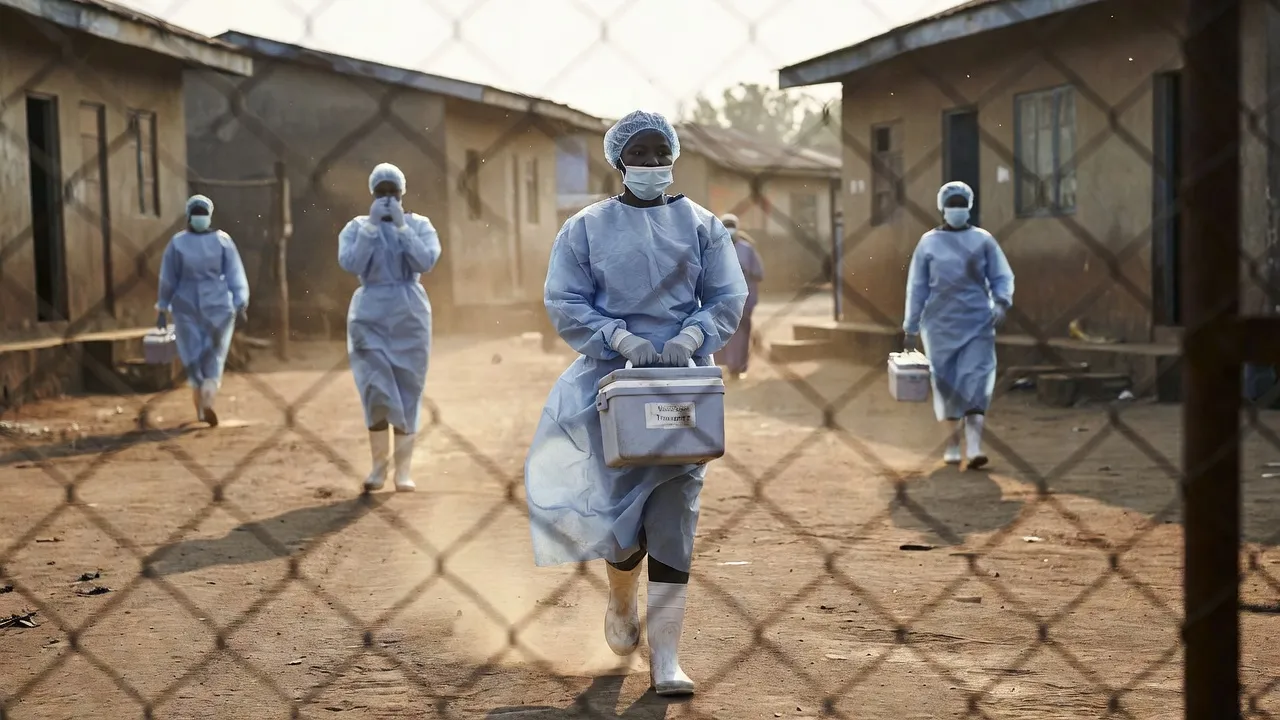
The World Health Organization allocates 70,000 doses of the Ervebo vaccine to the Democratic Republic of the Congo, with 20,000 reserved for a phase 3 clinical trial against the Bundibugyo strain and 50,000 intended for frontline healthcare workers. The WHO maintains the international health emergency in response to the 17th Ebola outbreak in the country, which affects six provinces including Ituri and has resulted in over 5,000 confirmed cases and more than 2,300 deaths according to reports published between August 16 and August 20, 2026. In North Kivu, a hospital in Butembo was burned down on August 19 after a case was confirmed. Rebels from the AFC/M23 have suspended taxi services between Goma and Kirumba and boat traffic on Lake Edward for a month in areas they control.
Measured with the previous method (distance between texts), on a different scale.