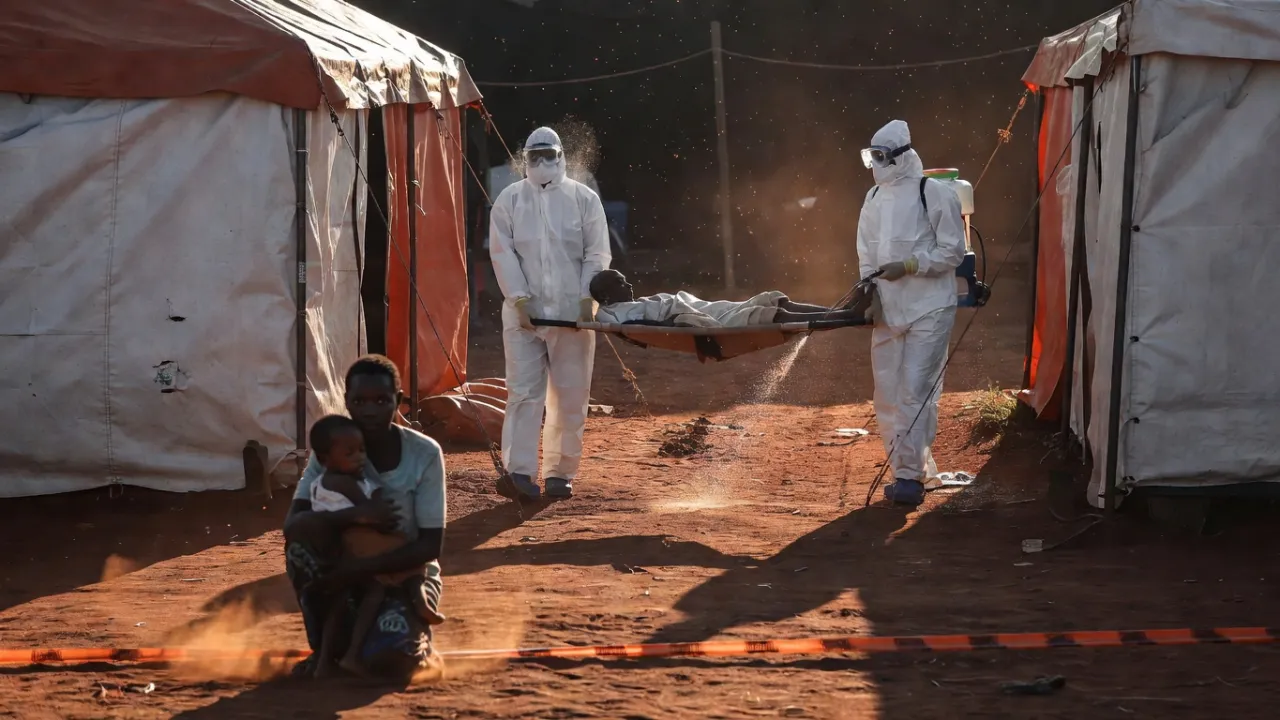
An outbreak of the Bundibugyo strain of the Ebola virus is unfolding in Ituri, in the east of the Democratic Republic of the Congo. It has passed the threshold of 1,100 suspected cases, including 263 to 291 confirmed cases depending on the source, making it the 17th outbreak recorded in the country. The Director-General of the WHO, Tedros Adhanom Ghebreyesus, travelled to Kinshasa, where he met President Tshisekedi, then to Bunia, the epicentre of the outbreak, meeting the first five recovered patients.
The alerts that emerged outside Africa have all been cleared: two suspected cases in Brazil turned out to be meningitis and malaria, and a case reported in Italy was declared negative. At this stage, there is no licensed vaccine or treatment for this strain, first identified in 2007. The WHO estimates a minimum of seven to nine months before possible human trials for the three candidates under development.
The response is taking place amid persistent armed conflict, population displacement and fragile health infrastructure. Only 20% of identified contact cases are effectively followed up in the field, a weakness highlighted by humanitarian organisations. The outbreak coincides with the approach of the 2026 World Cup, hosted in North America from 11 June, which has accelerated travel-restriction and visa-suspension decisions.
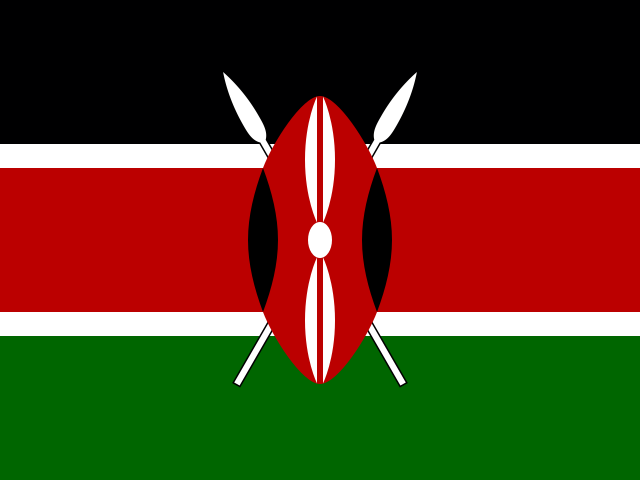
Several points remain disputed. A U.S. plan to set up a quarantine centre at the Laikipia base in Kenya — a country with no declared cases — has drawn opposing reactions: some actors see it as a technical health measure, others as an infringement of sovereignty. Travel restrictions are presented as a legitimate response by some and denounced as discriminatory by others. The gap between a possible early emergence of cases and the official declaration of 15 May, as well as the long-standing pharmaceutical underinvestment in this strain, also remain subjects of debate.