Common ground and differences in coverage across the media analysed.
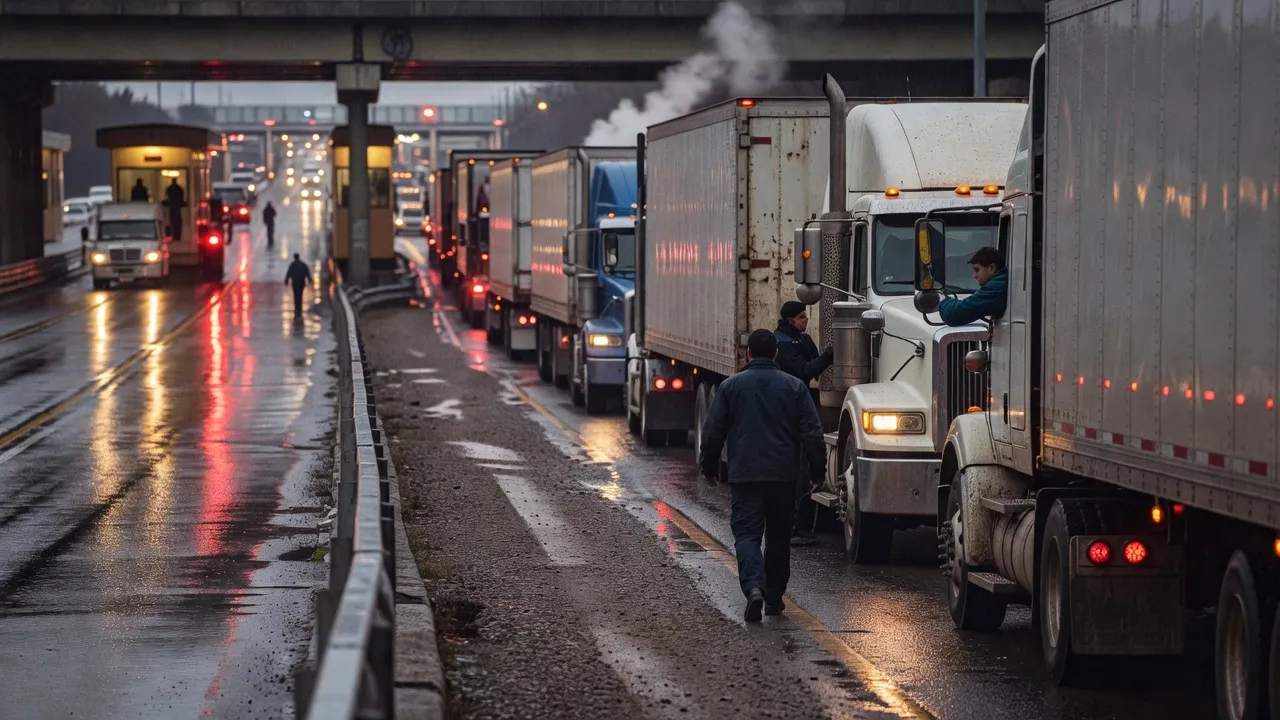
After trade talks failed on Friday, the United States imposed tariffs of 50% on about $20 billion worth of Canadian products on Saturday.
Mark Carney promised a 'dollar-for-dollar' retaliation set to take effect on September 8, targeting American steel, dairy products, appliances, farm equipment, paper products, and electronics.
US Trade Representative Jamieson Greer accused Canada of backtracking on earlier commitments and failing to finalize the agreement.
Some news outlets link the bilateral rift to a broader risk affecting the North American trade agreement (USMCA), while others view the episode as a contained dispute between Washington and Ottawa.
Coverage that diverges
The United Kingdom and India explicitly present this failure as a signal for their own ongoing tariff discussions with Washington, a perspective absent from other viewpoints.
Coverage aligned with this reading
The Indian press explicitly links the failure of the negotiations to Canada's refusal to lift provincial bans on American alcohol introduced in 2025, a point that other perspectives do not detail.
Coverage aligned with this reading
Coverage that diverges
This grouping describes the publications analysed, not the position of these countries’ populations or of their governments.
What the coverage of each country leaves aside, while others put it forward.
United States
Canada
United Kingdom
Preview: 3 of 10 media perspectives. Syntheses of the media analysed — not direct quotations. Method & limitations
Buenos Aires sees the failure of negotiations between Washington and Ottawa as proof that even the closest US allies are no longer shielded from punitive tariffs.
4 sources · View sources
Canberra is gauging the fallout of a historic trade alliance teetering on the brink of an all-out war, as Washington and Ottawa failed to seal a deal at the eleventh hour.
4 sources · View sources
Ottawa responds: following the failure of talks, Mark Carney breaks off negotiations and promises a dollar-for-dollar response to US tariffs of 50 percent.
4 sources · View sources
DOMINANT ANGLE
Buenos Aires sees the failure of negotiations between Washington and Ottawa as proof that even the closest US allies are no longer shielded from punitive tariffs.
ANALYSIS
Buenos Aires, August 23, 2026.
DOMINANT ANGLE
Canberra is gauging the fallout of a historic trade alliance teetering on the brink of an all-out war, as Washington and Ottawa failed to seal a deal at the eleventh hour.
ANALYSIS
Canberra, August 23, 2026.
DOMINANT ANGLE
Ottawa responds: following the failure of talks, Mark Carney breaks off negotiations and promises a dollar-for-dollar response to US tariffs of 50 percent.
ANALYSIS
Ottawa, August 23, 2026.
DOMINANT ANGLE
Beijing sees the commercial failure between Washington and Ottawa as confirmation of a tariff approach that it has already experienced in its own trade with the United States.
ANALYSIS
Beijing, August 23, 2026.
DOMINANT ANGLE
Paris is assessing the systemic risk to the Aceum: this North American trade disruption, which affects only about 5% of Canada's exports, undermines an agreement on which nearly 70% of Canada's external sales depend.
ANALYSIS
Paris, August 23, 2026.
DOMINANT ANGLE
New Delhi sees in this North American trade rupture a precedent for its own tariff negotiations with the US government.
ANALYSIS
New Delhi, August 23, 2026.
DOMINANT ANGLE
Mexico City is assessing the impact of a North American trade dispute it is not a part of, but whose outcome will affect the future of the treaty that also binds it to Washington and Ottawa.
ANALYSIS
Mexico, August 23, 2026.
DOMINANT ANGLE
Nigeria's capital, Lagos, is gauging the depth of the North American trade rift, where the breakdown in talks between the US and Canada highlights the volatility of relationships imposed by the Trump administration, even with a historic ally.
ANALYSIS
Lagos, August 23, 2026.
DOMINANT ANGLE
London sees the failure of the Canada-US talks as a warning for its own trade negotiations with Washington, where Ottawa's firm stance has run up against an uneven balance of power.
ANALYSIS
London, August 23, 2026.
DOMINANT ANGLE
The United States has imposed a 50% tariff on Canadian products, effective immediately, as no agreement was signed with Ottawa and no new meeting is scheduled.
ANALYSIS
The United States government announced on August 23, 2026, that trade negotiations with Canada had failed, paving the way for the implementation of 50% tariffs on approximately $20 billion worth of Canadian products - about 5% of Canada's annual exports to its neighbor, according to NPR.
Explore every perspective on this subject across 10 countries.
Compare viewpoints and see where they diverge.
published on
countries
sources
articles
gap
Following the breakdown of trade negotiations between Washington and Ottawa on Friday evening, the United States imposed a 50% tariff on approximately $20 billion worth of Canadian products on Saturday, August 22, effective at 1:01 a.m. Eastern Time, after the Canadian government refused to finalize an agreement reached earlier in the week, according to US Trade Representative Jamieson Greer. Canadian Prime Minister Mark Carney announced the suspension of negotiations and the implementation of "dollar-for-dollar" retaliatory measures against US products, set to take effect on September 8. These US tariffs are based on Section 338 of the Tariff Act of 1930.
Measured with the previous method (distance between texts), on a different scale.