
DOMINANT ANGLE
Sydney is replacing the Kolkata stampede in the series of Indian crowd accidents, where the ABC notes "recurring management and security failures".
Dominant angle identified — does not reflect unanimity of this country’s media
KEY POINTS
- 01
At least 17 dead and 25 injured outside a Durga Puja pavilion in Kolkata, according to ABC.
- 02
Narendra Modi's office announces 200,000 rupees for the relatives of each deceased and 50,000 for each injured.
- 03
ABC recalls 30 deaths at the Kumbh Mela last year and 121 deaths in 2024 in Uttar Pradesh.
ANALYSIS
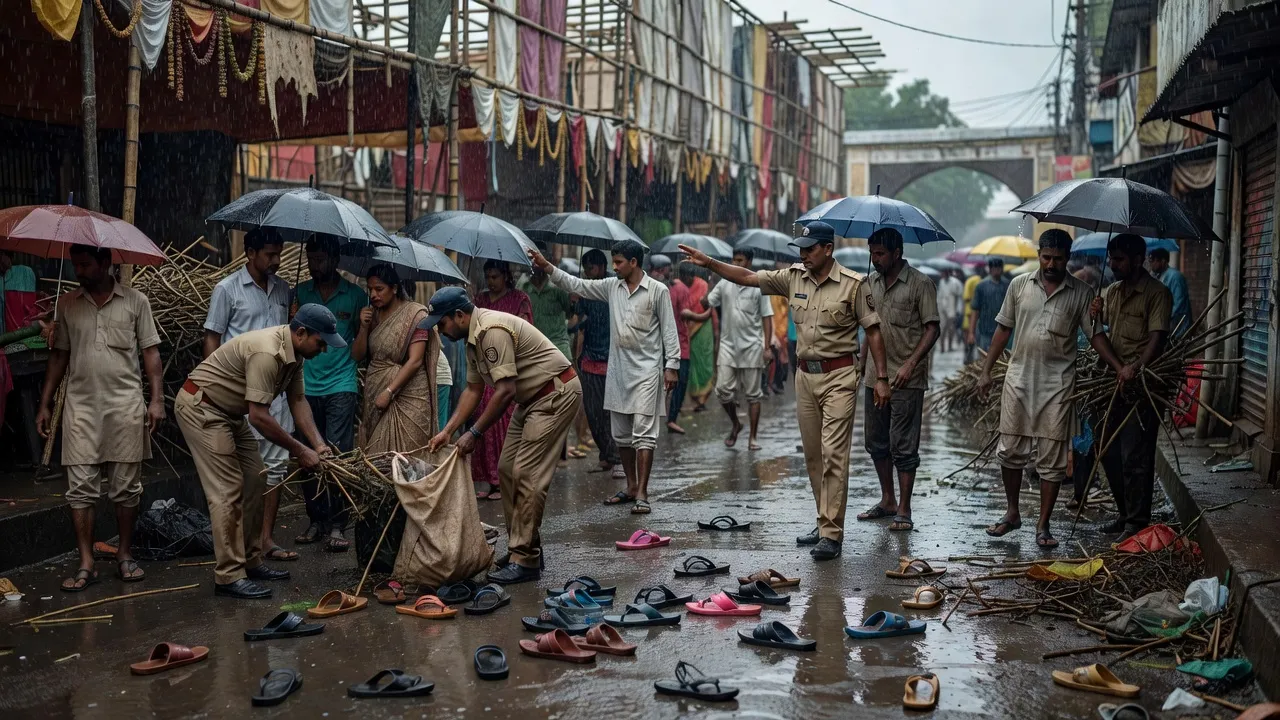
Sydney, 18 October 2026. The ABC and PerthNow, relying on a DPA dispatch, cover the Kolkata (Calcutta) stampede as just another crowd accident in a country that experiences many. According to the ABC, at least 17 people have died and 25 have been injured in front of a pavilion for the Hindu festival of Durga Puja, in eastern India. The head of the West Bengal government, Suvendu Adhikari, indicated that the dead include a seven-year-old girl and that "six bodies have been identified" at this stage.
The causes remain unclear in both articles. The ABC cites State Minister Umesh Rai, who speaks of a "sudden influx of people" into the pavilion, and a senior police official: an announcement triggered "agitation" when the rain started falling at night, the crowd massed in front of the pandal pushing, pulling, and rushing forward before falling. PerthNow, citing local television, locates the incident at the exit gate, in the Girish Park neighborhood, after heavy rains. It also quotes the daily The Hindu, according to which Mr. Adhikari mentions a panic born of a "misleading" announcement. A witness quoted by India Today describes visitors fainting, being taken away by motorcycle.
Regarding the official response, Australian media stick to the office of Prime Minister Narendra Modi. In a message on X, he announces 200,000 rupees (approximately 3,000 Australian dollars) for the relatives of each deceased and 50,000 rupees for each injured person.
The ABC then broadens the discussion, as a reader of a country that views India from afar: "deadly crowd incidents are frequent during major Indian events due to management and security failures". It lists the precedents: 30 deaths at the Kumbh Mela last year, 11 supporters crushed in Bengaluru during celebrations of the local cricket team's title, 36 deaths at a political meeting in Tamil Nadu, 121 deaths in 2024 in Uttar Pradesh during a Hindu gathering. This reminder makes Kolkata just one episode in a series, rather than a drama specific to a festival.
PerthNow adds a contextual reference point: the Durga Puja takes place in West Bengal from 16 to 21 October and attracts huge crowds to temporary structures housing the goddess's idols. Both articles attribute little to individual responsibilities; they describe crowd mechanisms and a provisional toll still numbered at 17.