EXPLORE THIS STORY
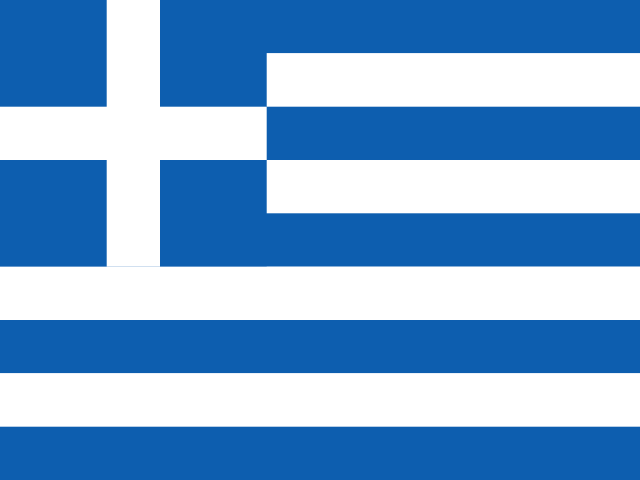
GREECE PERSPECTIVE
ISLAMABAD TALKS COLLAPSE: TRUMP ANNOUNCES NAVAL BLOCKADE OF STRAIT OF HORMUZ
Single source
DOMINANT ANGLE
Athens calculates the blockade's impact on its merchant fleet, the world's largest in oil tanker transport
Dominant angle identified — does not reflect unanimity of this country’s media
ANALYSIS
Athens watches the announced Hormuz blockade with the nervousness of a country whose merchant fleet ranks first globally in oil tanker tonnage. The Greek Reporter frames the event as a "massive escalation" threatening to "disrupt global energy markets"—a phrase that translates immediately to dollars for Greek shipowners. Greece controls roughly 20 percent of global oil tanker tonnage; a Hormuz blockade would transform Greek tankers into either potential targets or bypass instruments depending on which side prevails. The dilemma is existential for Athens: its shipowners prosper from transporting Iranian crude to Asia, already semi-clandestine trade under sanctions. If Washington imposes a total blockade, Greeks lose a client but potentially gain rerouting contracts from alternative sources. The calculation is brutal and happening right now in Piraeus offices, far from television studios.
KEY POINTS
- Greece controls roughly 20 percent of global oil tanker tonnage
- Greek shipowners already transport Iranian crude to Asia
- A blockade transforms Greek tankers into targets or bypass instruments
COGNITIVE BIASES IDENTIFIED
Nearly exclusive economic and maritime framing
Absence of humanitarian dimension
Does this analysis seem accurate?
SHARE
Compare with another country
Discover how another country covers this same story.