Common ground and differences in coverage across the media analysed.
Israel resumed its strikes on southern Lebanon on August 5, 2026, citing a ceasefire violation by Hezbollah, with a Lebanese toll of at least one dead and around a dozen injured.
The seventh round of indirect Israel-Lebanon talks, under American mediation, took place in Rome from August 4-6, parallel to the resumption of strikes.
The central sticking point in the negotiations remains the disarmament of Hezbollah and the expansion of 'pilot zones' under the control of the Lebanese army in the south.
One part of the coverage initially relays the Israeli military justification (response to a Hezbollah violation, Israeli military statements), while another part highlights the civilian and agricultural destruction and accusations of war crimes against the Israeli military.
Some countries relay the official US endorsement of negotiations deemed 'productive' and an improving atmosphere, while others emphasize that the military escalation and documented Israeli territorial advances on the same day undermine the diplomatic process.
Three countries explicitly link the HRW/Amnesty/Legal Agenda report qualifying the death of journalist Amal Khalil as a war crime to the day's narrative, while the majority of the coverage reports on the same strikes and talks without mentioning this report published on the same day.
This grouping describes the publications analysed, not the position of these countries’ populations or of their governments.
What the coverage of each country leaves aside, while others put it forward.
Qatar
Saudi Arabia
Lebanon
United States
Preview: 3 of 12 media perspectives. Syntheses of the media analysed — not direct quotations. Method & limitations
Brasília is gauging the fragility of a ceasefire that Rome's diplomacy is struggling to consolidate, amid renewed Israeli bombing and a seventh round of talks.
2 sources · View sources
Helsinki highlights a largely overlooked aspect: the chemical destruction of Lebanese and Syrian agricultural land using glyphosate, set against the backdrop of renewed Israeli strikes in southern Lebanon during the Rome talks.
2 sources · View sources
Paris is tracking three simultaneous storylines from the same Thursday - the killed Israeli soldiers, the Rome talks, and the war crime accusation against Israel - without imposing any one as the dominant narrative.
6 sources · View sources
DOMINANT ANGLE
Brasília is gauging the fragility of a ceasefire that Rome's diplomacy is struggling to consolidate, amid renewed Israeli bombing and a seventh round of talks.
ANALYSIS
Brasília, August 7, 2026.
DOMINANT ANGLE
Helsinki highlights a largely overlooked aspect: the chemical destruction of Lebanese and Syrian agricultural land using glyphosate, set against the backdrop of renewed Israeli strikes in southern Lebanon during the Rome talks.
ANALYSIS
Helsinki, August 7, 2026.
DOMINANT ANGLE
Paris is tracking three simultaneous storylines from the same Thursday - the killed Israeli soldiers, the Rome talks, and the war crime accusation against Israel - without imposing any one as the dominant narrative.
ANALYSIS
Paris, August 7, 2026.
DOMINANT ANGLE
Israel separates two narratives coexisting in its own press: the silent territorial control documented by Haaretz in southern Lebanon, and the strategic debate - including internal criticism - carried by the Jerusalem Post on the death of two reservists and the Rome talks.
ANALYSIS
Jerusalem, August 7, 2026.
DOMINANT ANGLE
Tehran denounces an occupation that continues to expand in southern Lebanon while Rome negotiates, and initially withholds evidence of war crimes and destruction inflicted on civilians.
ANALYSIS
Tehran, August 7, 2026.
DOMINANT ANGLE
Rome is hosting, at the US embassy, the seventh round of indirect Israel-Lebanon talks - a hosting role that the Italian press is highlighting, even as it takes a backseat to the military assessment announced the same day by the Israeli side.
ANALYSIS
Rome, August 7, 2026.
DOMINANT ANGLE
Islamabad is particularly focused on the coincidence between the new Israeli strikes and the round of talks in Rome, without repeating the accusations of war crimes made elsewhere by human rights organizations.
ANALYSIS
Islamabad, August 7, 2026.
DOMINANT ANGLE
Bucharest is watching the fragility of the Lebanese ceasefire, as Israeli strikes resume and a seventh round of talks is set to take place in Rome.
ANALYSIS
Bucharest, August 7, 2026.
DOMINANT ANGLE
Moscow separates three threads from the same day — the heaviest strikes since the June truce, the incursion of Israeli settlers in southern Lebanon, and the State Department's endorsement of Rome — without ever explicitly linking them.
ANALYSIS
Moscow, August 7, 2026.
DOMINANT ANGLE
Stockholm is closely watching the fragility of a peace process that has stalled in Washington, amid a deadly flare-up in southern Lebanon and tentative talks in Rome.
ANALYSIS
Stockholm, August 7, 2026.
DOMINANT ANGLE
Singapore is gauging the gap between the progress announced in Rome and the resumption of strikes on the ground, symptomatic of an Israeli-Lebanese ceasefire that is still being put to the test.
ANALYSIS
Singapore, August 7, 2026.
DOMINANT ANGLE
Turkey points to an Israeli escalation that deprives the Rome process of credibility, at the very moment when an international report describes the death of a Lebanese journalist as a war crime.
ANALYSIS
Ankara, August 7, 2026.
Explore every perspective on this subject across 12 countries.
Compare viewpoints and see where they diverge.
published on
countries
sources
articles
gap
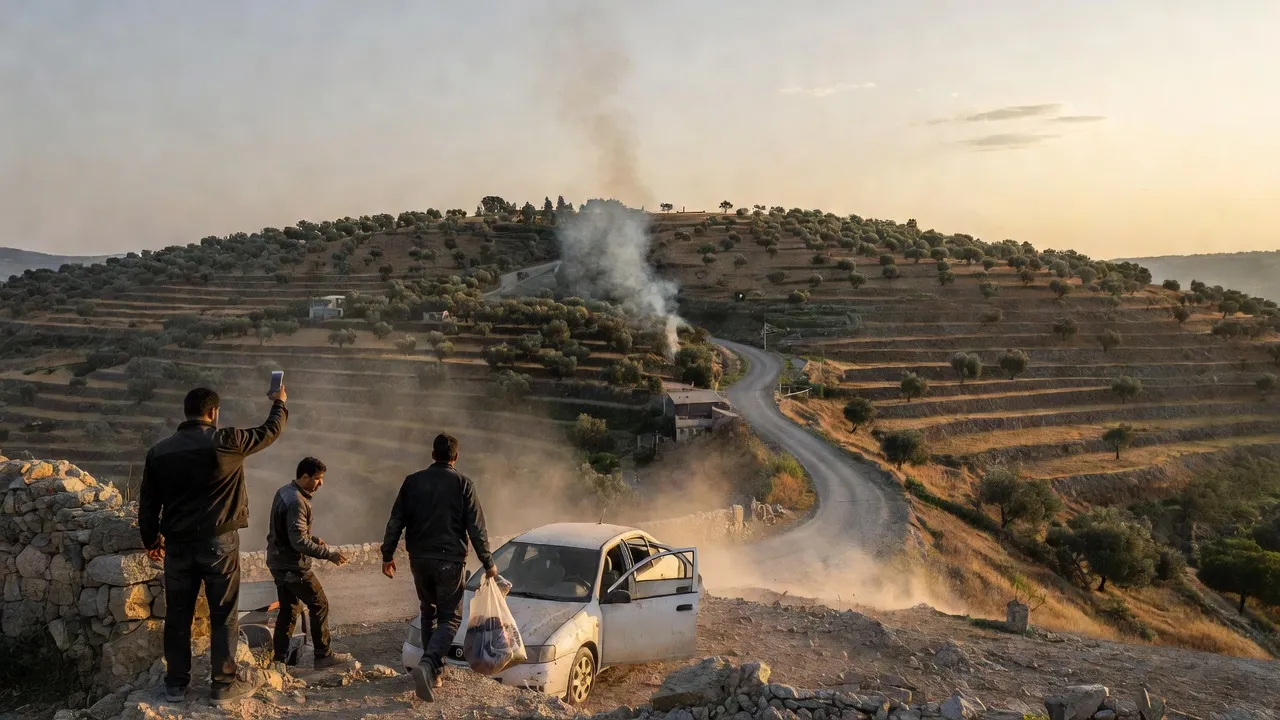
On August 5, the Israeli army resumed its strikes on southern Lebanon, citing a ceasefire violation by Hezbollah, and issued an evacuation alert targeting the village of Mansouri. The next day, the Israeli military announced the death of two reserve soldiers killed by an explosive device in Majdal Zoun, while the previous day's strikes had killed at least one person and injured eleven on the Lebanese side. These events occurred during the seventh session of indirect Israel-Lebanon talks, held in Rome under US mediation, on the implementation of the security agreement signed in late June. On the same day, Human Rights Watch and Amnesty International released an investigation characterizing the death of Lebanese journalist Amal Khalil, killed on April 22 in al-Tiri, as a possible war crime.
Measured with the previous method (distance between texts), on a different scale.