
DOMINANT ANGLE
Buenos Aires distinguishes between two difficult-to-reconcile Macrons: the energy mediator negotiating in New York and the head of state contested by his own police reform in Paris.
Dominant angle identified — does not reflect unanimity of this country’s media
KEY POINTS
- 01
Macron has promised Zelensky defense and energy aid for the winter, with "the signing of a contract for the supply of radars" and the delivery of interceptors (Infobae).
- 02
Macron discussed with Trump a possible energy truce between Russia and Ukraine and a hypothetical halt to strikes in the Black Sea, in addition to a moratorium on energy facilities (Infobae).
- 03
Deputy Mathilde Panot, quoted by Perfil, claims that since 2005, 162 people have died at the hands of the French police, in the debate on the police reform bill voted on "without debate".
ANALYSIS
Buenos Aires, September 22, 2026. The Argentine press has taken note of two different faces of Emmanuel Macron from the New York week, which are difficult to reconcile: that of the energy mediator and that of the contested head of state in his own country. In an EFE dispatch published on Tuesday, September 22, 2026, and picked up by Infobae, the French president appears to be in the midst of diplomatic mobilization as Zelensky and he are in New York for the UN General Assembly. Received by Macron, the Ukrainian president fears "a new campaign of massive Russian bombings" against his energy system as winter approaches. Macron has promised him aid in air defense and energy, with "the signing of a contract for the supply of radars" and the delivery of interceptors intended to shoot down Russian missiles. On X, he wrote that France "will be by Ukraine's side to face the winter," with the G7 Energy group mobilizing for Kiev.
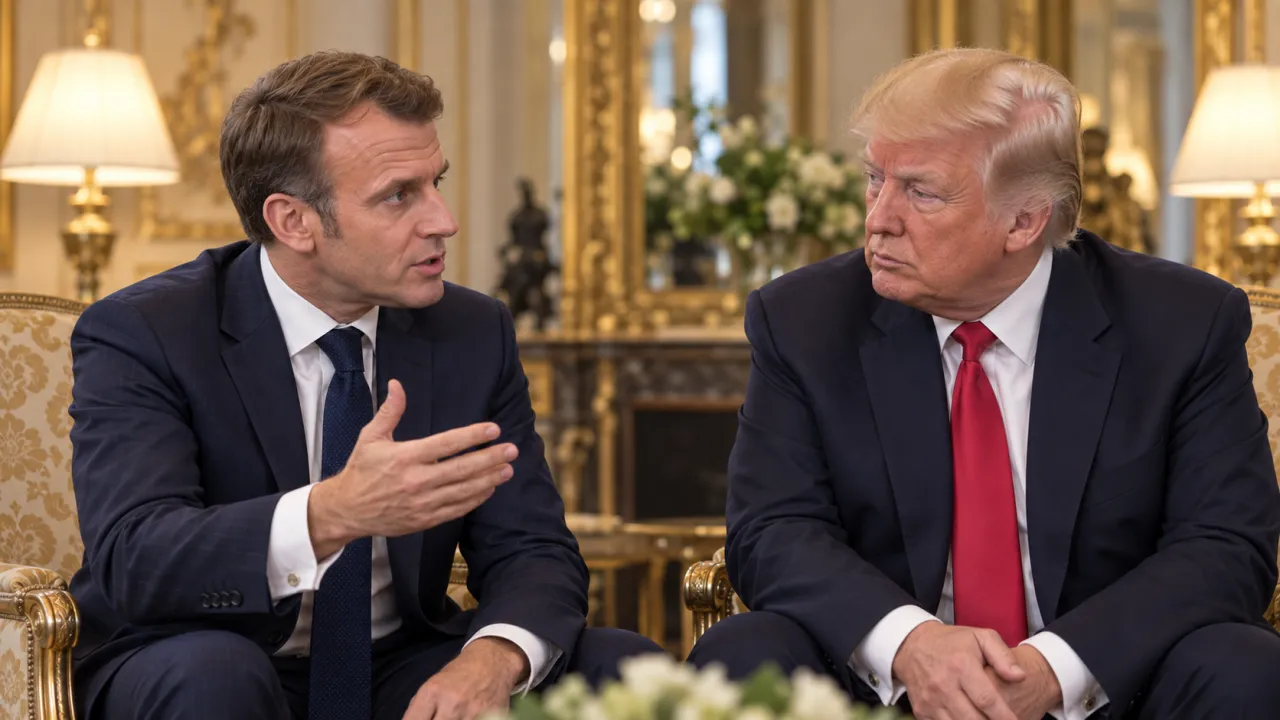
The article specifies that Macron discussed this support with Donald Trump, as well as a possible energy truce between Russia and Ukraine and a hypothetical halt to strikes in the Black Sea — the same architecture as the moratorium announced by the French, but seen from Kiev: a truce that would first protect the Ukrainian energy network, in exchange for Western military deliveries. This, Macron insisted according to Infobae, "will be a key issue in the negotiations" leading to a just and lasting peace.
In the same week, Perfil devoted its Ronda de Corresponsales to a very different Macron: the one of police reform, adopted by the National Assembly "like a closed book, without debate," according to journalist Juan Luis Francia. He recalls a precedent from 2017 that, he says, "multiplied the deaths in France," and quotes Deputy Mathilde Panot: since 2005, 162 people have died at the hands of the French police. The most contested point, Francia emphasizes, is the presumption of legitimacy granted to police officers in the event of a fatal shooting.
For the Argentine press, these two accounts coexist without responding to each other: the Macron who negotiates the terms of an energy ceasefire in New York is never confronted, in the same column, with the one whose internal legitimacy is publicly questioned by his own opposition.