
DOMINANT ANGLE
New Delhi views Netanyahu's UN speech in the context of the tight electoral calendar he is currently navigating at home, just five weeks ahead of the October 27 legislative elections.
Dominant angle identified — does not reflect unanimity of this country’s media
KEY POINTS
- 01
Netanyahu spoke "facing a difficult reelection campaign at home", in a tight race ahead of the Israeli elections on October 27 (Deccan Chronicle).
- 02
Dozens of delegates walked out of the room at the call of the Palestinian mission to the UN; Netanyahu called them "moral cowards" (Swarajya).
- 03
Zohran Mamdani, the mayor of New York who was labeled "anti-Semitic" by Netanyahu, responded that the latter remains targeted by an arrest warrant from the International Criminal Court for war crimes (Deccan Chronicle).
ANALYSIS
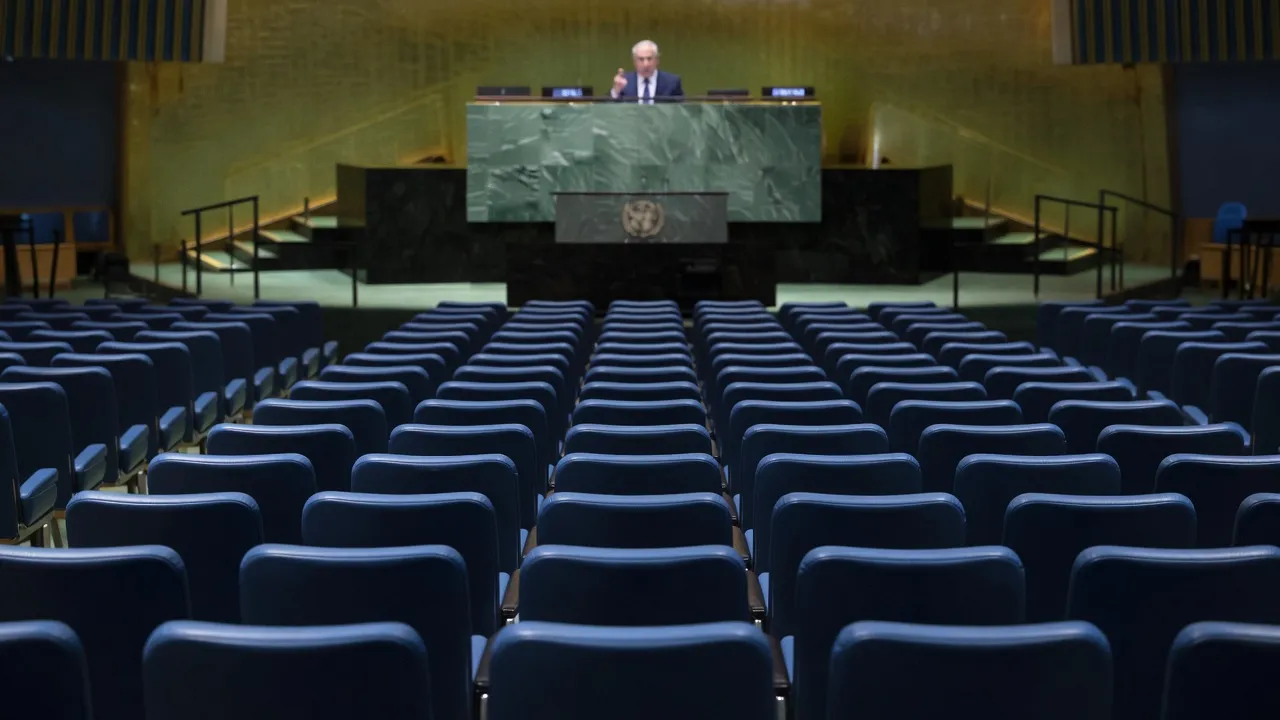
New Delhi, September 25, 2026. The speech delivered on Thursday by Benyamin Netanyahu at the United Nations General Assembly podium is seen by the Indian press first and foremost as an exercise in domestic politics. Deccan Chronicle notes from the outset: the Israeli Prime Minister, "facing a difficult re-election campaign at home", spoke before the UN while he is engaged in a tight race to stay in power in the October 27 legislative elections. Swarajya shares the same perspective, recalling that this speech took place on the third day of the general debate of the 81st session of the General Assembly, held from September 22 to 28 in New York.
In the room, dozens of delegates left their seats upon Netanyahu's entrance, some jeering, while his team stood up to applaud; Assembly President Khalilur Rahman had to call for order several times. The Palestinian mission to the UN had called for this collective withdrawal beforehand, presented as a protest against Israel's conduct in Gaza. Netanyahu retorted without delay: "If there are other moral cowards who have not yet left this room, let them do so now."
The Indian press also notes the barrage targeting Iran, the United Kingdom, France, and Turkey, as well as New York Mayor Zohran Mamdani, described as "anti-Semitic" — an attack to which the New York official responded by accusing Netanyahu of repeating "baseless lies intended to whitewash his genocide of Palestinians" and recalling that he remains targeted by an arrest warrant from the International Criminal Court for war crimes. Netanyahu also defended the offensive against Iran as one of the "easiest" decisions of his term, citing the threat of Iran's nuclear program, and asserted that in defending itself, Israel was also protecting the countries whose representatives had just left the room.
For New Delhi, this UN moment illustrates less a new judicial or diplomatic stage than an assumed electoral calculation: a head of government who transforms the global podium into a campaign platform, five weeks before a vote where his political survival is at stake.