
DOMINANT ANGLE
Mexico City sees Netanyahu's speech as an operation of domestic politics tied to the October 27 legislative elections, targeting Mamdani as much as Israeli public opinion, rather than a simple diplomatic dispute.
Dominant angle identified — does not reflect unanimity of this country’s media
KEY POINTS
- 01
Netanyahu went to New York "in the midst of the Israeli election campaign for the October 27 elections", according to El Informador.
- 02
Dozens of delegates left the room at the call of the Palestinian mission; the President of the Assembly, Khalilur Rahman, called for "order in the room", reports Reforma.
- 03
Netanyahu labeled New York City Councilman Zohran Mamdani an "anti-Semite" after his call for an international arrest warrant against him for war crimes.
ANALYSIS
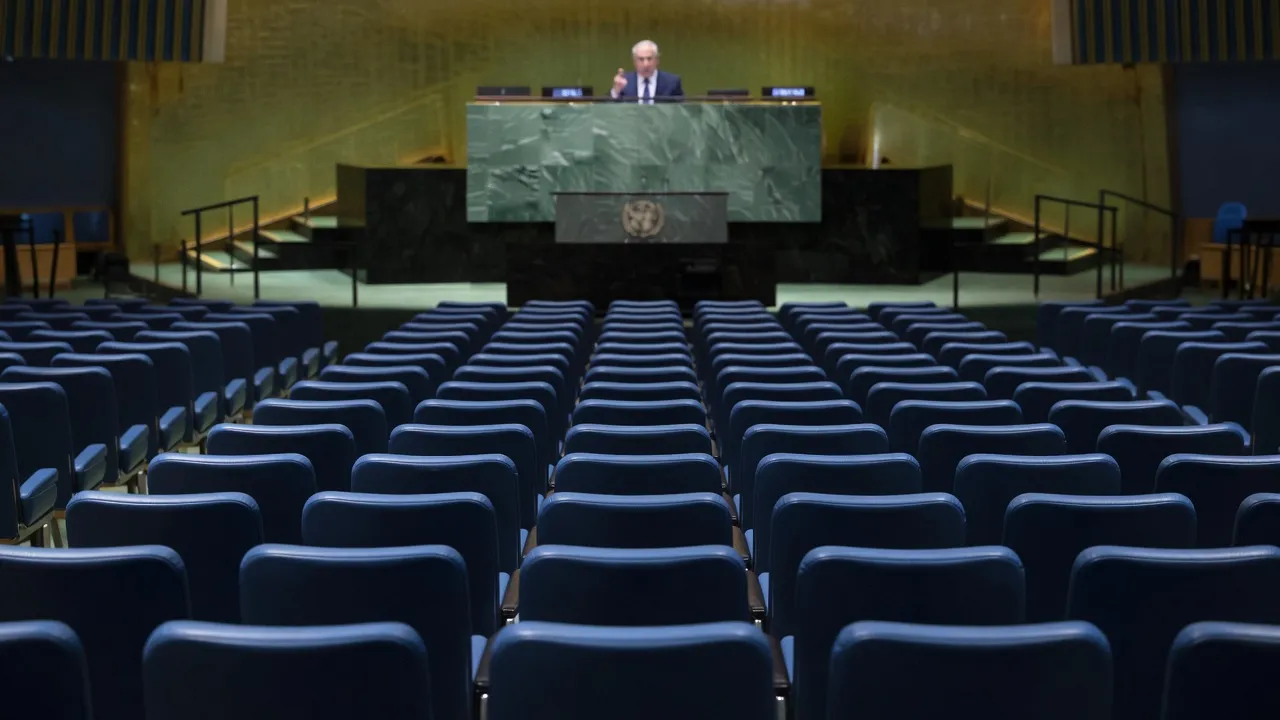
Mexico, September 25, 2026. Before a sparse United Nations General Assembly, the Mexican press first notes the electoral calendar that underpins Benjamin Netanyahu's speech. El Informador emphasizes that the Israeli Prime Minister traveled to New York in the midst of the Israeli election campaign for the October 27 elections, and that his nearly 40-minute speech targeted both domestic opinion and the UN audience.
The newspaper reports on the frontal attack against New York Mayor Zohran Mamdani, who was labeled "anti-Semitic" after calling for an international arrest warrant against Netanyahu for war crimes. "You can't silence me. You can't silence the truth," the Israeli leader responded, adding that Israel had not committed genocide in Gaza but had prevented it by avoiding the "friends of Hamas" from killing "all" Israelis. He also praised Donald Trump as the "best ally" of the Hebrew state, thanking him for his "courageous leadership".
Reforma, for its part, details the scene in the room: dozens of delegates left their seats when Netanyahu took the podium, responding to the call from the Palestinian mission for a collective withdrawal. Assembly President Khalilur Rahman had to call for "order in the room". Netanyahu labeled the departing delegates as "moral cowards", stating that in defending itself, Israel was also defending "many of the countries whose delegates just left", some of whose leaders would thank him privately, he claimed, for eliminating "Iran's nuclear weapons". He presented the attack on Iran as "one of the easiest decisions" of his career.
The Palestinian mission had justified the call for a boycott by denouncing a message of complicity with "genocide and war crimes" that Israel denies, while maintaining that the settlements, deemed illegal under international law, are legal according to its government. President Mahmoud Abbas had addressed the Assembly earlier, without an American visa.
For the Mexican press, the episode is seen less as a classic diplomatic confrontation than as a campaign speech delivered on the world stage, where the UN podium serves as both a domestic electoral platform and an international plea.