
DOMINANT ANGLE
Dakar takes away from the 2026 Nobel Prize in Chemistry the scientific enigma: the Senegalese press explains the chirality of living things and the "spectacular reaction" of Kenso Soai, more than the national record.
Dominant angle identified — does not reflect unanimity of this country’s media
KEY POINTS
- 01
The 2026 Nobel Prize in Chemistry was announced on Wednesday, October 7, to Henri Kagan and Kenso Soai "for the discovery of nonlinear effects and autocatalysis in asymmetric organic synthesis" (PressAfrik).
- 02
According to the Nobel Committee cited by PressAfrik, Kenso Soai designed in the mid-1990s a reaction where a chiral molecule acts as its own catalyst.
- 03
The prize is worth 12 million Swedish crowns, equivalent to about one million euros, and the award ceremony is scheduled for December 10 (Senego).
ANALYSIS
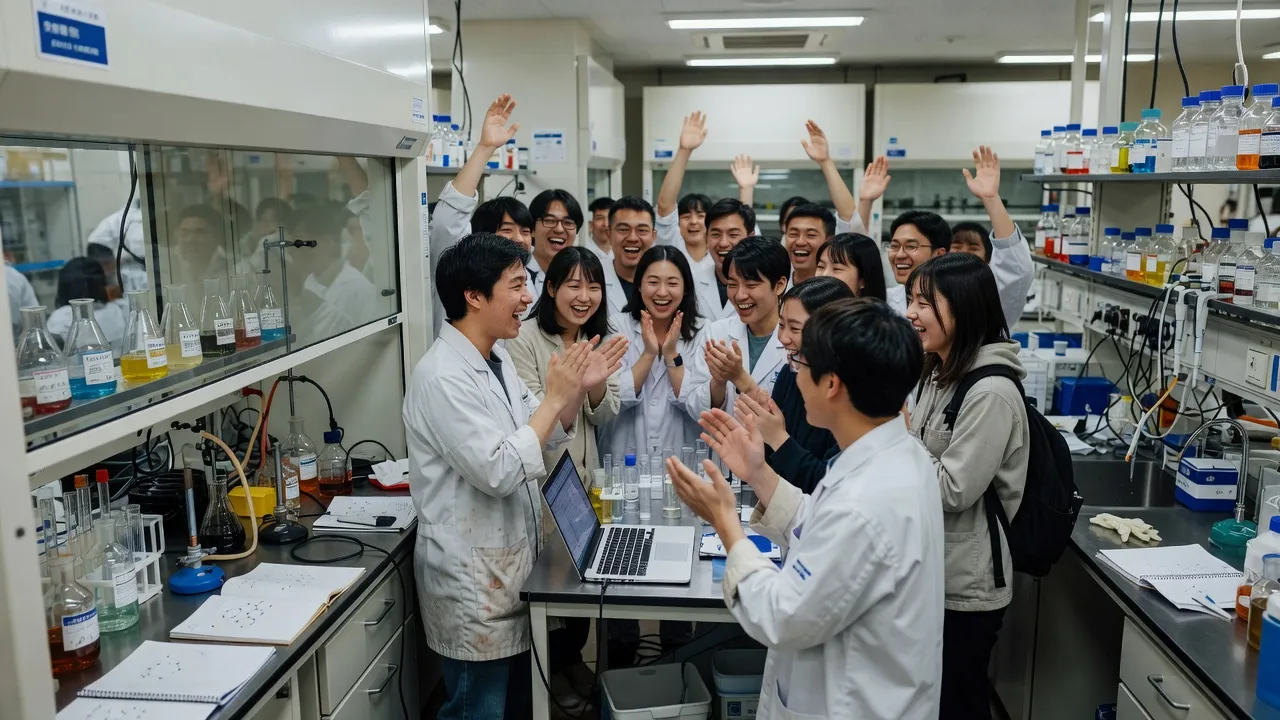
Dakar, October 8, 2026. The Senegalese media are covering the 2026 Nobel Prize in Chemistry with educational dispatches, focusing more on the science than on the winners' countries of origin. PressAfrik and Senego report that Frenchman Henri Kagan and Japanese Kenso Soai were honored "this Wednesday, October 7" for "the discovery of nonlinear effects and autocatalysis in asymmetric organic synthesis".
PressAfrik, which locates the Nobel Committee's announcement in Stockholm, opens with the stakes: this work provides "a fundamental answer to one of the greatest mysteries of science: the origin of the chirality of life". The site explains that the molecules of living organisms, such as DNA or amino acids, exist in only one "mirror" form, whereas chemistry naturally produces both.
The details of the contributions are given. In the 1980s, at the University of Paris-Sud, Henri Kagan showed that the purity of a catalyst is not proportional to the purity of the product obtained: a catalyst containing impurities or a mixture of both forms can still generate a highly purified product in one form. In the mid-1990s, according to the Nobel Committee, Kenso Soai designed a "spectacular chemical reaction", known as the Soai reaction, the first example where a chiral molecule acts as its own catalyst. From a tiny imbalance, the reaction "snowballs" to form only one form.
Senego, more brief, talks about "a Frenchman and a Japanese under the spotlight" and highlights the interest of these advances for organic chemistry and the development of substances used, in particular, in the pharmaceutical field. It specifies that the Royal Swedish Academy of Sciences designated the winners, that the prize is worth 12 million Swedish crowns, approximately one million euros, and that the official award ceremony is scheduled for December 10, the anniversary of Alfred Nobel's death.
Neither of the two texts comments on the national dimension of the prize or links it to Senegal or Africa: the reading is that of global scientific news, relayed for its content. Senego includes this announcement in the series opened after the medicine and physics prizes, announced at the beginning of the week.