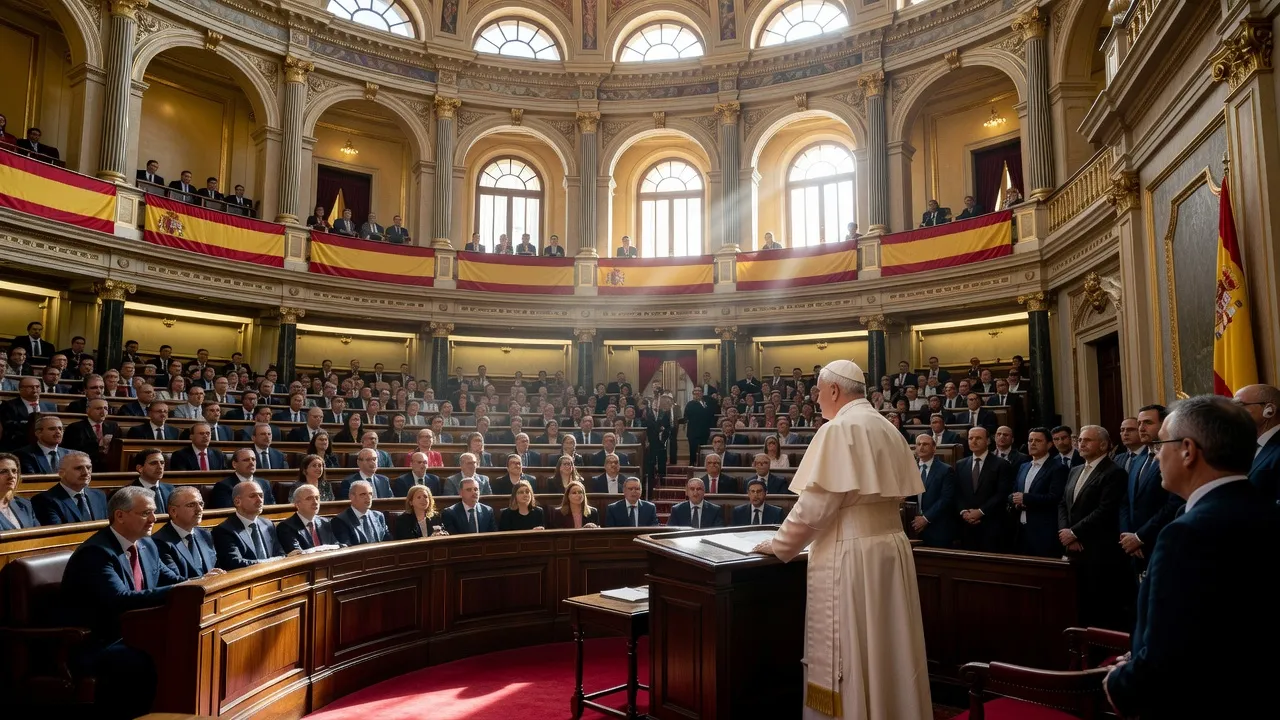
Pope Leo XIV traveled to Spain for a visit described everywhere as unprecedented. More than one million people gathered in Madrid, and the pontiff addressed the Spanish Parliament — the first time a pope has spoken from that rostrum. The scale of the turnout is disputed nowhere: it is read across the board as the mark of a papacy able to draw people together beyond the usual divides.
In his address, the pope called for fighting polarization, welcoming migrants and making amends to the victims of clerical abuse, while condemning abortion and euthanasia. These stances come amid intense political polarization in Europe and Latin America, where immigration, rearmament and reproductive rights divide Western democracies.
That a pope born in the United States addressed a European parliament against polarization and in favor of welcoming migrants was perceived in several capitals as a counter-message to nationalist currents. Its international resonance extends well beyond Spain alone.
The positions are read in opposing ways, however. Some actors hold that the statements on abortion and euthanasia amount to interference in rights written into law, while others see them as welcome support. Likewise, on clerical abuse, some voices stress that victims' associations were kept away from the private meeting and denounce rhetoric without concrete acts, whereas others emphasize the commitments made. Several angles — the Catalan independence movement's stance, the security cost, internal tensions within the Church — remain little addressed.