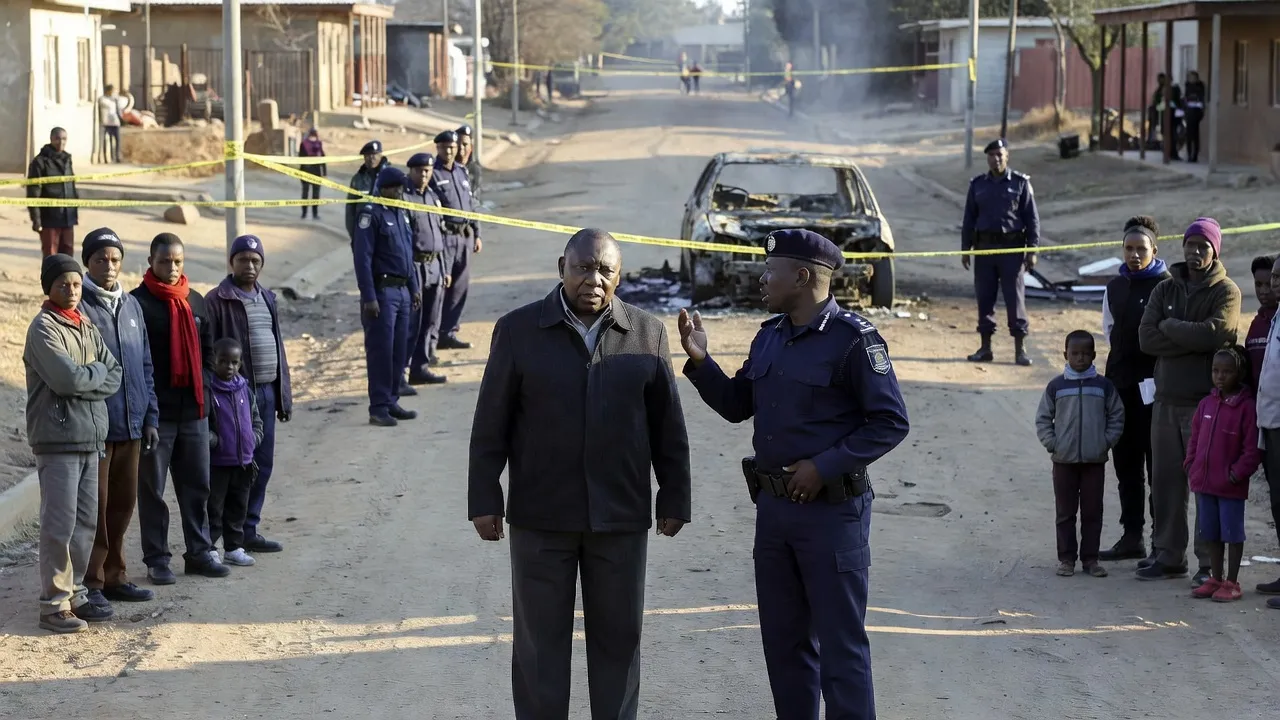
Two mass shootings kill 27 in one night in South Africa, near Johannesburg and Cape Town
published on
countries
sources
articles
the same fact, two accounts
this subject is more divergent than 5% of the subjects analysed
 Pakistan
Islamabad takes away from these South African dispatches a familiar security lesson: a proliferation of illegal weapons that neither police crackdowns nor the November polls seem able to stem.
What each one tells
opposition United States
The United States government clearly distinguishes these South African shootings from American mass shootings: organized crime and gang rivalries predominate over the isolated and ideological act.
- Pakistan
Omission of local leads
the motive for the two shootings is presented as unknown, with no mention of the distinct leads put forward elsewhere by the police (rivalry between illegal miners in Wedela, commercial competition in Lwandle).
What the account puts first
United StatesComparative framing with the United States
the coverage highlights the distinction with American mass shootings by lone gunmen, rather than treating the event on its own.
Historicizing
the coverage links the shootings to past events (Covid lockdown, Zuma riots, truck fires) rather than to the current government response.
- Pakistan
Reliance on a single expert
the causal analysis of the phenomenon is based on the statements of a single crime expert, quoted by the agency, with no opposing view or separate official source.
What it leans on
United StatesAlmost exclusive reliance on police communications
the tolls, motives, and circumstances come almost entirely from the police, with no independent source cited.
and the figures
17 killed
Assessment of the Wedela shooting incident
deaths
same figure17 dead
10 killed
Assessment of the Lwandle shooting
deaths
same figure10 dead
this press does not report this figure
Daily homicide rate in South Africa
homicides/day
this press does not report this figure