TYPHOON NOUL SLAMS CHINA'S GUANGDONG, FORCING MASS EVACUATIONS
July 27, 2026·11 COUNTRIES
11countries·30sources·35articles
Asia (6)
Americas (2)
Oceania (1)
Europe (1)
Russia & CIS (1)
Asia
Americas
Oceania
Europe
Russia & CIS
EXPLORE THIS STORY
SHARE THIS COMPARISON
Show your friends how the world sees the same news differently.
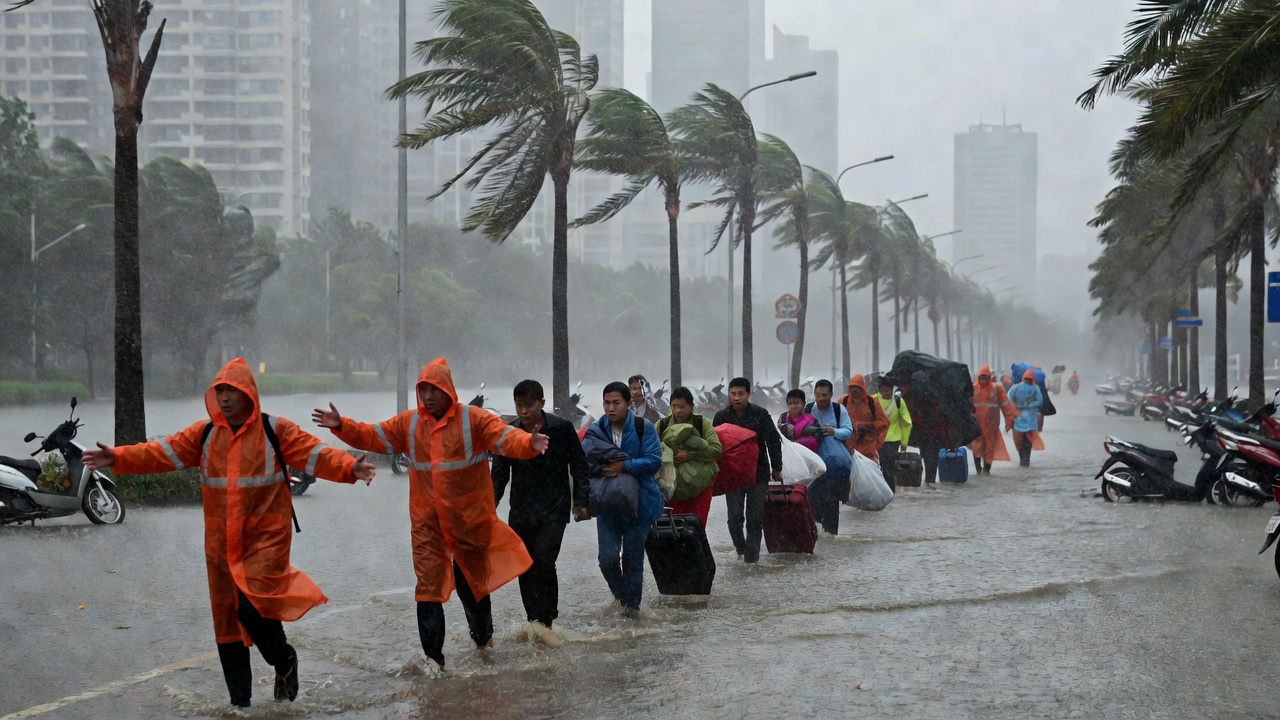
Typhoon Noul, described as the most powerful of 2026, made landfall on 26-27 July in China's Guangdong province, forcing the evacuation of several hundred thousand people (up to 710,000 by some accounts), grounding flights and halting trains in Shenzhen, Guangzhou and Hong Kong, and bringing torrential rain and flooding. Authorities raised the alert to its highest level.
🇫🇷 France vs 🇷🇺 Russia
FRAMING GAP
85/100HIGH
Perspectives diverge strongly
Here are the main framing differences identified between media coverages.
ANALYSIS BY COUNTRY
 FRANCE
DOMINANT ANGLE
Paris examines an unprecedented evacuation operation in southern China, balancing recognition of Beijing's logistical capacity with careful attention to French economic stakes anchored in Hong Kong's role as a regional financial hub.
Dominant angle identified — does not reflect unanimity of this country’s media
KEY POINTS
- •More than 340,000 people evacuated from Guangdong Province as the typhoon's eye made landfall near Pinghai at 3:50 a.m. local time on July 26, according to Xinhua News Agency.
- •Winds reached 162 kilometers per hour at impact, making Noul the strongest tropical system to strike China since the start of 2026, per state broadcaster CCTV.
- •In Hong Kong, the Observatory downgraded its alert from Signal T9 to T8 Sunday morning, with over one hundred trees reported downed, nine people injured, and at least 350 flights canceled.
BIASES
Wire-service dependency: French media largely republished the same AFP dispatch, constraining editorial diversity and independent analytical angles.Institutional data preference: Coverage prioritizes official statistics (CCTV, Xinhua, Hong Kong Observatory) over on-the-ground eyewitness accounts and community impact reporting.Truncated Philippines coverage: Early damage in the Philippines—three deaths and one missing person—received minimal attention, appearing only late in articles.
 RUSSIASTATE MEDIA
DOMINANT ANGLE
Moscow methodically documents the scale of evacuations and transport paralysis caused by the typhoon, without linking the event to climate change
Dominant angle identified — does not reflect unanimity of this country’s media
KEY POINTS
- •TASS reports over 710,000 people evacuated in Guangdong, including 205,000 in Huizhou and 192,000 in Shanwei
- •RT documents over 1,800 flights canceled in Guangzhou, Shenzhen, and Hong Kong, with over 190 high-speed rail connections suspended
- •Sustained winds of 162 km/h (45 m/s) at landfall near Pinghai (Huidong, Huizhou) around 3:50 a.m. local time Sunday, according to China's National Meteorological Center
BIASES
Factual-numerical framing: emphasis on evacuation statistics and logistical paralysis rather than individual human narratives or longer-term impactsHeavy reliance on official Chinese sources (Nanfang Daily, National Meteorological Center, provincial flood-fighting headquarters) presented without critical perspective or counterpointAbsence of climate context: no discussion of long-term environmental trends or analysis of how this event fits into broader weather pattern changes
FRANCEDOMINANT ANGLE
Paris examines an unprecedented evacuation operation in southern China, balancing recognition of Beijing's logistical capacity with careful attention to French economic stakes anchored in Hong Kong's role as a regional financial hub.
Dominant angle identified — does not reflect unanimity of this country’s media
KEY POINTS
- •More than 340,000 people evacuated from Guangdong Province as the typhoon's eye made landfall near Pinghai at 3:50 a.m. local time on July 26, according to Xinhua News Agency.
- •Winds reached 162 kilometers per hour at impact, making Noul the strongest tropical system to strike China since the start of 2026, per state broadcaster CCTV.
- •In Hong Kong, the Observatory downgraded its alert from Signal T9 to T8 Sunday morning, with over one hundred trees reported downed, nine people injured, and at least 350 flights canceled.
BIASES
Wire-service dependency: French media largely republished the same AFP dispatch, constraining editorial diversity and independent analytical angles.Institutional data preference: Coverage prioritizes official statistics (CCTV, Xinhua, Hong Kong Observatory) over on-the-ground eyewitness accounts and community impact reporting.Truncated Philippines coverage: Early damage in the Philippines—three deaths and one missing person—received minimal attention, appearing only late in articles.
RUSSIASTATE MEDIADOMINANT ANGLE
Moscow methodically documents the scale of evacuations and transport paralysis caused by the typhoon, without linking the event to climate change
Dominant angle identified — does not reflect unanimity of this country’s media
KEY POINTS
- •TASS reports over 710,000 people evacuated in Guangdong, including 205,000 in Huizhou and 192,000 in Shanwei
- •RT documents over 1,800 flights canceled in Guangzhou, Shenzhen, and Hong Kong, with over 190 high-speed rail connections suspended
- •Sustained winds of 162 km/h (45 m/s) at landfall near Pinghai (Huidong, Huizhou) around 3:50 a.m. local time Sunday, according to China's National Meteorological Center
BIASES
Factual-numerical framing: emphasis on evacuation statistics and logistical paralysis rather than individual human narratives or longer-term impactsHeavy reliance on official Chinese sources (Nanfang Daily, National Meteorological Center, provincial flood-fighting headquarters) presented without critical perspective or counterpointAbsence of climate context: no discussion of long-term environmental trends or analysis of how this event fits into broader weather pattern changes