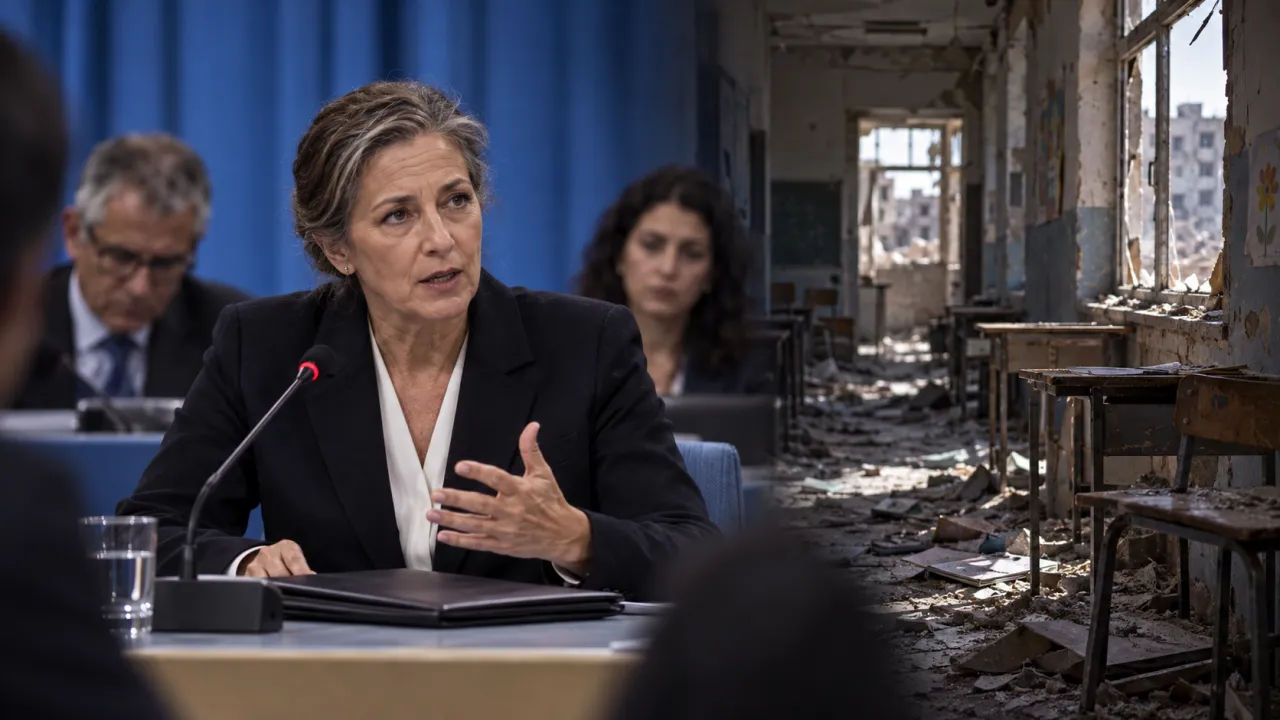
A UN mission finds US war crimes in two strikes in Iran, including on the Minab school, and crimes against humanity in Iran's crackdown
published on
countries
sources
articles
the same fact, two accounts
this subject is more divergent than 58% of the subjects analysed
 South Africa
Pretoria is gauging the scope of this report in light of its own commitment to international accountability: the US refusal to recognize the authority of the Human Rights Council is holding South African attention, just like the crimes against humanity uncovered on the Iranian side.
What each one tells
same framing Brazil
Brasília first takes note of the legal qualification in the UN report: the United Nations claims to have "reasonable grounds" to believe that the US strikes on Minab and Lamerd constitute war crimes, a conclusion that the Brazilian press details strike by strike before reporting the crossed denials of Washington and Tehran.
- South Africa
Draws on official US reactions
the article extensively details the Pentagon's and the White House's position, with less development on the official Iranian reaction.
What the account puts first
BrazilInstitutional
the narrative begins with the official UN mission formula rather than the identification of victims.
Omission of the Iranian reaction
the narrative details the American response over several sentences but summarizes Tehran's silence in one line.
- South Africa
this perspective does not carry this information
What it leans on
Brazil onlyBrazilReliance on the statement
the media outlets report the mission's conclusions without having access to the detailed evidence, which is absent from the released text.
and the figures
more than 150 people
Assessment of the strike on Minab school
people killed
same figuremore than 150 people, including nearly 120 children
this press does not report this figure
Children killed in the crackdown
children killed
this press does not report this figure
this press does not report this figure
Assessment of the strike on Lamerd
civilians killed or injured
only one reports it22 civilians killed or injured