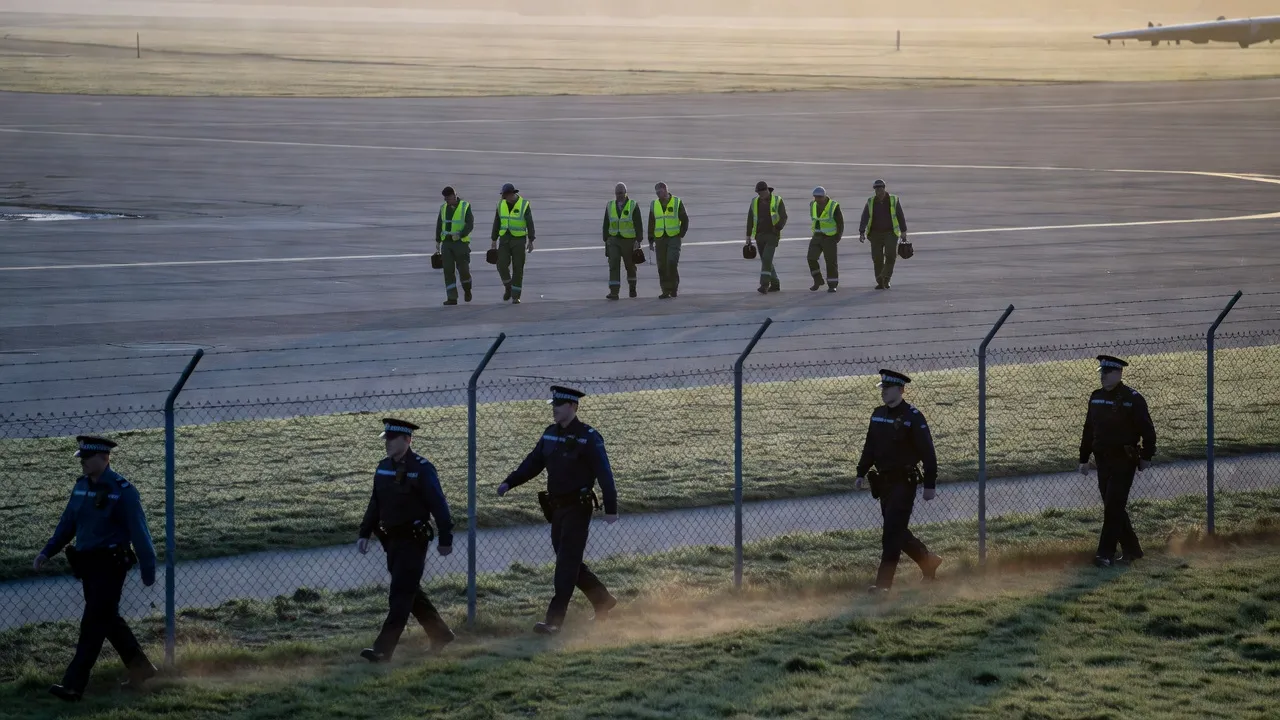
Common ground and differences in coverage across the media analysed.
What the media report in common
1
A Pentagon official confirmed that all US bombers deployed to RAF Fairford, about a dozen B-1s, have returned to the United States.
2
Five men were arrested on September 27 near the base, then a sixth, a British-Iranian, and all were released on bail; Iran denies any involvement.
Where media coverage diverges
Reason for the withdrawal of B-1s
Does a specific threat related to Iran motivate the withdrawal? Trump claims so and some of the press reports a drone plan; Rubio talks about common reallocation and several sources emphasize that the threat is not publicly demonstrated.
Buenos Aires views the withdrawal of bombers from Fairford as a security episode shrouded in uncertainty: alleged plot, uncorroborated American version and stalled investigation.
Canberra is gauging the withdrawal of B-1s from Fairford in light of the threats attributed to Iran against American assets, primarily relaying the differing versions from Washington.
Dhaka is first focusing on the security aspect: the withdrawal of B-1s from Fairford, one week after a presumed plot that largely remains unexplained, revives the vulnerability of American bases in Europe to Iran.
Buenos Aires views the withdrawal of bombers from Fairford as a security episode shrouded in uncertainty: alleged plot, uncorroborated American version and stalled investigation.
KEY POINTS
A Defense Department official confirmed Sunday that all bombers deployed to Fairford, B-1B Lancers (a dozen according to CNN), have returned to the United States; six B-52s had already done so by the end of September.
On September 27, five men were arrested near the base after three suspicious vehicles were reported; a sixth, a British-Iranian, was arrested in London on Thursday; all are out on bail, none have been charged.
According to Perfil, the withdrawal surprised British authorities, Washington maintains the existence of a plot and London asserts that the base's security is guaranteed.
ANALYSIS
Buenos Aires, October 6, 2026. The Argentine press is treating the withdrawal of US bombers from RAF Fairford as a security episode shrouded in uncertainty. Perfil, via its correspondent in the United Kingdom Enrique Zattara in "Ronda de Corresponsales", reports that the US Air Force has withdrawn the 12 aircraft installed in the British base, in a "preemptive" manner according to the explanation attributed to the American government, which claims to have information about a threat.
According to this account, the departure took place on Sunday and caught the British authorities by surprise: Washington had not officially communicated its decision to London before it became known, with the first information coming from the media and leaks attributed to anonymous Pentagon officials. Zattara emphasizes that the investigation has not yielded any substantial progress. He adds that the American government "continues to assert" that it had information and that the plot to blow up the base did indeed exist. For its part, London assures that the security of the base and neighboring towns is guaranteed.
MercoPress, in English, provides the factual context. A Defense Department official confirmed on Sunday that all the bombers deployed to Fairford, B-1B Lancers, a dozen according to CNN, had returned to their bases in the United States; six B-52s had already returned at the end of September. Washington has given no public reason, notes the media. Since March, bombers have been operating from this base in the war against Iran, with London having approved its use for what it called defensive strikes.
On September 27, five men were arrested near the base after three suspicious vehicles were reported, and a sixth, with dual British and Iranian nationality, was arrested in London on Thursday. All are on bail and none have been charged. Washington has publicly criticized this release, which Prime Minister Andy Burnham has defended by citing strict conditions. Burnham mentions strong indications of an Iranian role, without details; Tehran denies any involvement. London had not commented on the withdrawal at the time of writing.
The Argentine corpus thus focuses on the security aspect: the alleged threat, the release of the suspects, the British guarantee.
Australia
DOMINANT ANGLE
Canberra is gauging the withdrawal of B-1s from Fairford in light of the threats attributed to Iran against American assets, primarily relaying the differing versions from Washington.
KEY POINTS
The Pentagon confirmed that all US bombers deployed to RAF Fairford have returned to their home bases (SBS).
Trump claims to know the authors of the threat, who would be linked to Iran, while Rubio mentions a constant reallocation of resources (SBS, PerthNow).
Five men arrested on September 27 and a British-Iranian national were released on bail; no explosives found but fuel recovered (SBS).
ANALYSIS
Sydney, October 6, 2026. The Australian government is closely following the withdrawal of US B-1 bombers from the British RAF Fairford base, under the angle of the security threat and the changing explanations of the US administration.
According to reports, Donald Trump stated that the US had withdrawn all B-1s due to unspecified threats he believes are linked to Iran. "There were some threats," he said at the White House, before adding: "We actually know the people that made the threat," who "would be linked to Iran." When asked about information mentioning attack drones, he replied: "I can't tell you that, but if they did they'll suffer greatly." The Pentagon had confirmed the redeployment on Monday: all bombers deployed to Fairford have returned to their home bases. It is noted that the base, used by the US for strikes on Iran, is deemed safe by the British government.
Australian media outlets are comparing American voices. Vice President JD Vance speaks of a decision made "out of an abundance of caution" to protect troops, and accuses Iran of carrying out acts of terrorism against the US for 49 years. Marco Rubio, on the other hand, denies any direct link between the withdrawal and the alleged plot: the Pentagon "constantly reallocates" its resources. A NATO military source estimates that Iran still poses an acute threat to US assets in the UK.
Bangladesh
DOMINANT ANGLE
Dhaka is first focusing on the security aspect: the withdrawal of B-1s from Fairford, one week after a presumed plot that largely remains unexplained, revives the vulnerability of American bases in Europe to Iran.
KEY POINTS
A Pentagon official confirmed Sunday that all bombers deployed to RAF Fairford had returned to their home bases in the United States.
The five men arrested on September 27 and a sixth suspect, a British-Iranian dual national, were released on bail; Iran denies any involvement.
According to The Daily Star, investigators found no explosives in the vans, but "a quantity of gasoline", and 85 homes were evacuated.
ANALYSIS
Dhaka, October 6, 2026. The Bangladeshi English-language dailies The Business Standard (TBS) and The Daily Star are treating the withdrawal of US B-1 bombers from the British RAF Fairford base as a military security episode related to the war with Iran.
TBS recalls that the aircraft left the base a week after the arrest of five men near the base, suspected of preparing terrorist acts. According to the site, British Prime Minister Andy Burnham judged this plot to be probably supported by Iran. A Pentagon official indicated on Sunday that the bombers had returned to their bases in the United States. TBS adds that Fairford, 145 km west of London, is one of the few European airfields adapted to heavy bombers, that it had served for strikes against Iran, and that the Revolutionary Guards had qualified it as a legitimate target at the end of July. A NATO military source asserts that "Iran still represents an acute threat to American means in the United Kingdom".
The Daily Star details the alert of September 27: a farmer reports men and several vans with "suspicious" activity, 85 homes are evacuated. Investigators did not find explosives, but "a quantity of fuel" was seized. The daily quotes the Pentagon's statement, according to which operational security prohibited confirming movements in real-time, then Marco Rubio, who expresses his "confidence in the security of all our bases" and praises British cooperation. It also reports, according to CNN, that the aircraft were moved after "an unspecified new threat", a "real incident", and that it is unusual to repatriate them rather than redeploy them elsewhere in the region.
Germany
DOMINANT ANGLE
Berlin scores a point on the field of deterrence: the withdrawal of the B-1s from Fairford is seen as a sign of American weakness, for which the entire West would pay the price.
KEY POINTS
According to the Pentagon, as cited by DW, all B-1s from Fairford have returned to American bases; ZEIT mentions twelve aircraft.
ZEIT reports, based on the Wall Street Journal, the New York Times, and Axios, an Iranian drone plan ordered by the Revolutionary Guard to target Fairford's planes.
FAZ writes that Trump "muss zurückweichen" and that the episode "untergräbt die amerikanische Abschreckung, auf der die Sicherheit in Europa wie in Asien immer noch beruht" becomes: FAZ writes that Trump "must back down" and that the episode "undermines American deterrence, on which security in Europe and Asia still relies".
ANALYSIS
Berlin, October 6, 2026. The German press is treating the withdrawal of B-1s from RAF Fairford as a matter of deterrence before making it a British issue. Deutsche Welle recalls the facts: a week after the incident, all aircraft returned to American bases, according to the Pentagon. These jets had also been used in strikes against Iran. The police had discovered three vans near the base and arrested several suspects. A British-Iranian national was later arrested on suspicion of terrorism, then released on bail. Prime Minister Andy Burnham speaks of indications of possible Iranian involvement, which Tehran denies.
Die ZEIT goes further, relying on the Wall Street Journal, the New York Times, and Axios. According to these media outlets, which cite American and British military sources, the plan was to strike the planes stationed at Fairford with drones and kill American military personnel. The Iranian Revolutionary Guard allegedly ordered it. The New York Times sees a model: last year's Ukrainian attack, when drones were transported to Russia on semi-trailers. Die ZEIT notes that the United States had deployed additional bombers to the United Kingdom in March to gain flexibility in the face of Iran, and that a successful strike could have provoked a significant escalation in the Middle East. Donald Trump dodged a journalist's question, the newspaper reports.
France
DOMINANT ANGLE
Paris is scrutinizing the withdrawal of B-1s from Fairford as a matter of security for allied bases, where an antiterrorist investigation with grey areas and suspects released on bail is leaving threats attributed to Iran unproven.
KEY POINTS
All US bombers deployed to Fairford have been redeployed to the United States, the US Department of Defense said Sunday in a statement without details.
On September 27, police reported "three suspicious vehicles" near the base; they found "no explosive device" but gasoline "in quantity".
The five men arrested and a sixth, British and Iranian, were released on bail; Iran denies any involvement.
ANALYSIS
Paris, October 6, 2026. The French press is treating the withdrawal of American bombers from RAF Fairford as a security episode with unclear contours. RFI and Sud Ouest report that the United States has withdrawn its strategic B-1 bombers from the British base, "at the heart of an anti-terrorist investigation with multiple areas of darkness". The US Department of Defense indicated on Sunday that all aircraft had been redeployed to their original bases in the United States, in a statement "lacking details".
The story begins on September 27: British police intervene near the base after a report of "three suspicious vehicles", a large perimeter is cordoned off and dozens of homes are evacuated. Sud Ouest specifies that the police found "no explosive device", but gasoline "in quantity". Five men are arrested, a sixth, British and Iranian, is arrested later; all are released on bail, and L'Express writes that the incident "remains largely mysterious".
Regarding the origin of the threat, the headlines highlight the difference in tone between London and Washington. Prime Minister Andy Burnham judges the plot to be probably supported by Iran; London had put forward "clear indications", which Tehran denies. Washington, according to RFI, only mentioned a "foreign actor" without naming Iran. Iranian Foreign Minister Abbas Araqchi judges the release of "alleged terrorists" to be "revealing" and writes: "You are completely mistaken about the target."
Pakistan
DOMINANT ANGLE
Islamabad views the Fairford case as a concrete security risk: an alleged plot linked to Iran, suspects released on bail, and bombers repatriated, without a full explanation.
KEY POINTS
A Pentagon official confirmed that all US bombers deployed to RAF Fairford have returned to their home bases in the United States (Express Tribune, Business Recorder).
On September 27, 85 homes were evacuated near the base; investigators found no explosives but "a quantity of fuel" (ARY News, citing AFP).
London had only authorized defensive strikes from Fairford against Iranian missile sites targeting ships in the Strait of Hormuz (Business Recorder, Express Tribune).
ANALYSIS
Islamabad, October 6, 2026. Pakistani headlines are covering the withdrawal of US bombers from RAF Fairford almost exclusively from the angle of the security of US facilities in Europe. Business Recorder, which picks up a Reuters dispatch, recalls that the United States withdrew its B-1s from this British base, located 145 km west of London, a week after the arrest of five men suspected of preparing terrorist acts. A Pentagon official confirmed on Sunday that the aircraft had returned to their home bases in the United States.
The Express Tribune talks about a dozen B-1s stationed at Fairford and quotes the Pentagon spokesperson: "operational considerations prohibited us from confirming the movement of our assets in real time." The daily reports that the Wall Street Journal was the first to reveal the departure of the planes, and that British Prime Minister Andy Burnham mentioned "strong indications" of Iranian involvement. Tehran considers these accusations to be baseless and has summoned the British ambassador.
ARY News, which relies on AFP, details the chronology: on September 27, a farmer reports men and several vans with suspicious activity, 85 homes are evacuated, and investigators find no explosives, but "a quantity of fuel." According to CNN, the bombers were relocated after a "new, unspecified threat"; it is unusual, notes the source, to return them to the United States rather than to another base in the region. The New York Times, for its part, mentions an Iranian-backed plot, whose urgency has increased over the past 24 hours. The British government claims that the site is safe.
Russia
DOMINANT ANGLE
Moscow is calling out Washington's shifting versions: between supposed Iranian drones, Vance and Rubio in disagreement, the Russian press highlights a fragile case.
KEY POINTS
According to the WSJ cited by Interfax, the B-1Bs left Fairford after an alert about a drone attack by the CGRI aimed at killing several hundred American military personnel.
According to RT, citing the NYT, the 12 B-1s were withdrawn over the weekend, some without in-flight refueling; at least three had joined South Dakota by Sunday.
TASS reports that JD Vance has de facto acknowledged the link to the incident, which appears to contradict Marco Rubio.
ANALYSIS
Moscow, October 6, 2026. The Russian press is treating the withdrawal of the twelve B-1s from RAF Fairford as an American story with floating versions. Interfax, citing the Wall Street Journal, reports that the B-1B Lancers were redeployed after an alert about a possible drone attack organized by the Islamic Revolutionary Guard Corps, which allegedly aimed to kill several hundred American military personnel. According to officials cited by the New York Times, the scenario was partly inspired by the drone strike launched last year by Ukraine from Russian territory, which destroyed Russian strategic bombers; Interfax relays this parallel without commenting on it.
RT emphasizes the fragility of the case. The media outlet recalls that five Britons in their twenties were arrested near the base a week earlier, then released on bail the next day, after what it describes as a "hysterical media reaction" in the UK. It specifies that the alert was triggered by a farmer's call after seeing men running out of white vans. According to the NYT cited by RT, the departure was so urgent that several aircraft took off without in-flight refueling; at least three had reached South Dakota by Sunday.
Meduza highlights that the Pentagon has not given the reason for the withdrawal, that these bombers were intended to strike Iran, and that Prime Minister Andy Burnham has provided no details to support Iranian involvement, which Tehran denies. The media outlet also notes the arrest in London on October 1 of a 25-year-old man with dual British and Iranian nationality, who was also released.
Singapore
DOMINANT ANGLE
Singapore sees the withdrawal of B-1s from Fairford as a significant security risk to American assets in Europe, noting the conflicting versions from Trump, Vance, and Rubio without taking a stance.
KEY POINTS
Donald Trump stated on October 5 that the B-1s had left RAF Fairford after threats, with individuals "linked to Iran" being identified, according to him.
Marco Rubio ruled out any direct link to the alleged plot and spoke of the Pentagon's constant reallocation of resources.
Five suspects arrested on September 27 and a British-Iranian arrested later were released on bail; no explosives were found, but gasoline was found, according to the counter-terrorism police.
ANALYSIS
Singapour, 6 October 2026. The Straits Times and Channel News Asia are treating the withdrawal of US bombers from RAF Fairford as a matter of American military security abroad, the contours of which remain unclear.
On Monday, 5 October, Donald Trump stated that the United States had withdrawn all its B-1s from the British base due to threats he deemed linked to Iran. According to the Straits Times, he said: "We had an idea that there might be a threat, and why would I leave them there?" He added that Washington knows "the people that made the threat" and that these individuals "would be linked to Iran." When asked about a possible use of attack drones, he replied that he could not say, but that the perpetrators, if any, "would suffer greatly," CNA reports.
The two publications emphasize that the American versions diverge. Vice President J.D. Vance spoke of "extreme caution" and accused the Iranian state of carrying out acts of terrorism for 49 years, while Secretary of State Marco Rubio ruled out any direct link with the alleged plot, citing a Pentagon that "constantly" reallocates its resources. The Straits Times also quotes a NATO military source: "It is still believed that Iran poses an acute threat to US assets in the UK."
CNA details the British investigation. An alert launched by a farmer on 27 September, reporting men with several vans, led to five arrests, followed by that of a British-Iranian national. All were released on bail. The investigators found no explosives, but "a quantity of petrol was recovered," according to the counter-terrorism police. The Pentagon confirmed on Sunday, 4 October, that all the bombers deployed to Fairford had returned to their American bases, while the British government maintains that the site is safe.
Turkey
DOMINANT ANGLE
Ankara is first focusing on the security dimension: a presumed plot linked to Iran, American bombers being brought back, and a London that repeats the base is safe.
KEY POINTS
A Pentagon official confirmed that all US bombers deployed to RAF Fairford have returned to their bases in the United States (Daily Sabah, Cumhuriyet).
On September 27, an alert near the base led to an anti-terrorist investigation and the evacuation of 85 homes; the vehicles did not contain explosives, but gasoline (Daily Sabah).
Donald Trump says the threats could be linked to Iran and that if Tehran sent drones, it will pay "a heavy price" (Cumhuriyet).
ANALYSIS
Ankara, October 6, 2026. Daily Sabah reports on the withdrawal of all B-1 bombers from RAF Fairford in England, motivated by "new threats", while the British government assured on Monday that the site was safe. The newspaper recalls that the police were called to the base on September 27 after a farmer reported a group of men and several vans with "suspicious" activity. The alert triggered an anti-terrorist investigation and the evacuation of 85 neighboring homes near the base, used by the United States for strikes against Iran.
The newspaper details what investigators found: no explosives in the vehicles, but "a quantity of petrol was recovered", according to the anti-terrorist police. It quotes a Pentagon statement on Sunday, indicating that all bombers deployed to Fairford have returned to their bases in the United States, with operational security prohibiting confirmation of movements in real-time. It relays CNN, which speaks of a "real incident" and a return to original bases rather than a regional redeployment, deemed unusual, as well as the New York Times, which reports that commanders would have received new information about a plot supported by Iran. Asked about the safety of the site, British Prime Minister's spokesman Andy Burnham simply replies: "Yes".
Cumhuriyet highlights Donald Trump's statement, made as he left the White House before a trip to Nebraska. The American president says there were "threats", that the aircraft were moved "not very far" and that it costs "very little money". On the origin of the threat, he estimates that it "could be linked to Iran". When asked by a journalist if the withdrawal was in response to the introduction of attack drones in England, he replies: "I cannot say, but if they did, they will pay a heavy price." He also mentions the attempted hijacking of an Israeli plane, for which Iran could be responsible. The newspaper reiterates the Pentagon's confirmation to the Wall Street Journal.
United Kingdom
DOMINANT ANGLE
London is walking a fine line between its two roles: host to a US base from which bombers are departing, and guardian of a security that Downing Street claims remains intact, while Trump cites an Iranian threat.
KEY POINTS
The Pentagon confirmed on Sunday, October 4, the withdrawal of bombers, about a dozen B-1s, from RAF Fairford to their American bases (BBC).
Trump stated on Monday, October 5: "They didn't fly out by accident. There were some threats," saying Washington knows the authors of the threat without naming them (BBC).
Downing Street asserts the base is safe; five men arrested after three "suspicious vehicles" were released on bail, as was a sixth, British-Iranian (BBC).
ANALYSIS
London, 6 October 2026. For the BBC, the matter boils down to one fact: the Pentagon confirmed on Sunday, 4 October, that it had withdrawn its bombers, "about a dozen B-1s", from RAF Fairford to their home bases in the United States. On Monday, 5 October, as he departed for Nebraska, Donald Trump stated that the aircraft did not leave "by accident": "There were some threats", he said, adding that Washington "actually knows the people that made the threat", without specifying who.
The channel notes that these comments seem to confirm reports from the American press that a new threat motivated the departure, following the incident on 27 September, when the police were alerted to three "suspicious vehicles" near the base. However, it specifies that the exact nature of the threat "remains unclear".
Downing Street, for its part, is maintaining the security line. A spokesperson refused to comment on the military operations of foreign countries, but assured that the base was safe, referring back to Trump's comments the previous week, in which he had praised the police and British defence and security services. Defence Minister Wes Streeting had mentioned "tried and tested approaches" to protect the bases. Marco Rubio, on Monday, refused to directly link the incident to the withdrawal, saying that the United States has full confidence in the security of its bases and that the British authorities have been very cooperative.
United States
DOMINANT ANGLE
The United States scrutinizes the administration's contradictory explanations for the withdrawal of B-1s from Fairford, between a "threat" linked to Iran according to Trump and a simple redeployment according to Rubio.
KEY POINTS
On Monday, October 5, Trump stated that the bombers left due to "threats" and that their authors "would be linked to Iran" (Time, CNBC).
Marco Rubio had ruled out any direct link to the Fairford plot, and a Pentagon official gave no specific reason (Time).
Senator Mark Warner claims that the Intelligence Committee was not briefed on the withdrawal of the B-1s (Bloomberg).
ANALYSIS
The United States, October 6, 2026. The B-1 bombers stationed at RAF Fairford have returned to their bases in the United States. According to the Associated Press, as reported by HuffPost, an anonymous Pentagon official confirmed this on Sunday, October 4, after an investigation into a plot to attack the base. Observers from the Military Air Tracking Alliance saw several B-1s depart on the same day. Since the early days of the war against Iran, dozens of B-52s and B-1s have been operating from Fairford.
On Monday, October 5, Donald Trump attributed the departure to "a threat". When asked by Time, he replied, "They didn't fly out by accident." He added that Washington "actually knows the people that made the threat" and that they "would be linked to Iran". Speaking to CNBC, he also argued, "It costs very little money to move them."
The press notes that this version is not unanimous within the executive branch. Marco Rubio had dismissed a direct link with the foiled plot and expressed his "confidence" in the security of American bases. The Defense Department official cited by Time gave no specific reason. He spoke of bombers that "routinely operate around the world".
Bloomberg then gives the floor to Congress. Democratic Senator Mark Warner, vice chairman of the Intelligence Committee, claims that the committee was not briefed on this departure. According to him, lawmakers do not receive regular updates on the conflict with Iran. He believes that Tehran could gain a communication advantage by claiming to have driven the Americans out of an allied base. Heather Conley, of the AEI, estimates that these contradictory explanations raise questions about the military's ability to protect its assets.
South Africa
DOMINANT ANGLE
Pretoria is deciphering the Fairford affair as a largely unexplained security enigma: a presumed plot attributed to Iran, suspects released on bail, and American bombers returned home.
KEY POINTS
Five men arrested on September 27 near RAF Fairford, released on bail the next day; a sixth suspect, a 25-year-old British-Iranian dual national, arrested in London (TimesLIVE).
A Pentagon official confirmed that all bombers deployed to Fairford had returned to the United States, without giving a reason (TimesLIVE, Daily Maverick).
Abbas Araghchi wrote on X that releasing "supposed terrorists" working for foreign states "says a lot"; Tehran considers the accusations unfounded (Daily Maverick).
ANALYSIS
Pretoria, October 6, 2026. South African media are treating the withdrawal of US bombers from RAF Fairford as a security fact with unclear contours. TimesLIVE, in an explanatory piece, writes that the United States withdrew its fleet of bombers from the British base a week after the arrest of five men near the base, suspected of preparing terrorist acts as part of a presumed Iranian plot, the details of which "remain largely unexplained".
The account of the facts is precise. On September 27, the police were called to Fairford, 145 km west of London, after a farmer reported three large white vans and men "wearing hoods and masks" running in a field. The five suspects were arrested in the Whelford area, about a mile from the base, initially under the Explosives Act, and then for preparing a terrorist act. They were released on bail the next day. A sixth man, a 25-year-old British-Iranian dual national, was later arrested in London as part of an investigation that the police describe as "hugely complex".
Daily Maverick, which reprints an agency dispatch, recalls that the aircraft had recently been used for US strikes against Iran. Washington had obtained permission to use Fairford to target Iranian missile sites attacking ships in the Strait of Hormuz. A Pentagon spokesperson confirms that all bombers "have been redeployed to their home bases in the United States", without giving a reason; the Wall Street Journal, which first reported it, mentions security concerns related to the presumed plots. The British Ministry of Defence has refused to comment.
Explore every perspective on this subject across 12 countries.
United Kingdom: the US pulls its B-1 bombers out of RAF Fairford as Donald Trump cites Iran-linked "threats"
published on
October 6, 2026
12
countries
31
sources
32
articles
30/100
gap
The Pentagon confirmed the return of the B-1s to the United States without giving a reason. Public accounts of the motive are based on anonymous sources relayed by the American press and on statements that do not agree with each other.
No indictment is announced: the six suspects are on bail and Washington has not publicly detailed the cited threats.
What anonymous sources report
According to the New York Times and CNN, cited by Sud Ouest and Daily Sabah, US officials, speaking on condition of anonymity, claim that commanders have received new information about a plot backed by Iran. CNN refers to a "real event" and notes that it is unusual to withdraw bombers rather than redeploy them in the region.
« They didn't fly out by accident. There were some threats »
Donald Trump, Monday, October 5, quoted by the BBC and by Time
Interfax, citing the Wall Street Journal, reports that the alert was about a drone attack organized by the Revolutionary Guard Corps, aimed at killing several hundred American soldiers. Die ZEIT reports the same scenario, based on the Wall Street Journal, the New York Times, and Axios. According to the New York Times, cited by Interfax and Die ZEIT, the plan is inspired by the drone strike launched last year by Ukraine against Russian bombers.
RT, which cites the New York Times, indicates that the departure was deemed so urgent that several aircraft took off without in-flight refueling, and that at least three had joined South Dakota by Sunday, October 4. Interfax specifies that US officials do not know if the arrested individuals are linked to the presumed drone attack or to another operation.
US statements that diverge
On the cause of the withdrawal, Donald Trump talks about threats. Asked about the possible sending of attack drones to England, he responded, according to SBS, that he cannot say, but that officials would "suffer greatly" in that case. For CNBC, he also argued that it costs very little money to move the devices.
Marco Rubio, quoted by the BBC, refuses to directly link the incident to the withdrawal and says the United States has confidence in the security of their bases. PerthNow reports that he describes a Pentagon that constantly reallocates its resources. TASS writes that JD Vance has in fact acknowledged the link to the incident, which the agency considers contradictory to Rubio.
In Congress, Democratic Senator Mark Warner, vice chairman of the Intelligence Committee, asserts according to Bloomberg that the committee was not briefed on this departure. Heather Conley, from the AEI, estimates that these contradictory explanations question the army's ability to protect its resources.
London and Tehran respond
According to the BBC, a Downing Street spokesperson refused to comment on the military operations of foreign countries, while ensuring that the base is safe. According to MercoPress, the British Ministry of Defence had not commented on the withdrawal at the time of writing. Perfil, through its correspondent Enrique Zattara, writes that London was reportedly surprised by the departure.
Andy Burnham mentions, according to The Express Tribune, "strong indications" of Iranian involvement. Meduza notes that he provided no details to support this. Tehran denies it, and, according to The Express Tribune, has summoned the British ambassador.
Abbas Araghchi wrote on X that the release of "supposed terrorists" is telling and that London is targeting the wrong people, according to Daily Maverick and PerthNow. The BBC notes that the counter-terrorism police are continuing their investigation.
What each coverage retains
The angles vary depending on the titles, without answering the same question. The Straits Times and the Australian press focus on the statements of Trump, Vance, and Rubio. L'Express and the British press place the episode in the war between the United States and Iran.
The FAZ provides a commentary on deterrence: it writes that "den Schaden hat der gesamte Westen". RT, on the other hand, highlights the rapid release of suspects after what it calls a "hysterical media reaction" in the United Kingdom. These texts deal with different elements.
The analyzed corpus brings together excerpts from twelve countries. This count measures the available sources for this analysis, not the opinion of the inhabitants of these countries. The excerpts from Pakistan and France do not mention the drone plan reported by the Wall Street Journal, according to the analysis of omissions.
The vehicles
The police found no explosives in the vehicles, but gasoline, according to the anti-terrorist police cited by the press.
The sixth suspect
A 25-year-old British and Iranian national, arrested in London; Tehran considers the accusations unfounded.
The framework for using the base
London only authorized defensive strikes against Iran from Fairford; six B-52 had already left by the end of September.
The British investigation is summarized factually. On September 27, police intervened after a farmer reported men and vans with suspicious behavior. Five men were arrested, then a British-Iranian national; all were released on bail. No explosives were found in the vehicles, but "a quantity of petrol was recovered," according to the counter-terrorism police. Prime Minister Andy Burnham judges the plot to be probably supported by Iran, which Tehran denies. Foreign Minister Abbas Araghchi writes on X that the release of these "alleged terrorists" is telling and that London is targeting the wrong party.
The two media outlets do not address the issue of British sovereignty or the tensions between London and Washington over the use of the base; the focus remains on the threat and the uncertainty surrounding the reasons for the withdrawal.
Both titles give Tehran a voice. Iranian Foreign Minister Abbas Araghchi writes on X that the release of "alleged terrorists" working for foreign states "says a lot" and that London is "on the wrong track". TBS specifies that the five men and a sixth suspect, a British-Iranian dual national, are released on bail and that the case remains largely unexplained. The British government, on its part, affirms that the site is secure.
The Bangladeshi treatment remains that of a relay press: it relies on Western sources (Reuters, CNN, New York Times) and does not propose its own reading of the sovereignty or transatlantic relationship issues.
The most biting commentary comes from the FAZ, for which "America looks weak again". The daily newspaper talks about a form of asymmetric warfare: six men targeting a single airport are enough to put the leading power of NATO on the defensive. Tehran would gain a small tactical success, and the return of the bombers to the United States would lengthen the flight time to the Gulf. Above all, the FAZ considers the psychological impact to be heavier, including for Moscow, which is familiar with this scenario, and refers to Leipzig Airport. It concludes that Trump has put himself in this situation, but "the entire West suffers the damage", because American deterrence remains the foundation of security in Europe and Asia.
These three titles leave little room for divergences between Washington and London, or between Trump and his administration. The "threats" related to Iran mentioned by the American president, Rubio's reserve, and British sovereignty over the use of the base do not appear in the available excerpts. The focus is on what the episode says about the vulnerability of allied bases and the reliability of American protection.
The newspapers relay anonymous American sources from the New York Times and CNN: new threats deemed alarming, a "real event", "precise details" that created "a sense of urgency", some planes taking off without waiting for their tankers. Marco Rubio asserts that he has "confidence in the security of all American bases". Sud Ouest headlines the phrase: "There were threats, so rather than tempting the enemy, we moved them".
L'Express puts Fairford in the context of the ongoing war: one of the few European airfields of the US Air Force adapted to heavy bombers, used to strike Iranian missile sites targeting ships in the Strait of Hormuz. The Iranian Revolutionary Guards had declared at the end of July that the base was a "legitimate target".
Business Recorder emphasizes the military context. The Revolutionary Guards had deemed the base a legitimate target at the end of July, and an NATO source estimates that Iran still poses an acute threat to US assets in the United Kingdom. London had only authorized defensive strikes against Iranian missile sites threatening navigation in the Strait of Hormuz, refusing offensive strikes. Iranian Foreign Minister Abbas Araghchi ironicized on X about the release of "supposed terrorists": "You are barking up the wrong tree."
TASS emphasizes the divergences within the American executive. Vice President JD Vance says he believes "with some confidence" in Iran's involvement, which he accuses of carrying out terrorist acts for 49 years. He has de facto acknowledged that the withdrawal was linked to the incident, which seems to contradict Marco Rubio, and mentioned the Secretary of War acting "with extreme caution" to protect American soldiers.
Interfax finally notes that the suspects' vans did not contain explosives and that American officials still do not know if the arrested individuals are linked to the presumed drone attack or another operation.
The Straits Times recalls that Fairford is the preferred European base for American bombers, that it was recently used for strikes against Iran, and that the Revolutionary Guards had designated it as a legitimate target. The newspaper notes that "much about the incident remains unexplained" and mentions that British Prime Minister Andy Burnham has spoken out on the matter. Neither of the two articles provided develops the issue of British authorization for strikes from its soil.
The Turkish press presents the case as an episode in the confrontation between Washington and Tehran, seen from an allied base in Europe. The two articles rely mainly on American sources, official or anonymous; Tehran's position, the differences within the American administration, and the judicial situation of the suspects are not mentioned in the provided excerpts.
The judicial case remains open: five men were initially arrested for suspected terrorist offences, then released on bail, as was a sixth, a British-Iranian national, who was arrested later. The counter-terrorism police are investigating. The BBC also notes that Whitehall does not dispute the link between the American decision and this case.
The Independent places the episode in the context of the war between Iran and the United States. Citing the Wall Street Journal, it reports that Washington feared a "complex" drone attack by Iran on the base. Trump asserts that he cannot confirm whether an Iranian drone was launched towards Britain, but promises that Iran would suffer "devastating losses" if that were the case. The newspaper also relays the statement of a commander of the Revolutionary Guards, according to which American forces "fled" the Gulf.
The British press therefore does not take a clear stance on the matter: it juxtaposes Trump's version of events, which mentions a threat, with Rubio's cautious version and Downing Street's reassuring version, without producing public proof of a link to Tehran.
The military context remains present. AP recalls that Trump is studying new strikes against Iran, while he promised a campaign of just a few weeks. He stated on Saturday, October 3, "it'll either be the easy way, or the hard way". On the British side, a spokesman for Prime Minister Andy Burnham says the base is safe but refuses to comment on the operations of "foreign nations". London attributes the plot to Iran, which denies any involvement. Six people were arrested and then released on bail.
The two titles record the positions: Donald Trump spoke of "major damage" planned, Marco Rubio of "the hand of a foreign actor", Prime Minister Andy Burnham of a possible Iranian link. The Revolutionary Guards had stated in July that the base was a legitimate target. Tehran considers the accusations to be baseless, and the head of its diplomacy, Abbas Araghchi, writes on X that releasing supposed terrorists "says a lot" and that London is mistaken in its target.
The coverage remains factual and distant: no editorial takes sides between Washington, London, and Tehran, and the emphasis is on what is missing, namely an official reason for the departure of the aircraft and public evidence of the plot.
More divergent than 11% of recent comparable stories (reference: 90 recent stories measured with the same method).