
DOMINANT ANGLE
Berlin scores a point on the field of deterrence: the withdrawal of the B-1s from Fairford is seen as a sign of American weakness, for which the entire West would pay the price.
Dominant angle identified — does not reflect unanimity of this country’s media
KEY POINTS
- 01
According to the Pentagon, as cited by DW, all B-1s from Fairford have returned to American bases; ZEIT mentions twelve aircraft.
- 02
ZEIT reports, based on the Wall Street Journal, the New York Times, and Axios, an Iranian drone plan ordered by the Revolutionary Guard to target Fairford's planes.
- 03
FAZ writes that Trump "muss zurückweichen" and that the episode "untergräbt die amerikanische Abschreckung, auf der die Sicherheit in Europa wie in Asien immer noch beruht" becomes: FAZ writes that Trump "must back down" and that the episode "undermines American deterrence, on which security in Europe and Asia still relies".
ANALYSIS
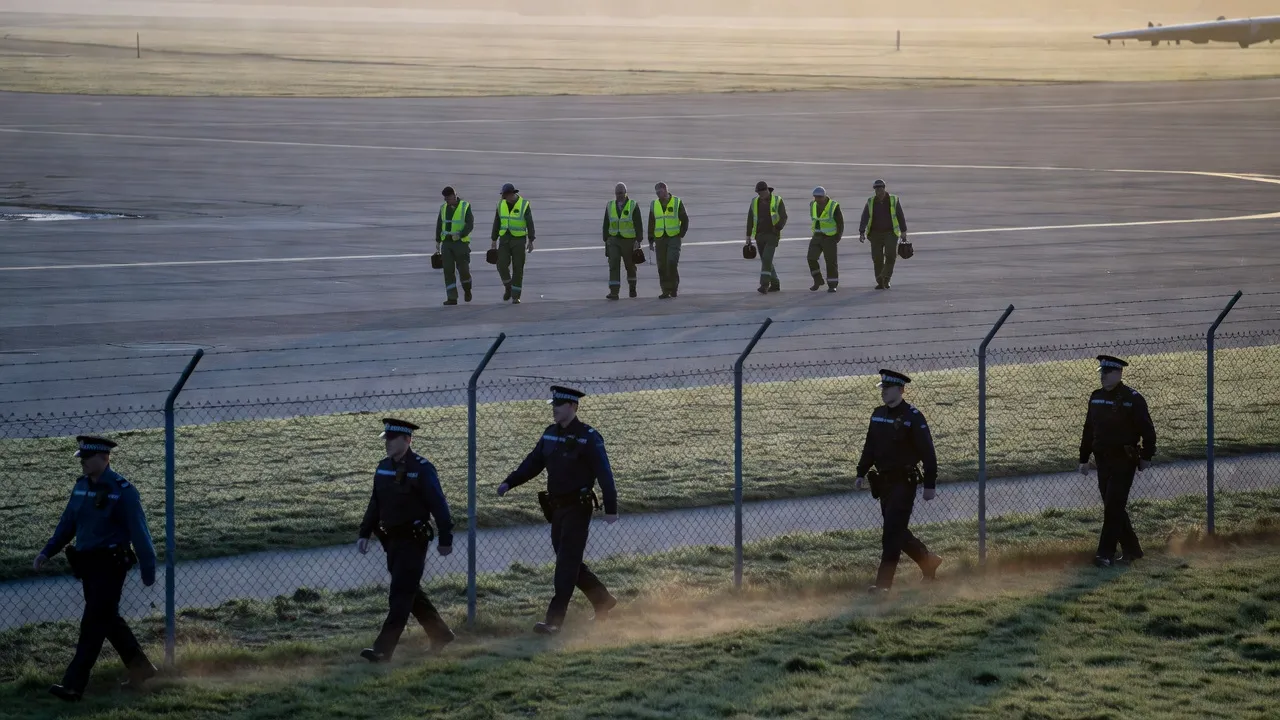
Berlin, October 6, 2026. The German press is treating the withdrawal of B-1s from RAF Fairford as a matter of deterrence before making it a British issue. Deutsche Welle recalls the facts: a week after the incident, all aircraft returned to American bases, according to the Pentagon. These jets had also been used in strikes against Iran. The police had discovered three vans near the base and arrested several suspects. A British-Iranian national was later arrested on suspicion of terrorism, then released on bail. Prime Minister Andy Burnham speaks of indications of possible Iranian involvement, which Tehran denies.
Die ZEIT goes further, relying on the Wall Street Journal, the New York Times, and Axios. According to these media outlets, which cite American and British military sources, the plan was to strike the planes stationed at Fairford with drones and kill American military personnel. The Iranian Revolutionary Guard allegedly ordered it. The New York Times sees a model: last year's Ukrainian attack, when drones were transported to Russia on semi-trailers. Die ZEIT notes that the United States had deployed additional bombers to the United Kingdom in March to gain flexibility in the face of Iran, and that a successful strike could have provoked a significant escalation in the Middle East. Donald Trump dodged a journalist's question, the newspaper reports.
The most biting commentary comes from the FAZ, for which "America looks weak again". The daily newspaper talks about a form of asymmetric warfare: six men targeting a single airport are enough to put the leading power of NATO on the defensive. Tehran would gain a small tactical success, and the return of the bombers to the United States would lengthen the flight time to the Gulf. Above all, the FAZ considers the psychological impact to be heavier, including for Moscow, which is familiar with this scenario, and refers to Leipzig Airport. It concludes that Trump has put himself in this situation, but "the entire West suffers the damage", because American deterrence remains the foundation of security in Europe and Asia.
These three titles leave little room for divergences between Washington and London, or between Trump and his administration. The "threats" related to Iran mentioned by the American president, Rubio's reserve, and British sovereignty over the use of the base do not appear in the available excerpts. The focus is on what the episode says about the vulnerability of allied bases and the reliability of American protection.










