
DOMINANT ANGLE
Doha views the US sanctions law as a potential reshaping of the global energy market, where tariffs targeting buyers of Russian oil and gas could redraw the map in favor of Gulf producers.
Dominant angle identified — does not reflect unanimity of this country’s media
KEY POINTS
- 01
The House of Representatives passed the bill by 262 votes to 159 on Wednesday, September 16, after its adoption in the Senate, sending the text to Donald Trump's desk.
- 02
The text authorizes customs duties of up to 100% on countries, including China and India, that continue to import Russian oil and gas.
- 03
The Indian Ministry of Foreign Affairs stated on Thursday, September 17, that New Delhi remained "firmly committed" to ensuring the energy security of its 1.4 billion inhabitants and would take "all necessary measures" to protect its trade interests.
ANALYSIS
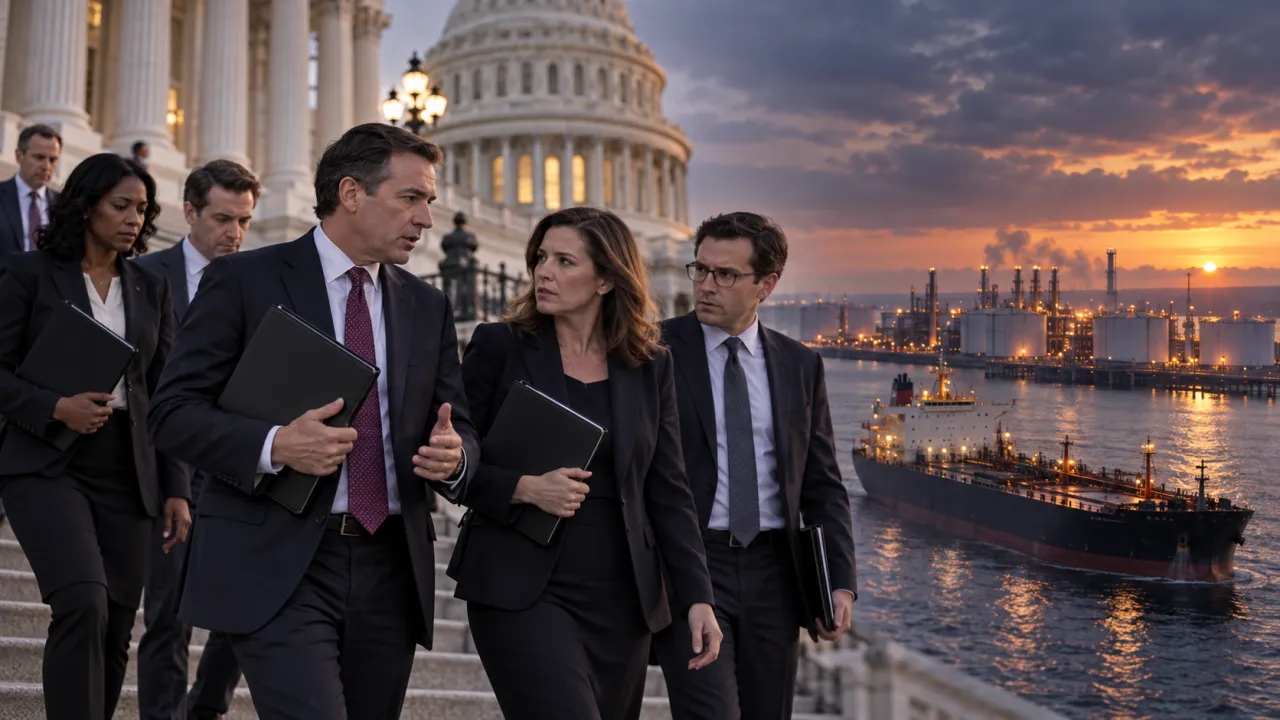
Doha, Friday, September 18, 2026. As the world's leading exporter of liquefied natural gas, Qatar is closely following the US Congress vote that paves the way for customs duties of up to 100% against countries that continue to buy Russian oil and gas. On Wednesday, September 16, the House of Representatives adopted the text introduced by Republican Senator Lindsey Graham by 262 votes to 159, after its adoption in the Senate; it is now headed to Donald Trump's desk. The law specifically targets China and India, two major customers of Russian oil, and also targets officials, banks, and the ghost fleet of tankers used by Moscow to circumvent Western sanctions.
For the Qatari press, the issue goes beyond simply punishing Moscow: it is a possible redistribution of the global energy market that is taking shape. If Asian buyers must reduce their Russian imports under penalty of tariff reprisals, alternative suppliers of LNG and oil, led by the Gulf, could benefit commercially, provided they avoid being caught up in the sanctions machinery themselves.
On Thursday, September 17, the Indian Ministry of Foreign Affairs responded that New Delhi remained "firmly committed" to ensuring the energy security of its 1.4 billion inhabitants through "diversified supply", and that it would take "all necessary measures" to protect its commercial interests. A position that, from Doha's perspective, illustrates the difficulty of converting the US law into a real lever: the exemption clause for countries importing less than 15% of their gas from Russia leaves room for negotiation, and nothing obliges Trump to actually apply the tariffs.
The text also extends the Iran Sanctions Act until 2031, a point closely followed in the Gulf, where the regional balance depends in part on American pressure on Tehran. For Qatari observers, the law confirms above all the willingness of Congress, reunited on this issue after more than a year of deadlock, to transform access to Russian energy into a variable of war diplomacy in Ukraine — a logic that could, in the long term, redistribute market shares to Gulf producers.




