Common ground and differences in coverage across the media analysed.
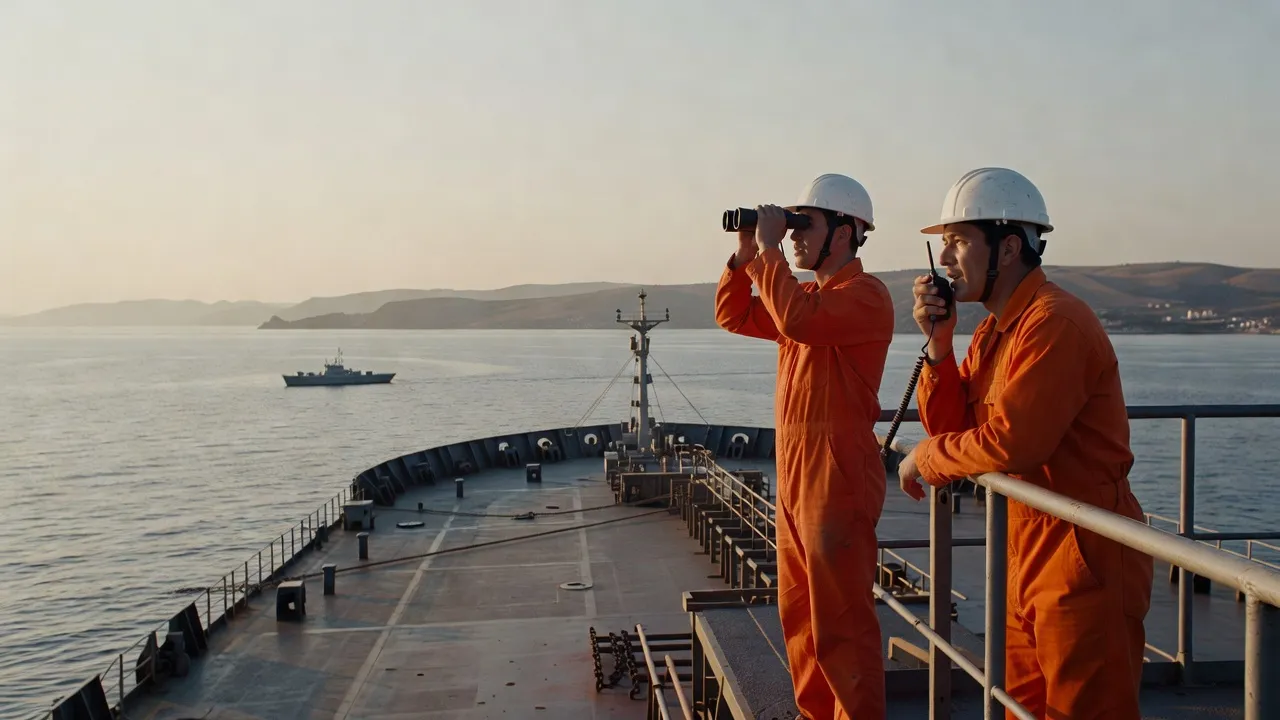
After about a month of calm, US forces struck Iranian missile launchers on August 31, 2026, on Larak Island in the Strait of Hormuz
Iran retaliated by targeting two US bases in Jordan, King Hussein and al-Azraq, as well as a target in the United Arab Emirates, Al Minhad base
The Jordanian army claims to have intercepted the missiles fired at its bases, with no reported civilian damage
Iran claims a drone attack on the UAE's Al Minhad base, a version Qatar echoes in condemning Iranian strikes, while France, Germany, and Argentina note that Abu Dhabi formally denies any strike, while confirming the interception of a drone.
Donald Trump released images presented as showing the Kharg Island oil terminal destroyed, but Russian and Singaporean media point out that no evidence of an actual strike was found and the video is likely AI-generated.
Coverage aligned with this reading
Washington frames its August 31 strike as a limited action against a mining threat in the strait, while Tehran views it as a violation of the United Nations Charter and claims a right to self-defense for its response.
Coverage aligned with this reading
Coverage that diverges
This grouping describes the publications analysed, not the position of these countries’ populations or of their governments.
What the coverage of each country leaves aside, while others put it forward.
France
Israel
India
Iran
Preview: 3 of 14 media perspectives. Syntheses of the media analysed — not direct quotations. Method & limitations
Islamabad is gauging the cost of its own diplomatic success: the June agreement, which Tehran calls the "Islamabad memorandum", is unraveling with the resumption of hostilities and the surge in oil prices above $91 a barrel.
5 sources · View sources
Tehran defends its strikes in Jordan and the Emirates as an exercise of legitimate self-defense, while also claiming exclusive control of the southern route of the Strait of Hormuz in the face of the United States.
2 sources · View sources
The United States government carefully distinguishes its retaliatory strike from a return to open war: CENTCOM refers to a "limited action" against the mining of the strait, while the Pentagon assesses a campaign of periodic strikes to contain Tehran without expanding the war objectives.
6 sources · View sources
DOMINANT ANGLE
Islamabad is gauging the cost of its own diplomatic success: the June agreement, which Tehran calls the "Islamabad memorandum", is unraveling with the resumption of hostilities and the surge in oil prices above $91 a barrel.
ANALYSIS
Islamabad, September 1, 2026.
DOMINANT ANGLE
Tehran defends its strikes in Jordan and the Emirates as an exercise of legitimate self-defense, while also claiming exclusive control of the southern route of the Strait of Hormuz in the face of the United States.
ANALYSIS
Tehran, September 1, 2026.
DOMINANT ANGLE
The United States government carefully distinguishes its retaliatory strike from a return to open war: CENTCOM refers to a "limited action" against the mining of the strait, while the Pentagon assesses a campaign of periodic strikes to contain Tehran without expanding the war objectives.
ANALYSIS
Washington, September 1, 2026.
DOMINANT ANGLE
Jerusalem sees Iran's choice of targets as a calculated move: Tehran is targeting Jordan and the UAE to avoid a direct Israeli response, while also targeting regional partners of the US.
ANALYSIS
Jérusalem, September 1, 2026.
DOMINANT ANGLE
Moscow highlights the flaws in the US account of the strikes against Iran, citing AI-generated videos and the lack of independent evidence of the announced bombings on Kharg Island.
ANALYSIS
Moscow, September 1, 2026.
DOMINANT ANGLE
Doha condemns Iranian strikes on Jordan and the Emirates as a dangerous escalation, but is mainly concerned about the risk this resurgence of hostilities poses to its own mediation efforts, which were launched last week in Tehran alongside Oman and Pakistan.
ANALYSIS
Doha, September 1, 2026.
DOMINANT ANGLE
France sees in the internal Pentagon warnings, revealed by the Washington Post and relayed by L'Express, the real risk of this exchange of fire: a US military with dwindling missile stocks, not just a temporary escalation.
ANALYSIS
Paris, September 1, 2026.
DOMINANT ANGLE
London is weighing an exchange of fire with still unclear consequences, where its own maritime agency, the UKMTO, documents an unclaimed attack on a tanker off the coast of Oman.
ANALYSIS
London, September 1, 2026.
DOMINANT ANGLE
New Delhi first estimates the oil bill for this resurgence of hostilities: Brent and WTI surge as soon as the markets open, even before the military assessment of the strike on Larak.
ANALYSIS
New Delhi, September 1, 2026.
DOMINANT ANGLE
Nigeria's capital, Abuja, is taking a cautious approach to the ambivalence of a barrel of oil rising above $90: a potential boost to the budget, but a heavy domestic bill that households are already struggling to pay.
ANALYSIS
Abuja, September 1, 2026.
DOMINANT ANGLE
Pretoria is gauging the Iran-US escalation in terms of dollars per barrel rather than human losses, and sees it as proof that a naval blockade is succeeding where decades of sanctions have failed.
ANALYSIS
Pretoria, September 1, 2026.
DOMINANT ANGLE
Buenos Aires is reconstructing the exchange of fire between Washington and Tehran hour by hour, focusing on the disputed tolls and crossed denials rather than the immediate oil consequences of the crisis.
ANALYSIS
Buenos Aires, September 1, 2026.
DOMINANT ANGLE
Singapore is feeling the oil shock from the resumption of hostilities between Washington and Tehran, more so than the military developments themselves, as the city-state thrives on refining and crude oil trading.
ANALYSIS
Singapour, September 1, 2026.
DOMINANT ANGLE
Berlin is deciphering the resurgence of hostilities through the lens of the G20 summit: as the German government seeks to navigate the situation, Finance Minister Lars Klingbeil is looking to establish new trade partnerships in Asheville, while its allies are being urged to economically isolate Tehran.
ANALYSIS
Berlin, September 1, 2026.
Explore every perspective on this subject across 14 countries.
Compare viewpoints and see where they diverge.
published on
countries
sources
articles
gap
After about a month of calm, US forces struck Iranian missile sites on Larak Island in the Strait of Hormuz on Monday, August 31, 2026; Tehran reports fatalities and injuries. Iran retaliated by targeting two US bases in Jordan and the Al-Minhad base in the UAE; the United Arab Emirates describes the Iranian attack as a "dangerous escalation". An oil tanker was hit by unidentified projectiles in the southern corridor of the strait, near the Omani coast, according to the UK Maritime Trade Operations (UKMTO) agency, with no casualties reported. The price of Brent crude exceeded $90 as soon as the strikes were announced. Donald Trump vowed to hit Iran "hard" while ruling out the use of nuclear arms.
The human toll and the exact number of targets hit remain disputed, with no independent source confirming the US and Iranian accounts.
An internal document revealed by the Washington Post mentions significantly depleted stocks of Patriot, THAAD, and Tomahawk systems.
Tasnim reports three deaths, including two Revolutionary Guard sailors, while the BBC, citing the same authorities, puts the number at two.
Qatar had sent a delegation to Tehran the previous week, along with Oman and Pakistan, to revive negotiations.
Trump posted an AI-generated video showing Kharg Island destroyed; no evidence of an actual strike was found.
More divergent than 96% of recent comparable stories (reference: 91 recent stories measured with the same method).