EXPLORE THIS STORY

UNITED KINGDOM PERSPECTIVE
XENOPHOBIC VIOLENCE IN SOUTH AFRICA SPARKS NIGERIA CRISIS
Single source
DOMINANT ANGLE
London is closely watching the diplomatic rift caused by the xenophobic violence in South Africa, fearing a domino effect on the Commonwealth's intra-African relations.
Dominant angle identified — does not reflect unanimity of this country’s media
ANALYSIS
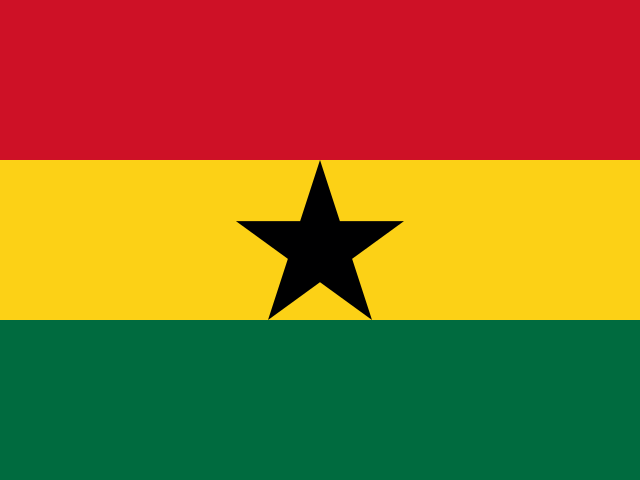
London, July 9, 2026. The British government has been closely following the crisis, which has led to Ghana's decision to postpone the planned early August visit of South African President Cyril Ramaphosa, highlighting the diplomatic fallout from the wave of anti-migrant violence in South Africa. According to Felix Kwakye Ofosu, the Ghanaian government's spokesperson, "We communicated to them that it would be preferable to defer the visit considering the current climate around xenophobia." More than 900 Ghanaian nationals have already been repatriated from South Africa, and a similar number is expected to follow in the coming weeks.
For the British press, the symbolic trigger remains the viral video of Emmanuel Asamoah, a young Ghanaian living in South Africa, being told to "go back and fix his own country." This incident has crystallized anger that now goes beyond Ghana: the British media notes that Nigeria, Malawi, and Kenya are also repatriating their nationals due to the violence.
On the South African side, presidential spokesperson Vincent Magwenya has attempted to defuse the crisis, reaffirming Pretoria's "unwavering commitment" to "deepen cooperation" between the two "sister nations" and to "advance the African agenda." He clarified that the postponed visit was not a state visit, contrary to what Ghanaian officials claimed, but the third in a series of bilateral meetings, and that the two governments "would continue to exchange diplomatically to fix a mutually convenient date."
From London, where historical ties with South Africa and Nigeria remain significant within the Commonwealth, this inter-African crisis is seen as a test of Pretoria's ability to manage its neighborhood relations without disrupting regional economic cooperation, in a context where the British media highlights that other countries are watching the situation with concern.
KEY POINTS
- The UK government is closely monitoring the situation in South Africa, where President Ramaphosa's August visit was reportedly postponed by Ghana, citing "the current climate around xenophobia" (spokesperson Felix Kwakye Ofosu to the BBC)
- More than 900 Ghanaians have already been repatriated from South Africa, with a similar number expected in the coming weeks
- From London's perspective, the ongoing anti-migrant violence has prompted countries like Nigeria, Malawi, and Kenya to also repatriate their nationals
COGNITIVE BIASES IDENTIFIED
Diplomatic framing is institutional in nature, with an emphasis on official channels, such as spokespeople and press releases, rather than direct testimony from victims.
There is a preference for a single source, the BBC, with a lack of corroboration from a second British media outlet on this crisis.
The Nigerian aspect of the crisis receives limited coverage, with the role of the Nigerian Senate and specific tensions with Abuja being underdeveloped in the available article.
SOURCES (1)
Does this analysis seem accurate?