Italy — news through its media
Stories followed in this country, with their framing set against the rest of the world.
219 subjects found
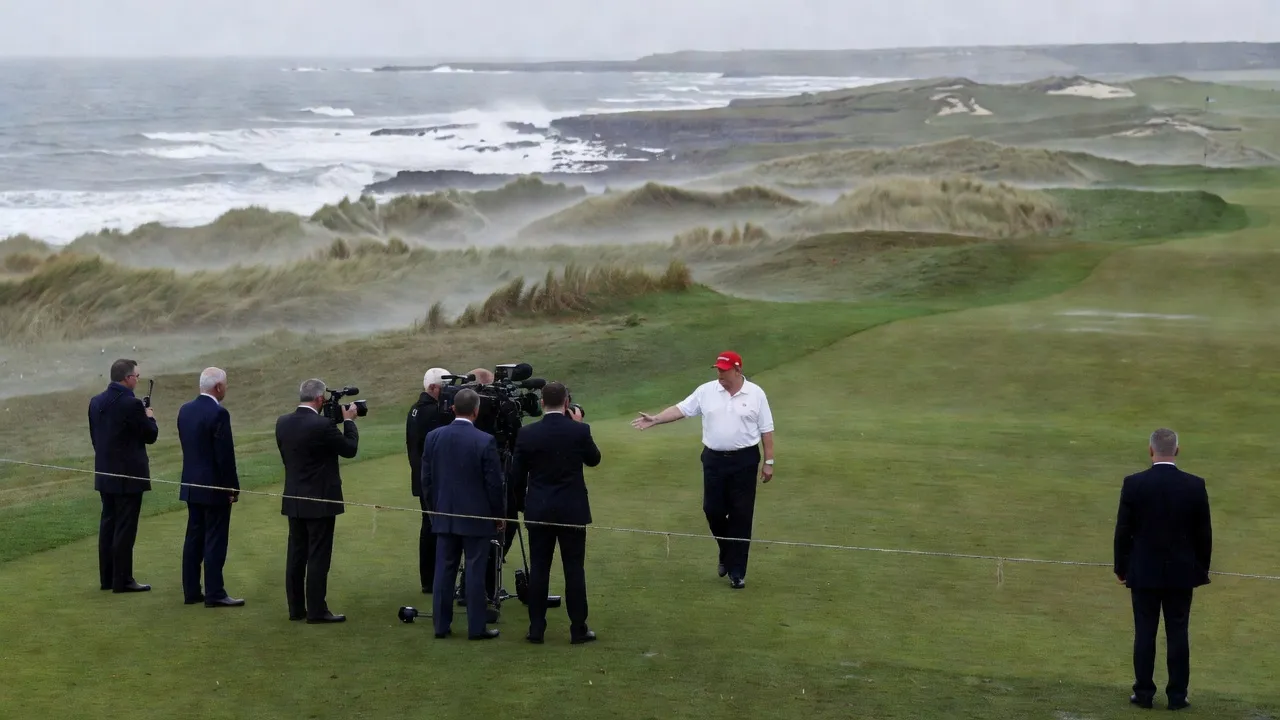
Trump backs a united Ireland during his visit to Dublin and his Doonbeg golf course, anger among unionists
On Saturday in Dublin, facing Taoiseach Micheál Martin, Donald Trump said he would love to see Ireland “united” and that reunification would be “fantastic”, before a tournament at his Doonbeg golf course. On Sunday he insisted it “is going to happen eventually”. Northern Irish unionists and Reform UK hit back sharply, while London had ruled the question off the table. Twenty countries read an unprecedented remark for a US president.


 +16
Saudi Arabia shuts its East-West pipeline after drone attacks launched from Iraq
Riyadh temporarily shut the East-West pipeline, its bypass around the Strait of Hormuz, after drone attacks on Friday night. Baghdad admits the drones came from Iraq, dismisses two officials and closes three border crossings with Iran; Donald Trump names Iran as the likely culprit. Twenty countries tell the same night, from crude above $100 to Iraqi militias.


 +16

Anthropic's chief calls for slowing AI development, and Altman and Musk agree
In an essay published on Saturday, Dario Amodei asks AI companies to slow the growth of their models' capabilities so that safety can catch up, and proposes a three-part framework. Sam Altman and Elon Musk say they agree. From Washington to Caracas, thirteen countries read the call according to their place in the race: regulation, jobs, sovereignty, fear of an AI beyond control.


 +9
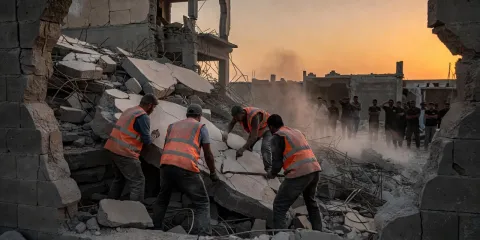
Israel on two fronts: a family killed by a strike in Gaza, Hezbollah tunnels blown up in Lebanon, the Rome talks postponed
On 11 September, the Israeli army blew up a Hezbollah tunnel network in southern Lebanon, a detonation recorded as a magnitude-4.1 tremor, and says it is ready for further strikes. In Gaza, a strike on a home killed a family of four, including two children, according to Palestinian medical sources; Israel says it killed the commander of Hamas's Khan Younis brigade. The Israel-Lebanon talks planned in Rome are postponed to October.

 +7
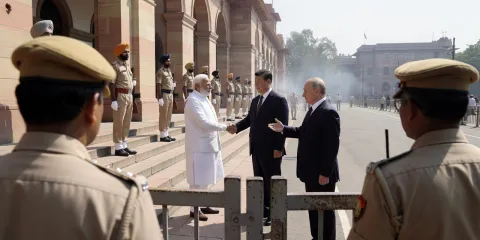
Vladimir Putin and Xi Jinping in New Delhi for a BRICS summit overshadowed by the wars in Ukraine and the Middle East
Vladimir Putin arrived in New Delhi on 11 September for the 18th BRICS summit, hosted by India on 12 and 13 September; Xi Jinping is making his first visit to India in seven years and is due to meet Narendra Modi on the 12th. The enlarged bloc accounts for nearly half the world's population and about 40% of global GDP, but the war in Ukraine and the conflict around Iran divide its members. India has deployed more than 30,000 security personnel.

 +14
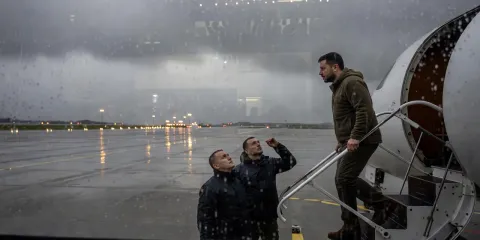
Volodymyr Zelensky's plane nearly hit by a drone after taking off from Moldova, Oslo says; the Kremlin denies any threat
On 9 September, the aircraft carrying Volodymyr Zelensky to Oslo was nearly hit by a drone after taking off from Moldova, according to Norwegian Prime Minister Jonas Gahr Støre; Chisinau and Kyiv say the departure was delayed by a drone threat, and one drone came down about 160 km from the airport. The Kremlin, through Dmitry Peskov, says there was no threat to the plane. A drone also entered Romanian airspace.
 +8
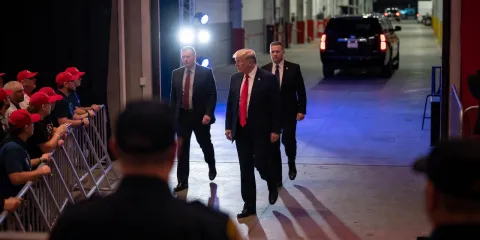
Donald Trump promises $5,000 to every American adult if Republicans keep Congress
On 9 September, Donald Trump promised a $5,000 "dividend" to every American adult if Republicans keep the House and Senate in November's midterm elections, which renew all 435 House seats and 35 of the 100 Senate seats. With around 270 million adults, the cost would exceed a trillion dollars; media outlets recall two similar promises that went unfulfilled, and legal scholars question the lawfulness of a payment conditioned on an election result.
 +21

A British air traffic control failure cancels over a thousand flights, and NATS chief Martin Rolfe is summoned by the transport secretary
A failure in NATS's flight data processing system disrupted UK air traffic on 8 September: more than a thousand flights cancelled, Heathrow, Gatwick, Manchester and Stansted hit, Dublin affected. A further 177 flights were cancelled the next day. Ryanair and Wizz Air are demanding answers; Transport Secretary Heidi Alexander rules out a cyberattack.

 +9
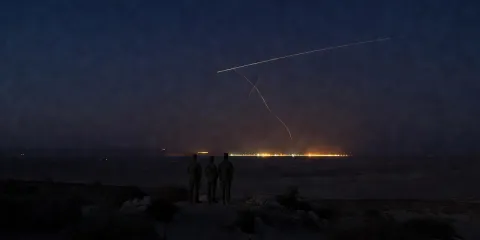
US destroys five Iranian tankers, Tehran strikes Jordan's Al-Azraq base, and Brent crude climbs back above $100
US Central Command destroyed five Iranian oil tankers on 8 September, calling it a response to two ballistic missile attempts against a Navy warship. Iran struck the Al-Azraq base in Jordan, which says it intercepted 18 of 20 missiles, then claimed attacks on shipping in the Strait of Hormuz, where one seafarer was killed and another reported missing. Brent crude passed $100 for the first time since July.


 +25
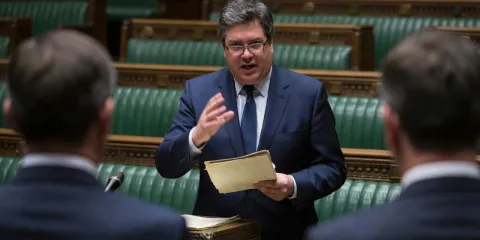
Twelve countries move to ban trade with Israeli settlements; Israel orders the British consulate closed
On Tuesday 8 September, twelve countries — the United Kingdom, France, Canada and nine European states — said they intend to ban trade with Israeli settlements in the occupied West Bank, which British Foreign Secretary Ed Miliband linked to “ethnic cleansing”. Two hours later Israel ordered the British consulate in East Jerusalem to close, told diplomats to leave and barred twelve Britons from entry. Washington said it would not follow.
 +16
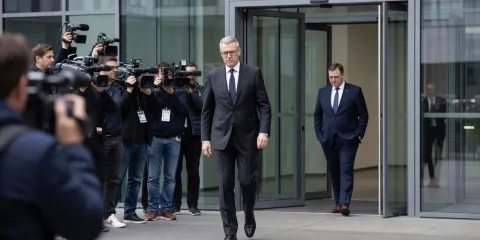
The CDU's "heaviest defeat": Merz holds his ground as the succession fight opens in Saxony-Anhalt
The day after the AfD's victory, Friedrich Merz told reporters at the CDU headquarters in Berlin that he was "deeply shocked", calling the result the party's heaviest defeat in decades. He is holding his position for now, but the internal fight has begun: Sepp Müller is running for the CDU chairmanship in Saxony-Anhalt, and the coalition's reform agenda looks harder to carry.
 +9
Understand global stakes from every perspective.
722 subjects · 75 countries · 8238 perspectives