Every angle on the news
Every story decoded through media worldwide, perspective by perspective.
Economy & Trade
71 subjects found
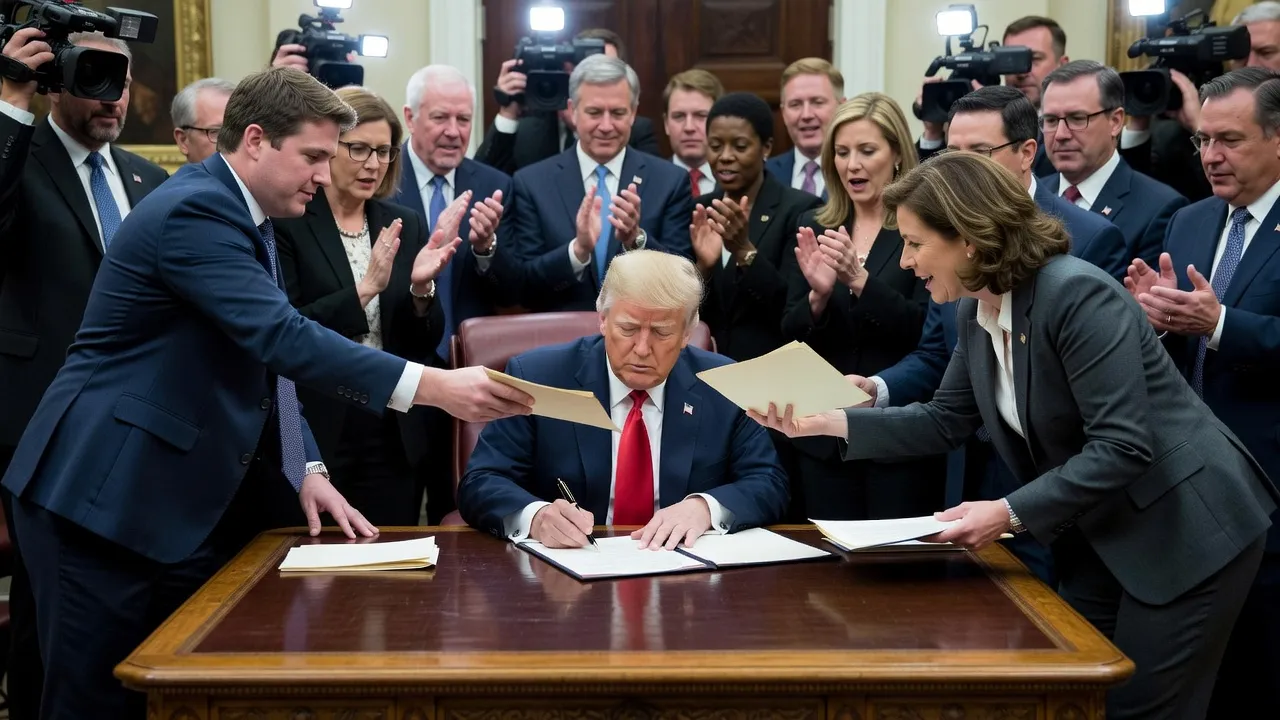
United States: Donald Trump suspends the Russia sanctions passed by Congress
The order freezes the Graham Act, which also targeted major buyers of Russian oil; the Kremlin hails a "historic" decision, Kyiv sees a reward for Vladimir Putin.



 +22
+22
United States: inflation climbs to 3.7% on the Iran war, Wall Street and AI stocks tumble
Gasoline is pushing prices up three weeks before the midterm elections. Markets are betting on a Fed rate hike, and artificial intelligence stocks are sliding.

 +6
+6
IMF raises 2026 global growth forecast to 3.1%, but warns of a 'highly uneven' outlook between AI winners and energy importers
Released in Bangkok, the International Monetary Fund's forecasts describe growth propped up by AI and held back by the oil shock, debt and interest rates.

 +11
+11
2026 economics Nobel: Americans Robert Hall and Michael Woodford honoured for the tools of economic stabilisation
The Royal Swedish Academy of Sciences honours the microeconomic foundations of the models central banks now use to respond to shocks, from the pandemic to energy crises.
 +10
+10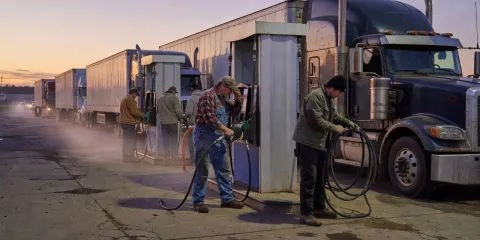
Trump-Putin deal on Russian diesel: Washington eases sanctions, Zelensky condemns "a weak decision"
After a call with Vladimir Putin, Donald Trump announced massive deliveries of Russian diesel to bring prices down before the midterm elections; the Treasury authorised the imports until April 2027. Kyiv speaks of money for the war, and lawmakers from both parties say the deal runs against the sanctions law.

 +15
+15
Paramount completes its takeover of Warner Bros. Discovery: Skydance, Hollywood's new giant led by David Ellison
The deal, valued at about 110 billion dollars including debt, brings together Paramount and Warner Bros., CBS and CNN, Paramount+ and HBO Max. Donald Trump welcomed the merger; Hollywood fears job cuts and higher subscription prices.

 +12
+12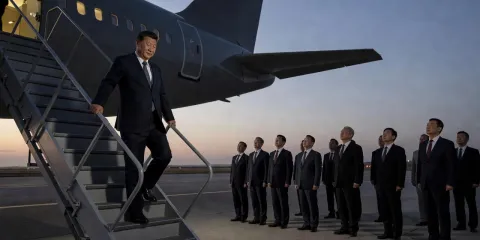
After the Trump–Xi summit, Washington and Beijing announce an AI incident channel and tariff cuts on $30 billion of goods
At the end of Xi Jinping's visit, the two countries announced tariff cuts on $30 billion of goods in each direction, a trade council, an AI dialogue in November and a channel for AI-related incidents. Donald Trump nonetheless said he rejects any brake on AI and any cooperation with China on the technology, while Beijing criticised Washington at the UN over Iran and Cuba.
+13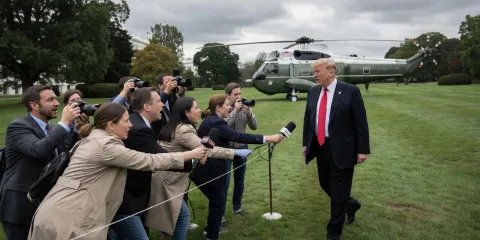
Trump rejects Iran's seven-day plan to reopen Hormuz and renames the strait "Trump Strait"
Donald Trump rejected the Iranian proposal passed on by Qatar: seven days of halted hostilities across the region, then the reopening of Hormuz, in exchange for lifting the US blockade and oil sanctions and unfreezing at least $12 billion in assets. Tehran says it is waiting for an official answer; according to the Wall Street Journal, Trump sees renewed bombing as likely after the midterm elections.
 +18
+18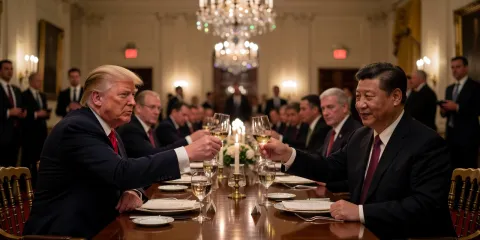
Trump and Xi display their "friendship" at the White House, with a state dinner and pandas but no progress on trade or Taiwan
On the second day of Xi Jinping's state visit, Donald Trump hailed a "truly great friendship": under two hours of talks, a state dinner with the heads of Apple, Nvidia and AMD, and two pandas promised to Atlanta's zoo. No progress was announced on trade, Taiwan, rare earths or AI; the trade truce is only extended to January 10.
 +35
+35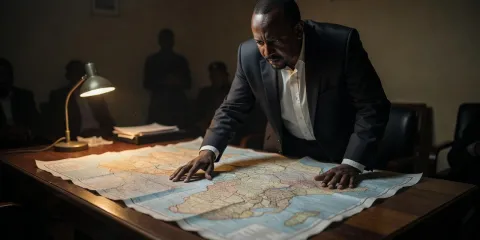
Tigray forces seize three airports and attack Afar and Amhara, pushing Ethiopia to the brink of a new war
Tigray forces on Wednesday seized three airports in the region and attacked Afar and Amhara; Ethiopian Airlines suspended flights to Mekelle, Shire and Axum. Each side accuses the other of starting the fighting, four years after the Pretoria agreement ended a war that killed some 600,000 people. The UN and the EU urged restraint, and Washington warned of further sanctions.



 +4
+4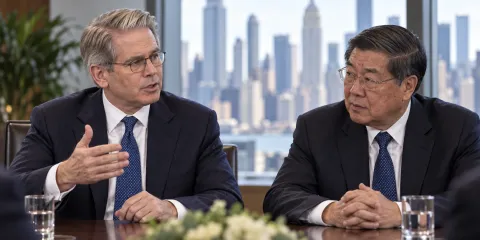
Washington proposes an AI incident notification mechanism to Beijing, days before the Trump-Xi summit
In New York, US Treasury Secretary Scott Bessent and Chinese Vice Premier He Lifeng discussed trade, tariffs, critical minerals and artificial intelligence. Washington proposed a notification mechanism between the two countries for serious AI incidents, and both delegations agreed to open a formal dialogue on AI ahead of the Washington summit.

 +6
+6Understand global stakes from every perspective.
726 subjects · 75 countries · 8278 perspectives