
DOMINANT ANGLE
Bucharest gauges the blow dealt to Politico in light of its own usage: the same media outlet is collecting this week the reaction of its designated prime minister on the future of the National Rally.
Dominant angle identified — does not reflect unanimity of this country’s media
KEY POINTS
- 01
CNN, MS NOW, and Politico notified the US government on Monday of the launch of a judicial procedure based on the First Amendment, after their credentials were withdrawn on Friday (G4Media).
- 02
Journalists from the three media outlets attempted to enter the White House on Saturday despite the ban, without success, before publicizing the situation (G4Media).
- 03
On the same day, Politico gathered the reaction of Siegfried Mureşan, Vice-President of the EPP and designated Prime Minister, in a separate interview about Marine Le Pen (Mediafax).
ANALYSIS
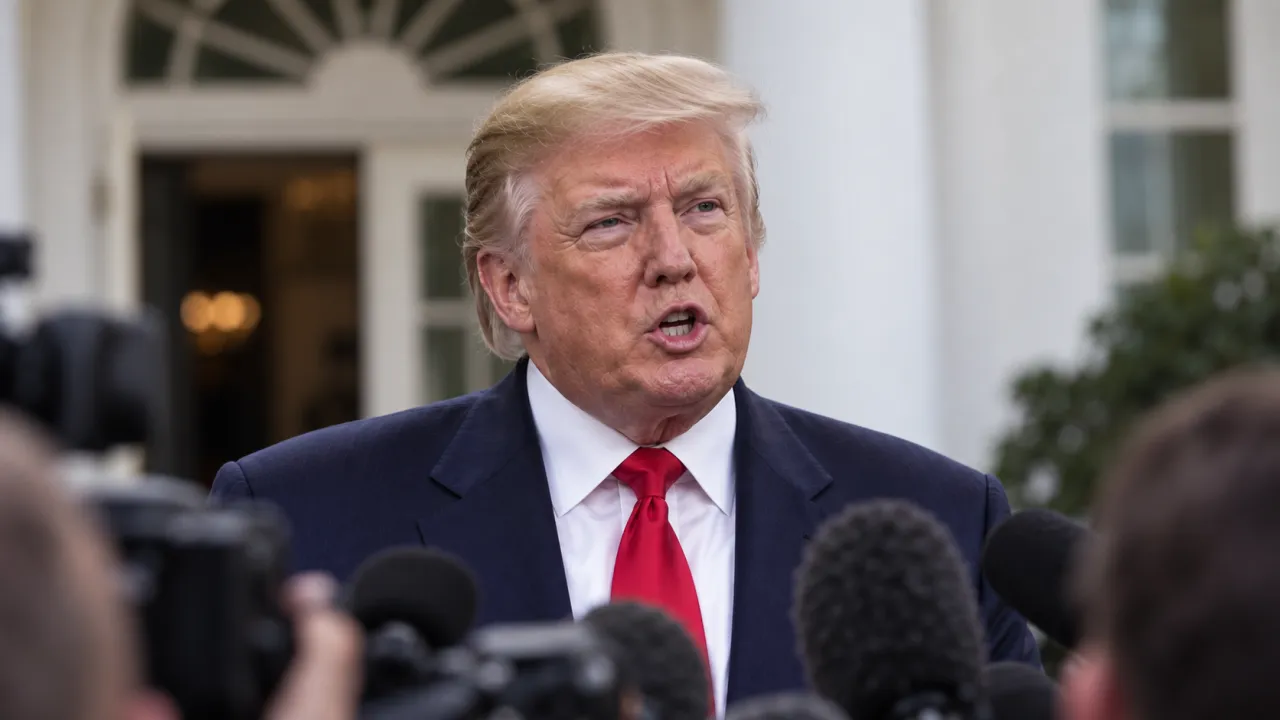
Bucharest, September 22, 2026. The Romanian press has been quietly reporting on the open confrontation between Donald Trump and three American editorial offices, CNN, MS NOW, and Politico, which announced on Monday that they would be taking legal action against the administration after their accreditation to the White House was withdrawn. According to G4Media, which cites the AFP and Reuters news agencies, the ban came into effect last Friday; the journalists in question nonetheless attempted to enter the presidential compound on Saturday, without success, before publicizing their exclusion. The three media outlets notified the government on Monday morning of the opening of a procedure based on the first amendment of the US Constitution, estimating that "it is not up to the government to decide what the press publishes". In a joint statement cited by G4Media, they denounce the withdrawal of their accreditation "without notice or procedure".
The American president justified the measure on social media by accusing these editorial offices of spreading "false news", specifying that the decision does not respond to any specific incident but to "an accumulation of reports" in recent years, and warning that other "fake news media" will follow, according to statements relayed by Agerpres and taken up by G4Media.
The Romanian press is not approaching the episode as a distant spectator: on the same day, Mediafax reported on an interview given to Politico by Nicola Procaccini, an ally of Giorgia Meloni, on the hypothesis of Marine Le Pen coming to power in France. In this article, Politico also gathered the reaction of Siegfried Mureşan, vice-president of the PPE and designated prime minister of Romania, who anticipates an evolution in the line of the National Rally. This dual use of the same media outlet, in one week, situates Politico not as a distant American title but as a current channel of European debate, including for Romanian officials themselves.
It is this proximity that informs the Romanian reading: the exclusion of an editorial office consulted by its own future head of government carries different weight than that of a media outlet without a direct link to Bucharest. The outcome of the procedure initiated by CNN, MS NOW, and Politico is therefore being followed less for its internal American consequences than for what it will say about the future access of editorial offices covering Europe to their own sources in Washington.