Common ground and differences in coverage across the media analysed.
What the media report in common
1
Donald Trump announced on Sunday, October 11, on Truth Social a 'ceasefire' with immediate effect between Russia and Ukraine, without specifying the terms; Russia had not confirmed its agreement in the articles of the corpus.
2
Volodymyr Zelensky told Axios that the announcement was 'news' to him, while stating he was ready to support the truce if Moscow respects it.
3
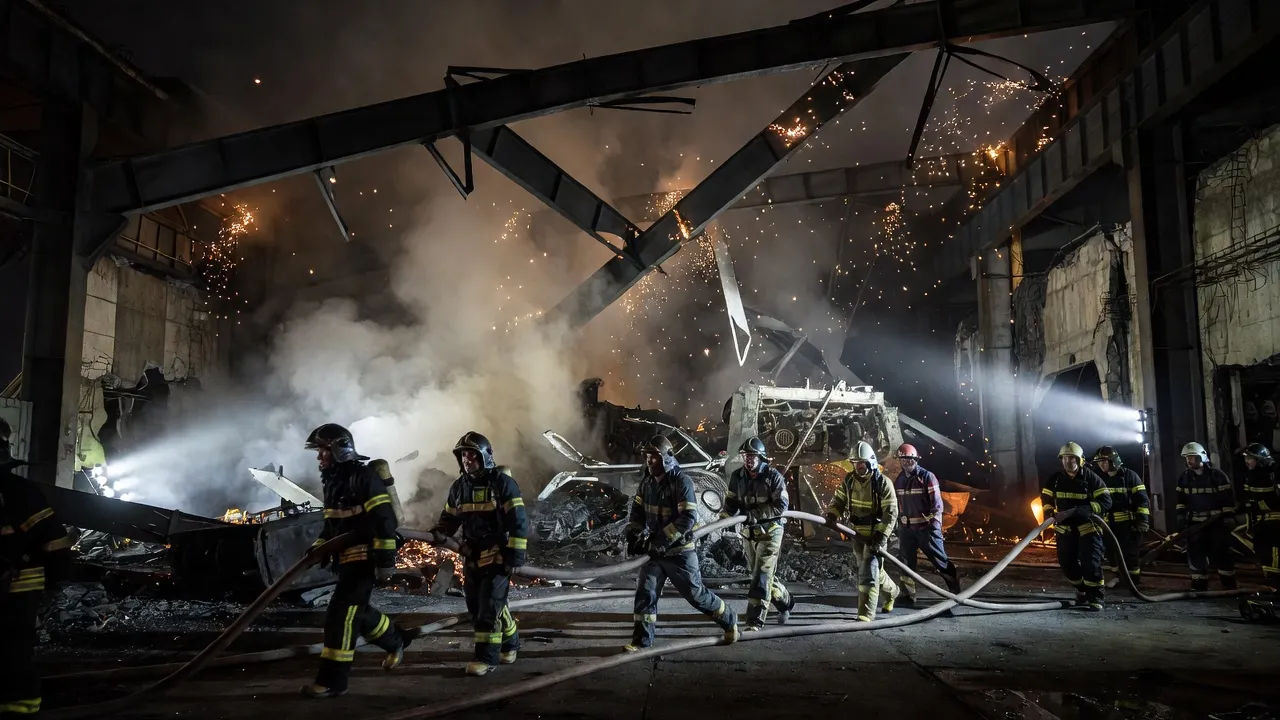
After the announcement, Zelensky reported strikes on a power plant in Kharkiv and on a power plant in Kiev, which the majority of perspectives report.
Where media coverage diverges
Responsibility for energy strikes
On the question of who is being blamed for the attacks on energy infrastructure, the Ukrainian press and Macron point to Russia, which « continues to refuse » a ceasefire, while the Russian press quotes Trump attributing the global fuel crisis to Ukraine and Zelensky.
What the coverage of each country leaves aside, while others put it forward.
France
according to the Financial Times, Washington's warning to suspend arms deliveries or the PURL device to obtain the cessation of Ukrainian strikes on Russian energy
Bangladesh
the strikes on the Kharkiv power plant and on a power plant in Kiev after the announcement
Brasília is deciphering a ceasefire proclaimed by Washington before Kiev or Moscow could confirm it, and the Brazilian press is putting it into the context of the standoff between Trump and Zelensky over the Ukrainian elections.
Canberra is deciphering an energy truce proclaimed by Trump before any visible agreement, which Kiev discovers, Moscow does not confirm, and the strikes on Kharkiv and Kiev immediately contradict.
Dhaka is gauging Trump's energy truce by the barrel and the stock exchanges: the price of imported diesel and oil takes precedence over the diplomatic machinery between Moscow and Kiev.
Brasília is deciphering a ceasefire proclaimed by Washington before Kiev or Moscow could confirm it, and the Brazilian press is putting it into the context of the standoff between Trump and Zelensky over the Ukrainian elections.
KEY POINTS
Trump announced a "energy ceasefire" effective immediately on Truth Social on Sunday, October 11, with no details on its terms (G1, Folha).
Zelensky told Axios it was "news" to him, while accepting the ceasefire if Moscow respects it; the Kremlin had not commented (G1).
Zelensky proposed holding elections in exchange for 60 days of total ceasefire, after Trump called for a "new leader" on Saturday, October 10 (Folha, G1).
ANALYSIS
Brasília, October 12, 2026. Brazilian headlines first highlight the asymmetry of the announcement. G1 reports that Donald Trump stated on Sunday, October 11, that Ukraine and Russia had accepted a partial ceasefire, halting attacks on their respective energy infrastructures, and notes that "neither Ukraine nor Russia has confirmed the agreement." Folha, on the other hand, headlines a Zelensky who claims to be "unaware" of the agreement.
The cited text is the one published on Truth Social: "Effective immediately, an energy ceasefire is in effect in the war between Russia and Ukraine. Both parties have agreed. Do not violate it!" Both newspapers emphasize that Trump provided no details. When asked by Axios, Volodymyr Zelensky spoke of a "novelty" for him, while assuring that Kiev would accept the truce if Moscow did the same. G1 recalls that this announcement came just hours after his own offer to stop striking Russian refineries in exchange for the cessation of attacks on the Ukrainian energy network. The Kremlin had not commented at the time of the last update.
The coverage focuses on the political context. On Saturday, October 10, Trump attributed the rise in diesel prices in the United States to Ukrainian strikes on refineries and judged that Ukraine should change its leader; Folha adds that he questioned the absence of elections since February 2022. Zelensky responded that "it's up to our society, our people" to choose their leader, and proposed on ABC to hold a vote in exchange for 60 days of total ceasefire: "Tell Putin to give us two months."
G1 also details Zelensky's exchanges with Canadian Mark Carney, Finnish Alexander Stubb, and NATO Secretary-General Mark Rutte. It quotes the Ukrainian president: "We are waiting for the details from the American side," with Ukraine "TOTALLY" supporting any de-escalation measure. The provided articles do not address the strikes on Kharkiv or oil markets: the prism is that of a negotiation led by Washington, whose terms remain unverified.
Australia
DOMINANT ANGLE
Canberra is deciphering an energy truce proclaimed by Trump before any visible agreement, which Kiev discovers, Moscow does not confirm, and the strikes on Kharkiv and Kiev immediately contradict.
KEY POINTS
Trump wrote on Truth Social: "Effective immediately, there is an ENERGY CEASEFIRE in the War between Russia and Ukraine. Both parties have agreed. Do not break it!"
Zelensky told Axios he supported the ceasefire if Russia adhered to it; the Kremlin had not confirmed according to SBS.
Zelensky indicated that several Ukrainian power plants had been hit, including one in Kiev and one in Kharkiv, causing power outages.
ANALYSIS
Canberra, October 12, 2026. For the Australian press, Donald Trump's announcement is first and foremost a diplomatic confusion. The American president wrote on Truth Social, Sunday (Washington time): "Effective immediately, there is an ENERGY CEASEFIRE in the War between Russia and Ukraine. Both parties have agreed. Do not break it!" SBS, which dates the message to early Monday morning in Australia, speaks of a president who "has sown confusion", with astonishment in Kiev, silence in Moscow, and support among Ukraine's Western allies.
The Age and the Sydney Morning Herald, which pick up the same dispatch from London, emphasize the gap between the message and reality: Ukrainian officials in Kiev said they had no information about an energy truce, which fuels doubt about the very existence of prior negotiations. Volodymyr Zelensky later told Axios that he was ready to support the ceasefire, provided Vladimir Putin did the same and stopped the reciprocal strikes on energy facilities. SBS quotes his statement: "Ukraine supports the ceasefire, and it is important that Russia support it as well".
The Kremlin, however, has not confirmed. In the following hours, Zelensky reported Russian strikes on several Ukrainian power plants, including one in the capital and one in Kharkiv, with power outages, and skies "infested with shaheds" all day long. The truce therefore seems "fragile at best", writes SBS.
Bangladesh
DOMINANT ANGLE
Dhaka is gauging Trump's energy truce by the barrel and the stock exchanges: the price of imported diesel and oil takes precedence over the diplomatic machinery between Moscow and Kiev.
KEY POINTS
On Sunday, October 11, Trump wrote on Truth Social: "Effective immediately, there is an ENERGY CEASEFIRE in the War between Russia and Ukraine. Both parties have agreed. Do not break it!"
On Monday, October 12, the two main crude oil contracts fell by more than 1% and most stock exchanges rose, according to TBS News.
According to The Daily Star, an informed person claims that Washington had threatened to cut off intelligence sharing and arms purchases via PURL to obtain the cessation of strikes on Russian energy sites.
ANALYSIS
Dhaka, October 12, 2026. The Bangladeshi press covers Donald Trump's announcement through agency texts, and it is the market reaction that structures the narrative. The Daily Star opens with the surprise: on Sunday, October 11, the American president wrote on Truth Social: "Effective immediately, there is an ENERGY CEASEFIRE in the War between Russia and Ukraine. Both parties have agreed. Do not break it!" The message gave no details. Volodymyr Zelensky said he is waiting to see the terms of the agreement, and the newspaper notes that no word has come from Moscow.
The Daily Star puts the announcement in the context of the pressure exerted by Washington on Kiev. Trump blames Ukrainian strikes on Russian refineries for the rise in diesel prices, which weighs on his Republican Party before next month's midterm elections. The newspaper reports that he warned Zelensky on Saturday that he "better damn well stop" these attacks and called on Ukrainians to change their leader. According to an informed person, Washington would have threatened to cut off intelligence sharing and arms purchases via the PURL system. The text also recalls that an energy truce announced in mid-September had never been confirmed by either party.
TBS News, in its economy section, treats the episode from the market angle. On Monday, most stock exchanges progressed and the two main crude oil contracts lost more than 1% after the statement, erasing the initial surge caused by the Houthi attacks on Saudi Arabia, including the one that killed at least a dozen people at Riyadh airport on Saturday. TBS quotes Zelensky: "Ukraine supports the ceasefire, and it is important that Russia support it as well." He specifies that Russia has not yet confirmed its agreement, that Kiev has reported Russian strikes on several power plants, and that the temporary easing of US sanctions on Russian diesel has been criticized by European leaders and Kiev, who see it as an encouragement for Vladimir Putin.
Canada
DOMINANT ANGLE
Ottawa is gauging the solidity of the ceasefire on the ground: the Kharkiv power plant struck in the evening of October 11 is causing the Canadian press to doubt an agreement that Moscow has not confirmed.
KEY POINTS
Trump announced a "ENERGY CEASEFIRE" on Sunday, October 11, effective "immediately", with no details; Moscow had not confirmed (National Post, Globe and Mail).
A power plant in Kharkiv (CHP-5) was hit in the evening and a plant in Kiev was struck by a drone; the presidential office places the attack after Trump's publication.
Zelensky discussed the announcement with Mark Carney, Alexander Stubb, and Mark Rutte, and says he is ready to stop striking Russian refineries if Moscow stops its strikes on Ukrainian energy.
ANALYSIS
Ottawa, October 12, 2026. On Sunday, October 11, Donald Trump announced on Truth Social that an "energy ceasefire" was taking effect "immediately" in the war between Russia and Ukraine. The Globe and Mail notes that the brief message provided no details: "Both parties have agreed. Do not break it!" Moscow had not reacted immediately, and the White House neither clarified nor expanded on the post, Global News reports.
The Canadian narrative quickly shifts to the ground. According to the National Post, Volodymyr Zelensky expressed his surprise and sought clarification, while Russia had not confirmed its agreement. In his evening address, the Ukrainian president described a sky "infested with Russian shaheds" all day, with gliding bombs and strikes on energy infrastructure. A power plant in Kharkiv, the CHP-5, was hit, and a power plant in Kiev suffered a drone strike, causing outages in the capital. The presidential office confirmed that the attack on Kharkiv followed Trump's post.
Kiev says it is in favor of the ceasefire. Zelensky assures that Ukraine is ready to refrain from striking Russian energy, and, in an interview with ABC, to stop targeting refineries if Moscow stops attacking the Ukrainian network. He asked Trump to pressure the Kremlin to agree.
Germany
DOMINANT ANGLE
Berlin is deciphering a US announcement without instructions: Trump's energy truce arrives before Kiev and Moscow, and the strikes continue.
KEY POINTS
Trump wrote on Truth Social, Sunday, October 11, that an "Energie-Waffenruhe" was effective "mit sofortiger Wirkung", without details; Kiev and Moscow had not confirmed (Tagesschau).
Zelensky told Axios the announcement was "news for me", while saying he was ready to accept it if Russia followed (Tagesschau, DW).
Zelensky reported a Shahed drone attack on a Kiev power plant and strikes on facilities in the Kharkiv region after the announcement (FAZ, Tagesschau).
ANALYSIS
Berlin, October 12, 2026. The German press is treating Donald Trump's announcement as a statement without clear instructions. Tagesschau recalls that the American president wrote on Sunday, October 11, on Truth Social that an "Energie-Waffenruhe" was applicable "mit sofortiger Wirkung" and that "beide Seiten" had accepted, without further details. It notes that there was no confirmation from Kiev or Moscow, and that Trump had already made a similar announcement in mid-September, with both sides subsequently continuing their strikes.
The Handelsblatt and Tagesschau are emphasizing Volodymyr Zelensky's surprise. According to Axios, cited by Tagesschau, the announcement was "neu" for him: "Wenn Präsident Trump das mit Putin ausgehandelt hat, sagen Sie uns bitte, wann die Waffenruhe beginnt, wir sind bereit". He spoke with Mark Carney, Alexander Stubb, and Mark Rutte. The Handelsblatt also quotes him: Ukraine is ready not to strike Russian energy if Moscow commits to it, and Vladimir Putin has only responded to his proposals with "Nein".
The FAZ and Tagesschau then relay the denial from the field. Zelensky writes that a Shahed drone hit a power plant in Kiev, and then that other installations in the Kharkiv region were targeted, "nachdem der Präsident der Vereinigten Staaten seine Erklärung" was made. The Handelsblatt specifies that a heating plant in Kharkiv was damaged, with six injured, including a child, but Zelensky did not say if the attack occurred before or after the announcement. Tagesschau adds three dead near a store in Kharkiv, two in Ivano-Frankivsk, and four Moscow airports closed by Ukrainian drones.
France
DOMINANT ANGLE
Paris is deciphering a ceasefire announced by Washington that neither Kiev nor Moscow had confirmed, and whose first Russian strikes of the evening are already undermining the credibility.
KEY POINTS
Trump announced an immediate "energy ceasefire" on Sunday, October 11, on Truth Social, without providing details; Zelensky told Axios it was "news" to him.
Macron stated that there is support for a "real energy truce" but that Russia "continues to refuse it" by intensifying its strikes.
Zelensky reported Russian strikes on a Kiev power plant and energy sites in the Kharkiv region after the announcement; on Monday, October 12, the two main crude oil contracts fell by more than 1%.
ANALYSIS
Paris, October 12, 2026. For the French press, the episode is first and foremost about the method. On Sunday, October 11, Donald Trump wrote on Truth Social: "From now on, there is an ENERGY CEASEFIRE in the war between Russia and Ukraine. The two parties have agreed. Don't break it!" The message provides no details, notes BFMTV. La Tribune talks about "a ceasefire announced in Washington, but whose existence Kiev was unaware of".
Volodymyr Zelensky confided to Axios that the announcement "was news" to him, while promising Ukraine's agreement if Russia accepts: "tell us when this ceasefire will come into effect: we are ready". According to La Tribune, the principle would be based on an exchange: Kiev would stop targeting Russian refineries and depots, Moscow would stop targeting Ukrainian energy facilities. This idea had already circulated in September under American mediation, without result. The HuffPost highlights the Kremlin's silence.
The context weighs on the reading. The HuffPost recalls the agreement of Friday, October 9, on the purchase of Russian diesel, deemed "unworthy" by Zelensky, then Trump's comments on Saturday, October 10, suggesting to Ukraine "a new leader who can reach an agreement". Le Monde adds that Democratic and Republican elected officials are contesting the legality of the diesel agreement in light of a Congress law.
India
DOMINANT ANGLE
New Delhi is gauging Trump's announcement by the barrel: the Indian economic press is looking for its effect on crude oil prices and on the Russian supply, more than the fate of the truce itself.
KEY POINTS
On Monday, October 12, Brent slipped below $104 ($103.40, -1.27%) on hopes of an increase in Russian energy, according to Free Press Journal.
Trump wrote on Truth Social: "Both parties have agreed. Do not break it!"; Russia has not commented and Zelensky is waiting for the details, according to The Hindu Business Line.
Houthi attacks on Riyadh airport and near Ormuz are keeping the barrel above $100 despite the announced ceasefire.
ANALYSIS
New Delhi, October 12, 2026. On the Indian side, Donald Trump's announcement arrives via the price screens. The Hindu Business Line opens with the oil futures contracts, which retreated on Monday morning: at 10:02, December Brent was trading at $103.40, down 1.26%, and November WTI at $90.33, down 1.65%. The newspaper immediately translates the movement into rupees: October crude is trading at 8,661 rupees on the Multi Commodity Exchange, compared to 8,881 at the previous close, a 2.48% decrease.
The text of Trump is quoted in full: "Effective immediately, there is an ENERGY CEASEFIRE in the War between Russia and Ukraine. Both parties have agreed. Do not break it!" The press adds two reservations. According to market reports reproduced by the newspaper, Volodymyr Zelensky is waiting to see the details, and Russia has not yet commented. Free Press Journal specifies that Moscow has not publicly confirmed the arrangement, which leaves its application uncertain.
The two titles link the announcement to that of Friday regarding a supply of Russian diesel. The Hindu Business Line writes that Trump announced that the United States would import Russian diesel, then asked Kiev to stop striking Russian refineries. Free Press Journal draws a market reading: the prospect of additional Russian deliveries on international markets could ease crude prices, which fell 1.27% to $103.40.
Italy
DOMINANT ANGLE
Rome is deciphering an energy truce proclaimed by Trump before any agreement, amid the Kremlin's silence, Zelensky's surprise, and pressure on Kiev.
KEY POINTS
Trump wrote on Truth: energy truce "with immediate effect", accepted by both parties, relayed by Tass without Russian confirmation (ANSA).
Missile attack near Kharkiv: 3 dead and at least 22 injured, according to the head of the regional military administration Oleh Syniehubov (Adnkronos).
According to the Financial Times cited by Adnkronos, Washington would threaten to block arms deliveries to stop Ukrainian strikes on Russian energy.
ANALYSIS
Rome, October 12, 2026. The Italian press first notes the paradox of a truce proclaimed without a visible partner. On Sunday, October 11, Donald Trump wrote on Truth: "With immediate effect, an energy truce is in force in the war between Russia and Ukraine. Both parties have accepted. Do not violate it." ANSA notes that the message was relayed by the official Russian agency Tass, but that, hours later, it offered "no comment," neither confirmation nor denial. The Kremlin remained silent.
La Repubblica, from New York, irony: "In Donald Trump's diplomacy, peace arrives before an agreement." It recalls that this is the second time in less than a month that the American president has announced this truce. A few minutes later, Volodymyr Zelensky told Axios he was unaware of anything. According to ANSA, he stated with irony that the announcement was "news" to him and asked to be told when the ceasefire would begin: "we are ready and we will accept it."
Adnkronos highlights what the text does not say: neither the terms of the agreement, nor its duration, nor the verification modalities. The truce would target power plants, distribution networks, and other energy infrastructure, and not a general ceasefire. Kiev says it is ready to stop striking Russian refineries, but only in exchange for a reciprocal halt to Russian attacks.
The pressure on Kiev takes center stage. According to the Financial Times, cited by Adnkronos, European officials claim that Washington is threatening to block Ukraine's arms supply to force it to stop its deep strikes. ANSA mentions a "real challenge" thrown by Zelensky to the White House, on elections as well as on refineries: he says he is ready to organize them in the event of a "60-day" ceasefire.
Pakistan
DOMINANT ANGLE
Islamabad weighs the energy truce in terms of the barrel and diesel: the Pakistani press picks up the Reuters dispatch and mainly retains the effect on prices and the Russian supply, more than the diplomatic mechanics.
KEY POINTS
Trump announced on Sunday, October 11, an "ENERGY CEASEFIRE" "effective immediately" between Russia and Ukraine, without details, and without a reaction from Moscow according to ARY News.
On Monday, October 12, Brent fell by $1.54 (1.47%) to $103.18 and ICE gasoil by 3%, according to Business Recorder.
The agreement for the delivery of Russian diesel provides for more than 300,000 tonnes immediately, 500,000 in November, and then one million tonnes, according to Trump as cited by Business Recorder.
ANALYSIS
Islamabad, October 12, 2026. The two Pakistani media outlets, ARY News and Business Recorder, pick up Reuters dispatches and initially read Donald Trump's announcement as a market event.
ARY News reports that the American president announced on Sunday, October 11, on Truth Social, an "ENERGY CEASEFIRE" between Russia and Ukraine, "effective immediately": "Both parties have agreed. Do not break it!" The text specifies that Volodymyr Zelensky was still waiting for the details of the agreement and that there was "no word from Moscow". Zelensky indicated that he had exchanged with NATO Secretary General Mark Rutte, Canadian Prime Minister Mark Carney, and Finnish President Alexander Stubb, and stated that Ukraine supports the ceasefire, while also deeming it important that Russia supports it as well.
The dispatch situates the announcement in a context of pressure: Trump blames Ukrainian strikes on Russian refineries for the rise in diesel prices, which weighs on his Republican party ahead of next month's midterm elections. On Saturday, October 10, he had warned Zelensky to "better damn well stop" these attacks and called on Ukrainians to change their leader. ARY also recalls that an energy ceasefire announced in mid-September had never been confirmed by either party, and that the war in Iran is widely held responsible for the surge in fuel prices.
Russia
DOMINANT ANGLE
Moscow is tempering an American announcement that it has not confirmed: between exported diesel, targeted refineries, and Trump's "verbal investments", the truce is being read for its effects on the oil market.
KEY POINTS
The US Treasury has suspended sanctions on Russian diesel until April 7, 2027; Novak confirmed the volumes announced by Trump (RT).
Zelensky told Axios that the ceasefire "was news" to him and reported a strike on the TETs-5 power plant in Kharkiv (Meduza).
Deputy Igor Ananskikh speaks of "verbal investments" by Trump to contain oil prices (Meduza).
ANALYSIS
Moscow, October 12, 2026. The Kremlin has not commented on Donald Trump's announcement, published on Sunday, October 11, on Truth Social: "Effective immediately, there is an ENERGY CEASEFIRE in the War between Russia and Ukraine", with the addition that "both parties have agreed". RT and Sputnik note that Moscow has, at this stage, said nothing, and place the message in the sequence opened by the telephone conversation between Trump and Vladimir Putin.
For RT, the common thread is diesel. The US Treasury has announced a temporary suspension of sanctions on Russian diesel, valid until April 7, 2027. According to Trump, Moscow would immediately supply more than 300,000 tonnes, then 500,000 in November and one million afterwards. Vice Premier Aleksandr Novak confirmed these figures and announced the early lifting of export restrictions. RT also reports that Axios mentions an agreement concluded after Zelensky ignored Washington's requests to stop strikes on Russian refineries, and that Trump blames Ukraine for the global fuel crisis.
Meduza, a Russian-language media outlet based outside Russia, emphasizes Kiev's surprise. Zelensky told Axios that the announcement "was news" to him; a high-ranking Ukrainian official confided to the Financial Times that "no one had heard" anything about a ceasefire, while teams were restoring electricity and water in Kiev. In his evening address, Zelensky asserts that Ukrainian forces have received "all orders" and that Russia has just struck the TETs-5 thermal power plant in Kharkiv.
Ukraine
DOMINANT ANGLE
Kyiv is measuring the energy truce by the Shaheds: announced by Washington without informing it, it is deemed violated by Russia from the first hours, with the strike on the TEC-5 of Kharkiv.
KEY POINTS
Zelensky indicated that the Kharkiv TEC-5 was hit after Trump's announcement, as well as a Kyiv power plant, causing outages in several neighborhoods.
Zelensky put the past week's toll at over 200 strikes on power production and transportation, more than 150 dead, and over 700 injured.
According to Axios, a White House official describes the ceasefire as a halt to strikes on refineries only, of which there is only one.
ANALYSIS
Kyiv, October 12, 2026. Ukraine's press receives Donald Trump's announcement as a promise that the situation on the ground immediately contradicts. On Sunday, October 11, the US President wrote on Truth Social: "Effective immediately, there is an ENERGY CEASEFIRE in the War between Russia and Ukraine. Both parties have agreed. Do not break it!" Ukrainska Pravda notes that neither of the two capitals confirmed this at the time, and that Presidential Advisor for Communications Dmytro Lytvyn did not respond to media inquiries.
Volodymyr Zelensky tells Axios, through journalist Barak Ravid, that the announcement "was news" to him, but that Ukraine will accept it if the Russians accept it. In his evening address, he sees it as "good news for everyone" and states that the armed forces have received "all the necessary orders". Kyiv says it is ready to stop striking Russian energy targets and expects the same from Moscow.
The narrative then focuses on the violation. Zelensky asserts that Shaheds flew over the country all day, that a thermal power plant in Kharkiv, TEC-5, was hit, as was a power plant in Kyiv, whose failure left several neighborhoods without power. Foreign Minister Andrii Sybiha, after a meeting with his German counterpart Johann Wadephul, writes that "Russia violated the energy ceasefire immediately after it was announced". TSN headlines: "Broken in the first hours". Zelensky quantifies the past week: over 200 strikes against electricity production and transportation, 17 against gas and oil, over 150 dead and 700 injured.
United Kingdom
DOMINANT ANGLE
London is interpreting a ceasefire announced by Washington before Kiev was informed, and is placing it in the context of American bargaining over Russian diesel and pressure over military aid.
KEY POINTS
Trump announced an "energy ceasefire" "effective immediately" with no details, according to the BBC; Russia had not commented.
Zelensky stated that the announcement was "news" to him, while saying that Ukraine would support the ceasefire if Moscow respected it; he reported an attack on a Kharkiv power plant Sunday evening.
According to the Financial Times, as cited by the Independent, Washington is threatening to suspend the PURL mechanism to secure a halt to Ukrainian strikes on Russian energy.
ANALYSIS
London, 12 October 2026. For the British press, the "energy ceasefire" announced by Donald Trump on Sunday is first and foremost a unilateral declaration. The BBC notes that the American president deemed it "effective immediately" without providing details, that Kiev says it is ready if Moscow follows, and that Russia has not commented.
The two titles highlight Volodymyr Zelensky's surprise. According to the BBC, he initially told the Axios website that the announcement was "news" to him, before writing that his teams were waiting for "clear details" on the US-Russia dialogue. The Independent speaks of a Ukrainian president "caught off guard" by an announcement presenting the agreement as already concluded.
The newspaper insists on the denial from the field. Zelensky wrote on Sunday evening that the Ukrainian sky had been "infested" with Shahed drones all day, that there had been planing bombs and strikes on the energy sector, and that a Kharkiv power plant had been attacked in the evening. Its title associates the strike with the truce announced a few hours earlier.
The British reading is above all transactional. The BBC explains that Trump is pushing Ukraine to stop striking Russian oil infrastructure, so that Russia can honour the recent agreement on diesel delivery to the United States and the global market, at the cost of a temporary lifting of sanctions. The agreement is sparking growing criticism: Zelensky sees it as a gift to Vladimir Putin, and European officials as well as Republican lawmakers say they do not support it. The newspaper frames it within Trump's effort to lower pump prices before the midterm elections, after months of increases linked to the war with Iran.
United States
DOMINANT ANGLE
The United States is gauging the energy truce based on the price of diesel and the November legislative elections: the American press sees it mainly as a Trump bet to lower fuel prices, which the terrain is already contradicting.
KEY POINTS
Trump announced a "ENERGY CEASEFIRE" between Russia and Ukraine on Sunday, October 11, without details; Zelensky told Axios it was "news for me".
A thermal power plant in Kharkiv was hit twice after the announcement, according to a local official cited by ABC News (The Hill).
On Monday, October 12, Brent fell 0.77% to $103.91 and WTI fell 1.26% to $90.69 (CNBC).
ANALYSIS
Washington, October 12, 2026. On Sunday, October 11, Donald Trump wrote on Truth Social: "Effective immediately, there is an ENERGY CEASEFIRE in the War between Russia and Ukraine. Both parties have agreed. Do not break it!" Time and CNBC note that the message provides no details and that the White House has only referred CNBC to the publication. Axios talks about a possible "dramatic diplomatic breakthrough ahead of the winter," but notes that it is unknown if Russia has agreed to stop the strikes.
The US press is putting the announcement into an economic sequence. On Friday, October 9, Trump unveiled an agreement easing sanctions on Russian diesel, and then on Saturday, October 10, he estimated that Ukraine should "get a new leader who can make a deal," according to Time. CNBC links this to the global rise in energy prices related to the US war against Iran and the risks that expensive diesel poses to the Republican Party before the November midterm elections. Time specifies that this war, with the blockages of the Strait of Ormuz, is the main cause of the shortage, and not the Ukrainian strikes on Russian refineries.
Volodymyr Zelensky told Axios that the announcement "was news for me," adding that Ukraine would accept it if the Russians subscribed to it. On X, he said he was waiting for details from the US side. A White House official, cited by Axios, describes a "refinery for refinery" project: if the attacks on refineries cease, an agreement on power plants and networks could follow. A Ukrainian official judges the idea unbalanced, as Ukraine only has one partially operational refinery: "What we need is for the Russians to stop attacking our electricity grid."
Explore every perspective on this subject across 13 countries.
'Energy ceasefire': Trump announces it between Moscow and Kyiv, Zelensky learns of it and Russia strikes Kharkiv
published on
October 12, 2026
13
countries
40
sources
46
articles
67/100
gap
The thirteen covers in the corpus provide what the maps do not yet say: the volumes of Russian diesel promised, the Ukrainian balances of the week, Zelensky's offer of elections, and oil prices that vary from one media outlet to another.
No text or terms of the ceasefire have been published and Moscow has not confirmed it; Kiev says it supports it conditionally, provided there is reciprocity.
Russian side: volumes and reserves
The Kremlin has not commented. ANSA notes that the official Russian agency Tass relayed Donald Trump's message, then offered "no comment", neither confirmation nor denial.
« verbal investments »
Igor Ananskikh, deputy of the Duma, regarding Trump's announcements, as reported by Meduza on October 11
The Russian press is reading the announcement in terms of diesel. RT reports that, according to Trump, Moscow would immediately supply more than 300,000 tonnes, then 500,000 in November and one million afterwards. Vice Premier Aleksandr Novak confirmed these figures and announced the early lifting of export restrictions, RT writes. Business Recorder repeats the same volumes.
Meduza, a Russian-language media outlet based outside Russia, cites Financial Times sources according to which Vladimir Putin did not want an energy agreement before winter. A senior White House official, quoted by Axios, says Russia is "thinking about it" and that a halt to strikes on refineries could precede an agreement on power plants and networks.
Igor Ananskikh, first vice-president of the energy commission of the Duma, believes Trump often speaks to prevent oil prices from rising. Meduza reports that it does not know if these statements correspond to reality.
The strikes, with figures to support
Ukrainska Pravda publishes the toll that Zelensky gave in his evening address: over the past week, more than 200 strikes against electricity production and transportation, 17 against gas and oil, over 150 dead and over 700 injured. The newspaper specifies that these figures come from this single address, without independent verification in the article.
« Russia violated the energy ceasefire immediately after it was announced. »
Andrii Sybiha, Ukrainian Foreign Minister, quoted by Ukrainska Pravda on October 11
Adnkronos adds, still according to Zelensky, around 1,450 air bombs, 75 missiles and over 1,640 attack drones over the week. The same media reports a missile attack in Pisochyn, near Kharkiv, around 19:25: three dead and at least 22 injured, including an 8-year-old girl, according to military governor Oleh Syniehubov.
Tagesschau reports three dead near a store in Kharkiv and two in Ivano-Frankivsk, and signals four Moscow airports closed by Ukrainian drones. France 24 reports at least five dead in Kharkiv and Ivano-Frankivsk.
The order of events is not reported in the same way everywhere. According to Global News, the Ukrainian presidential office confirmed that the attack on Kharkiv followed the publication of Trump. Handelsblatt writes that Zelensky did not say whether the attack preceded or followed the announcement. The Ukrainian Minister of Foreign Affairs, however, settles the matter.
Elections, assets and pressure on Kiev
La Folha reports that Trump, on Saturday, October 10, questioned the absence of elections in Ukraine since February 2022. Zelensky responded that it is up to Ukrainian society to choose its leader. On ABC, according to G1, he proposed to organize a vote in exchange for 60 days of total ceasefire. La Repubblica sees this as a challenge to the White House.
« Tell Putin to give us two months »
Volodymyr Zelensky, on ABC, as reported by G1 on October 11
Kyiv Post recalls that, according to the New York Times, Washington proposed to Moscow a thaw of assets that could reach up to $100 billion, the sale of Lukoil assets, and relief for Belarusian potash.
On the American front, Le Monde writes that Democratic and Republican elected officials are contesting the legality of the diesel agreement in light of a Congress law. Deutsche Welle notes that this agreement contradicts sanctions signed a few weeks earlier. Zelensky judged it "absolutely terrible", according to Ukrainska Pravda.
Quotations and coverage angles
The oil figures on Monday, October 12, differ according to the sources. CNBC gives a Brent price of $103.91, down 0.77%. The Hindu Business Line quotes the December Brent at $103.40 at 10:02, down 1.26%. Business Recorder, from Singapore, gives it at $103.18, down 1.47%. The articles do not all specify the time of quotation.
« Questions remain over the validity and longevity of any such ceasefire »
Tim Waterer, analyst at KCM Trade, quoted by Business Recorder (Reuters dispatch) on October 12
Business Recorder adds that ICE gasoil contracts are down 3%, at $1,436 per ton. Fatih Birol, from the International Energy Agency, invites members to assess new diesel releases. Analyst Tim Waterer, from KCM Trade, believes that in the absence of proof that the truce will hold, the decline will remain limited. The Hindu Business Line and Free Press Journal recall that the Houthi attacks on Riyadh airport are keeping the barrel above $100.
The angle count measures what the collected articles highlight, not the opinion of the inhabitants of each country. In the meta-analysis, six coverage areas (Ukraine, France, Canada, Germany, Australia, Italy) start from the terrain and the credibility of the announcement. Five (Bangladesh, India, Pakistan, United States, United Kingdom) start from the prices of oil and diesel. Two (Russia, Brazil) start from Russian diesel or the arm-wrestling over the Ukrainian election. These angles deal with different elements and do not oppose each other.
Perimeter according to Axios
A White House official describes strikes on refineries only; Ukraine has only one.
Agreement on Russian diesel
The US Treasury suspended sanctions on Russian diesel until April 7, 2027; Novak confirmed the volumes.
Pressure on Kiev
According to the Financial Times cited by the Independent, Washington threatens to suspend the PURL mechanism against strikes on Russian energy.
Key figures
200 strikes
Strikes on electricity production and transportation in one week, according to Zelensky
The context weighs on the Australian reading. The announcement comes two days after the temporary easing of US sanctions on Russian diesel, which provoked the anger of Europeans and Ukraine, who see it as encouragement given to Putin. The Age also notes information according to which Washington is threatening to cut off arms deliveries financed by Europeans to force Kiev to stop striking Russian refineries, a lever that the text presents as unconfirmed.
Western supporters are mentioned, but the narrative remains centered on Washington: what Trump said, what Kiev knew about it, what Moscow is silent about. The energy stake for Ukrainian civilians or for oil markets is not the main thread of these articles, whose primary question remains who really negotiated what, and with whom.
For an energy-importing country, the stakes are clear in these two texts: the rise in global fuel prices, which the war in Iran has contributed to fueling according to The Daily Star, and the fragility of a decline in crude oil that relies on an unconfirmed announcement. The humanitarian consequences for Ukrainian civilians and the details of the terms of the agreement remain underdeveloped.
The national dimension is discreet but present: Zelensky indicated that he had discussed the announcement with Prime Minister Mark Carney, Finnish President Alexander Stubb, and NATO Secretary General Mark Rutte, and was waiting for information from Washington.
The newspapers put the announcement into the recent sequence of events. The National Post recalls that it comes two days after the temporary easing of US sanctions on Russian diesel, which had provoked the anger of Kiev and its European allies, and that Trump attributes the rise in diesel prices to Ukrainian strikes on Russian refineries, with a risk for his party in the US elections. On Saturday, October 10, Trump had said it was time for Ukraine to have a new president, Global News reports. Canadian media also relay the Ukrainian phrase "weaponizing winter" to describe Russia's strategy of depriving civilians of electricity, heating, and running water.
Deutsche Welle puts the episode into the American calculation: the agreement announced on Friday, October 9, to buy Russian diesel is intended to lower prices before the midterm elections, while contradicting the sanctions signed a few weeks earlier. The Handelsblatt reports, according to the Financial Times and European sources, that Washington is threatening to suspend arms deliveries to obtain the cessation of Ukrainian strikes on Russian refineries. The FAZ finally mentions that Kiev is rejecting Trump's demand for a new president. The common thread: who negotiated what with whom remains, in Berlin, the central question.
Emmanuel Macron has displayed the French position: France "unreservedly supports the call for a real energy truce, to which Ukraine is willing", but "at this stage, Russia continues to refuse it, intensifying its strikes in recent hours". Zelensky has indeed reported a "shahed" drone on a Kiev power plant, then strikes on energy sites in the Kharkiv region, "AFTER" the American announcement. France 24 reports at least five deaths in Kharkiv and Ivano-Frankivsk.
On Monday, October 12, according to France 24, the two main crude oil contracts lost more than 1% and most stock exchanges progressed, despite Kiev's "surprise". The French media therefore treat the announcement as an American political signal, first to be verified on the ground, and await the modalities that Washington has not provided.
The decline remains limited. The two articles recall that tensions in the Middle East are supporting prices: the Houthis, linked to Iran, claimed an attack on Riyadh's international airport on Saturday, which reportedly killed 12 to 13 people and injured over 300, according to the headlines, and then targeted the airport again on Sunday. Free Press Journal adds new attacks on ships near the Strait of Hormuz, which are keeping the barrel above $100. Washington is also studying a junction with Saudi Arabia, according to the same article.
Free Press Journal finally mentions the emergency exchange, authorized by the US Department of Energy, of up to 4 million barrels from the strategic reserves, to compensate for disruptions attributed to Hurricane Isaias.
In these two dispatches, the war is read as a supply variable. The strikes on Ukraine's energy infrastructure, including Kharkiv, are not mentioned, nor are Ukrainian civilians.
On the ground, the toll contradicts the truce. Adnkronos reports 3 dead and at least 22 injured in a missile attack in Pisochyn, near Kharkiv, around 7:25 pm, according to military governor Oleh Syniehubov, including an 8-year-old girl. Zelensky estimates the week at around 1,450 air bombs, 75 missiles, and more than 1,640 attack drones. He denounces Russian strikes after the announcement. The case is read in Rome as a matter of diplomatic method, where the announcement precedes negotiation.
Business Recorder covers the topic from Singapore on Monday, October 12: Brent loses $1.54, or 1.47%, to $103.18 a barrel, and WTI falls to $90.31. ICE gasoil contracts yield 3%, to $1,436 a ton, according to the text, after the announcement on Friday, October 9, of an agreement for the delivery of Russian diesel: more than 300,000 tons immediately, 500,000 in November, and one million tons thereafter. The International Energy Agency, through the voice of Fatih Birol, invites its members to assess new diesel releases.
Analyst Tim Waterer (KCM Trade) tempers: "Questions remain over the validity and longevity of any such ceasefire", and without proof that the ceasefire will hold, the decline will remain limited. The conflict in the Middle East continues to support Brent above $100.
The Pakistani perspective, as an energy importer, thus focuses less on the terms of the agreement than on its price and supply effects; the voice of Moscow and the details of the commitments remain absent from both texts.
Meduza recalls that Trump had already announced an energy ceasefire on September 14, without follow-up, and that, according to FT sources, Putin did not want an agreement before winter. A high-ranking White House official cited by Axios describes a Trump "very angry" with Zelensky; Russia "is thinking about it", and a halt to strikes on refineries could precede an agreement on power plants and networks.
On the parliamentary side, Igor Ananskikh, first vice-president of the energy commission of the Duma, judged that Trump often speaks to prevent oil prices from rising: "verbal investments", about which he says he does not know if they correspond to reality.
The question of terms also occupies the press. According to Axios, cited by Ukrainska Pravda, a White House official describes a truce as "refinery for refinery". A Ukrainian official responds that the country has only one refinery, which is partially shut down: "What we need is for the Russians to stop attacking our electricity grid". The US official adds: "Trump is really mad" at Zelensky. Kyiv Post recalls that, according to the New York Times, Washington proposed to Moscow a thaw of assets worth up to $100 billion, the sale of Lukoil assets, and relief for Belarusian potash.
The context weighs on the reading: the agreement on Russian diesel on Friday, October 9, which Zelensky judges "absolutely terrible", and Trump's comments on Saturday, October 10, about a "new president" for Ukraine. Zelensky speaks with Mark Carney, Alexander Stubb, Mark Rutte, then Ursula von der Leyen, to whom he details the strikes, and awaits clear details from Washington.
The Independent adds a lever of pressure. It quotes the Financial Times, according to which Washington is threatening to suspend the PURL device, which provides arms to Ukraine, to obtain the cessation of Kiev's deep strikes on Russian energy. The newspaper also reports that Trump would have threatened to block arms deliveries if these strikes continued.
The Ukrainian position is reported consistently: Kiev is ready not to target Russian energy if Moscow does the same, and is counting on reciprocity. The provided articles do not detail any official British reaction or analysis of the effects on markets or civilians: attention is focused on the credibility of the announcement, the balance of power between Washington and Kiev, and the expected response from the Kremlin.
The situation on the ground quickly contradicted the message. The Hill reports that a thermal power plant in Kharkiv was hit twice and caught fire, according to a local official cited by ABC News, which Zelensky confirmed. Axios judges that Trump seems to want to impose a partial ceasefire on his own, without Russian acceptance. Time recalls that a similar announcement on September 14 had no effect, with both sides continuing to strike each other's installations.
On Monday, October 12, CNBC notes that Brent fell by 0.77% to $103.91 and WTI by 1.26% to $90.69, with markets betting on more Russian supply, with over 4 million tons of diesel promised by Moscow.
More divergent than 68% of recent comparable stories (reference: 90 recent stories measured with the same method).