
DOMINANT ANGLE
London is interpreting a ceasefire announced by Washington before Kiev was informed, and is placing it in the context of American bargaining over Russian diesel and pressure over military aid.
Dominant angle identified — does not reflect unanimity of this country’s media
KEY POINTS
- 01
Trump announced an "energy ceasefire" "effective immediately" with no details, according to the BBC; Russia had not commented.
- 02
Zelensky stated that the announcement was "news" to him, while saying that Ukraine would support the ceasefire if Moscow respected it; he reported an attack on a Kharkiv power plant Sunday evening.
- 03
According to the Financial Times, as cited by the Independent, Washington is threatening to suspend the PURL mechanism to secure a halt to Ukrainian strikes on Russian energy.
ANALYSIS
London, 12 October 2026. For the British press, the "energy ceasefire" announced by Donald Trump on Sunday is first and foremost a unilateral declaration. The BBC notes that the American president deemed it "effective immediately" without providing details, that Kiev says it is ready if Moscow follows, and that Russia has not commented.
The two titles highlight Volodymyr Zelensky's surprise. According to the BBC, he initially told the Axios website that the announcement was "news" to him, before writing that his teams were waiting for "clear details" on the US-Russia dialogue. The Independent speaks of a Ukrainian president "caught off guard" by an announcement presenting the agreement as already concluded.
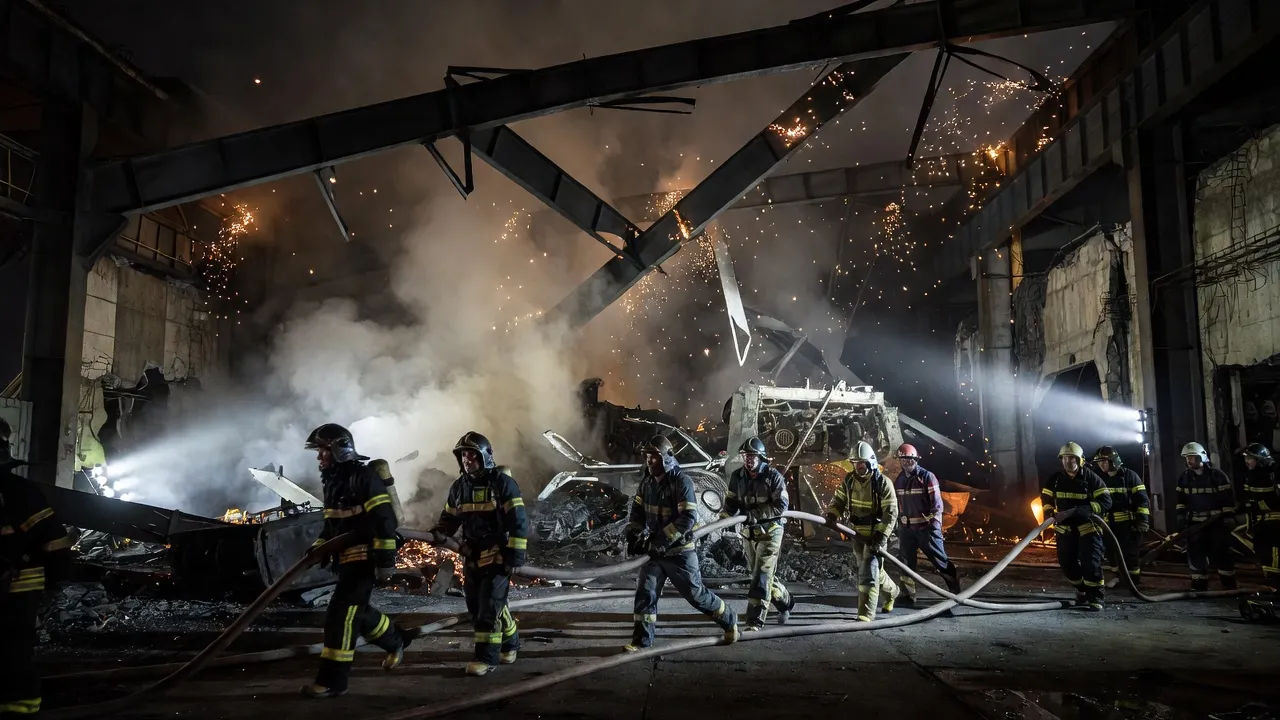
The newspaper insists on the denial from the field. Zelensky wrote on Sunday evening that the Ukrainian sky had been "infested" with Shahed drones all day, that there had been planing bombs and strikes on the energy sector, and that a Kharkiv power plant had been attacked in the evening. Its title associates the strike with the truce announced a few hours earlier.
The British reading is above all transactional. The BBC explains that Trump is pushing Ukraine to stop striking Russian oil infrastructure, so that Russia can honour the recent agreement on diesel delivery to the United States and the global market, at the cost of a temporary lifting of sanctions. The agreement is sparking growing criticism: Zelensky sees it as a gift to Vladimir Putin, and European officials as well as Republican lawmakers say they do not support it. The newspaper frames it within Trump's effort to lower pump prices before the midterm elections, after months of increases linked to the war with Iran.
The Independent adds a lever of pressure. It quotes the Financial Times, according to which Washington is threatening to suspend the PURL device, which provides arms to Ukraine, to obtain the cessation of Kiev's deep strikes on Russian energy. The newspaper also reports that Trump would have threatened to block arms deliveries if these strikes continued.
The Ukrainian position is reported consistently: Kiev is ready not to target Russian energy if Moscow does the same, and is counting on reciprocity. The provided articles do not detail any official British reaction or analysis of the effects on markets or civilians: attention is focused on the credibility of the announcement, the balance of power between Washington and Kiev, and the expected response from the Kremlin.