
DOMINANT ANGLE
Brasília is taking away from the OpenAI case the question of protecting the secrets of an AI lab, through an AFP dispatch focused on the company's announcement and what the employee allegedly failed to achieve.
Dominant angle identified — does not reflect unanimity of this country’s media
KEY POINTS
- 01
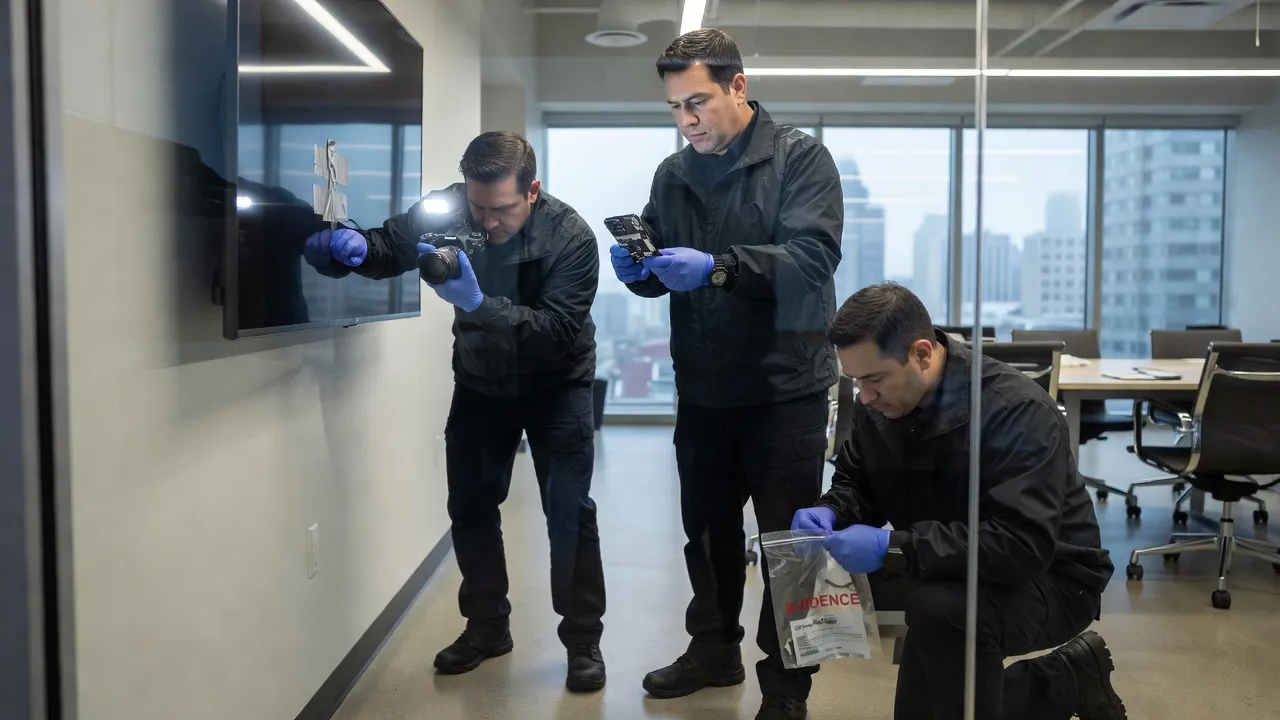
OpenAI announced on Tuesday, October 13, the arrest of an employee reported to the FBI, accused of hiding a "sophisticated recording device" in a meeting room.
- 02
The device, equipped with complex encryption, was discovered on September 30 by OpenAI's surveillance team; the employee, who joined in July 2025, was fired on October 9, the day of their arrest.
- 03
A spokesperson claims to have "no indication" of inappropriate access to model weights, source code, or customer data.
ANALYSIS
Brasília, October 14, 2026. The Brazilian coverage of the OpenAI case consists of an Agence France-Presse dispatch, reproduced verbatim by the Jornal de Brasília and UOL Notícias, under the title "OpenAI announces arrest of employee suspected of placing bug in the company".
The account opens with the company itself: OpenAI, "creator of ChatGPT", announced on Tuesday, October 13, the arrest of an employee who had been reported to the FBI. The employee is accused of hiding a " sophisticated recording device" in a meeting room and attempting to install others in different locations. The text thus highlights the internal espionage gesture, before any judicial or political consideration.
Technical details take center stage. According to the company, the device was designed to go unnoticed and equipped with complex encryption. It was OpenAI's surveillance team that discovered it on September 30. The employee, who joined the company in July 2025, was identified and fired on October 9, the same day as their arrest. The chronology is therefore presented as a success of the internal detection system.
The phrase retained as the conclusion of the information is a statement by an OpenAI spokesperson: "At this moment, we have no indication that this person has accessed the weights (calibration parameters) of the models, the source code, or customer data in an inappropriate manner". The dispatch explains the "weights" in parentheses for the non-specialist reader, which situates the issue in the protection of the model parameters and source code, i.e., the most sensitive assets of an artificial intelligence laboratory.
The two articles stick to what the company says. The UOL version is a simple header, while the Jornal de Brasília version reproduces the detail of the encryption, dates, and the spokesperson's statement. Neither of the two texts names the arrested person, specifies their nationality, mentions a sponsor, or quotes a reaction from an American authority. They also do not report the charge against the employee.
For the Brazilian reader, the case appears first and foremost as an internal security incident at one of the most visible players in generative AI, which reassures about the absence of a proven leak. Questions of motivation, funding, or geopolitical rivalry remain absent from these two texts.





