
DOMINANT ANGLE
Ottawa is gauging the OpenAI case in terms of protecting research secrets in artificial intelligence, where the Canadian press notes that the file does not identify any sponsor.
Dominant angle identified — does not reflect unanimity of this country’s media
KEY POINTS
- 01
Abdulrahman Alfozan, 35 years old, a Saudi engineer at OpenAI since July 2025, is accused of having installed a recorder in a conference room of the management in San Francisco (CBC News).
- 02
The device, hidden in toilet paper and plugged into the USB port of a TV, was discovered on September 30; OpenAI says it has "no indication" of access to model weights, source code, or customer data (CBC News, Globe and Mail).
- 03
The complaint does not specify what the engineer intended to do with the recordings and the Saudi embassy had not responded to Reuters (Globe and Mail, CBC News).
ANALYSIS
Ottawa, October 14, 2026. The Globe and Mail and CBC News are covering the arrest of an OpenAI engineer accused of installing a recorder in a conference room, two articles that pick up the agency's thread and American official statements.
According to The Globe and Mail, the employee, Abdulrahman Alfozan, 35, a Saudi national, was arrested on Friday, a week after the discovery of a hidden audio recording device in the room, according to a criminal complaint filed in a federal court in San Francisco. He appeared in court on Tuesday for allegedly using or attempting to use a device to intercept oral communications. The newspaper specifies that it was not known at the time if he had a lawyer.
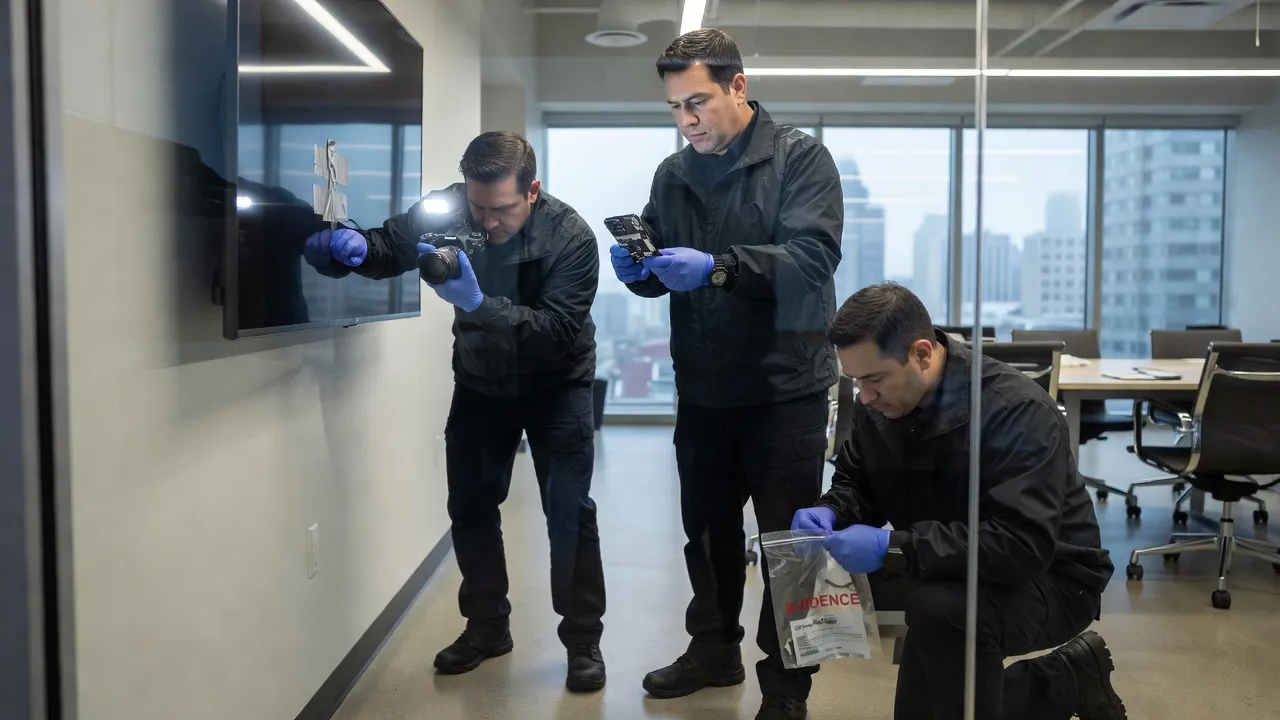
CBC News provides the material details: the device, plugged into the USB port on the back of a television in the conference room of the management, was hidden in toilet paper. It was discovered on September 30 and is believed to have been installed around September 28, according to the complaint. The US Department of Justice indicates that the engineer had been working at OpenAI since July 2025. FBI Director Kash Patel mentions sensitive communications about the company's "super-intelligence" technology.
Both media outlets emphasize OpenAI's version: the company says it used its own models to understand the device and identify the employee, and then contacted the FBI. It claims to have "no indication" of inappropriate access or extraction of model weights, source code, or customer data. The employee was fired.
The Canadian reading is less about the judicial dimension than about what the case says about the vulnerability of laboratories. CBC writes that the case illustrates growing security concerns around sensitive AI research, as companies and governments compete for talent and technology. The Globe also recalls, in an internal link, the recent firing of three OpenAI security researchers after a disagreement over AI risks.
The gray areas are stated outright. The Globe notes that the complaint does not say what Alfozan wanted to do with the captured conversations. CBC indicates that the Saudi embassy in the United States had not immediately responded to Reuters' request for comment. The FBI investigation is ongoing.





