Common ground and differences in coverage across the media analysed.
What the media report in common
1
The Ministry of the Interior counted approximately 161,500 protesters on Tuesday, October 13: this count is reported, with minor variations, in seven of the nine perspectives (Australia, Germany, Finland, France, Sweden, Turkey, United States).
2
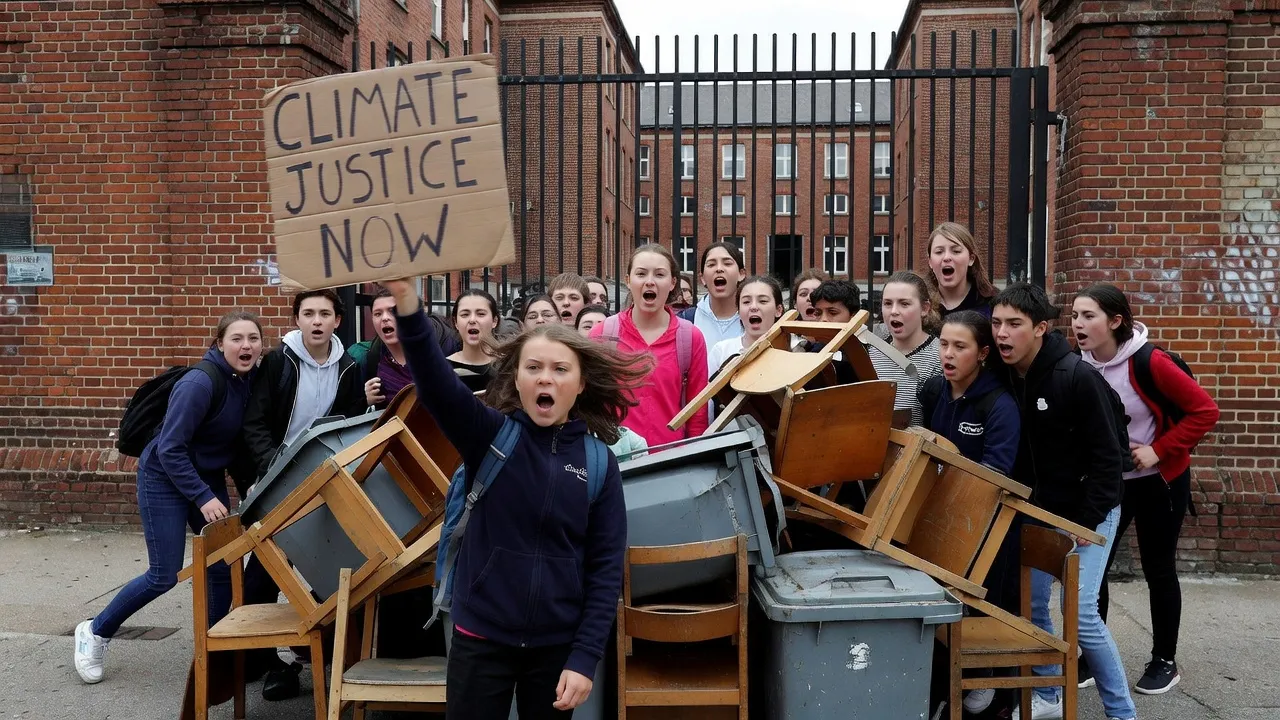
Greta Thunberg joined high school students in Saint-Denis on October 13: the presence of the activist is reported by seven perspectives (Australia, Brazil, Finland, France, Italy, Sweden, United States).
Where media coverage diverges
Number of protesters on October 13
Two counts coexist: approximately 161,500 according to the Ministry of the Interior, 480,000 according to the organizers. Some coverage only mentions the first, while others report both and make the discrepancy an element of the story.
Cause of the movement and interpretation of violence
Regarding what explains the mobilization and its excesses, the French and Brazilian press retains the school grievances, while Fox News relays Donald Trump, who mentions mass immigration, and Expressen reports Macron's accusation towards the left.
Greta Thunberg describes the police as 'extremely violent' (Italy) and criticism of disproportionate measures is reported (Finland, Turkey, France with the IGPN investigations). The United States and Sweden primarily focus on the burned cars, tear gas, and arrests.
Canberra is deciphering the French high school street protests as a campaign test: six months out from the presidential election, Mélenchon is joining the marches while Le Pen, leading in the polls, condemns the violence.
Brasília sees in the French street a public school crisis embodied by Greta Thunberg: overcrowded classes, degraded buildings, youth demanding its fundamental rights.
Berlin is deciphering a high school student-led movement that is taking hold in the French political landscape: the German press sees it as less of a revolt against a particular decision and more of a general malaise, which the presidential campaign and the debacle of public finances are masking.
Canberra is deciphering the French high school street protests as a campaign test: six months out from the presidential election, Mélenchon is joining the marches while Le Pen, leading in the polls, condemns the violence.
KEY POINTS
More than 161,500 protesters marched in France, despite the government's commitment last Friday to hire more teachers.
Greta Thunberg joined high school students in Paris and Saint-Denis, a working-class neighborhood where students denounce the lack of funding.
Jean-Luc Mélenchon joined the marches; Marine Le Pen, leading in the polls, condemns the gatherings that damage schools.
ANALYSIS
Canberra, October 14, 2026. The Sydney Morning Herald and The Age published the same account, dated London, on the French high school mobilization. They initially framed it as a school issue: more than 161,500 protesters marched across the country, according to the text, to demand more resources for education, despite the government's commitment last Friday to hire more teachers and address student concerns.
The account recalled the origin of the movement. Students began protesting in September to demand more teachers, better school facilities, and the repair of basic equipment, such as toilets. The presence of Greta Thunberg, who came to support the high school students in Paris and then in the Saint-Denis suburb, a popular neighborhood where students said their school lacked funding, was presented as a sign of growing international attention. The climate activist launched a broader call for "a better fate" for the young generation and invited young people from other countries to imitate the French in their demand for social justice. The title cited a phrase attributed to the scene: "The whole world is watching with awe."
The riots were given measured coverage. The processions were described as "largely peaceful," but some turned violent: masked protesters threw projectiles at the police and set fires in the streets, and the authorities fired tear gas to contain the crowds.
The text primarily placed the protests in the political calendar, six months from the next election. Jean-Luc Mélenchon, candidate for La France insoumise, joined the rallies to support young voters. Marine Le Pen, from the Rassemblement national, whom the account described as leading in the polls, condemned the rallies that damaged schools or degenerated. She stated last week: "Those who vandalize our schools, and their parents when they are minors, must pay for the damage they cause."
From an Australian perspective, the protests are thus seen as a test for the presidential campaign, with two opposing responses from the left and the far right, rather than as a budgetary or security issue. The account, very synthetic, did not detail the quantified demands or the position of the unions.
Brazil
DOMINANT ANGLE
Brasília sees in the French street a public school crisis embodied by Greta Thunberg: overcrowded classes, degraded buildings, youth demanding its fundamental rights.
KEY POINTS
On Tuesday, October 13, Greta Thunberg joined students in front of the Paul Eluard high school, in Saint-Denis (Agência Brasil, G1, Folha).
Minister Edouard Geffray announced around 200 schools closed, partly as a precaution due to the march routes (G1, Folha).
Folha recalled that over 70,000 people had demonstrated the previous Thursday, the last major event of the movement that emerged at the end of September.
ANALYSIS
Brasília, October 14, 2026. The Brazilian press tells the story of the French high school mobilization as the story of a deteriorating public school, with Greta Thunberg as a rallying figure. Agência Brasil, G1, and Folha report that on Tuesday, October 13, the Swedish activist joined students in front of the Paul Eluard high school in Saint-Denis, presented by G1 as a "working-class suburb of Paris" and as one of the establishments where the movement has gained momentum.
The movement, now in its fourth week, denounces the lack of teachers, overcrowded classes, and the state of degradation of the buildings. The articles describe marches, blockages of hundreds of establishments, and in some cases, clashes with the police. Folha mentions the concern of the authorities and participants about new episodes of violence and reports lawyers in robes forming a human cordon to protect the adolescents after numerous allegations of police violence.
The three media outlets quote Greta Thunberg, 23 years old according to Folha: "We are inspired by the young people who are demanding their fundamental rights," she says to Agência Brasil and G1, adding that the French students deserve broader support. Folha also attributes this phrase to her: "Our future is being stolen from us." Agência Brasil notes that she also criticized the police action, linking the lack of funding for schools to the climate crisis and social injustices.
Germany
DOMINANT ANGLE
Berlin is deciphering a high school student-led movement that is taking hold in the French political landscape: the German press sees it as less of a revolt against a particular decision and more of a general malaise, which the presidential campaign and the debacle of public finances are masking.
KEY POINTS
More than 160,000 protesters according to the French police, 480,000 according to the organizers, on October 13 (Tagesschau).
214 high schools blocked according to the Ministry of Education; 90% of universities blocked or closed according to a student union, 35% according to the Ministry of Higher Education (Tagesschau).
Handelsblatt notes that the presidential campaign and the debate on the country's finances are increasingly overshadowing the protests, for the third consecutive week.
ANALYSIS
Berlin, October 14, 2026. For the Tagesschau, French high school students "are not giving up": on Tuesday, October 13, more than 160,000 young people took to the streets again, according to the police, and 480,000 according to the organizers. Their demands are known, writes the public channel: better learning conditions. The concessions from the political class seem too meager to them at this stage.
The text gives the figures from both camps without taking a stance. The Ministry of Education reports 214 blocked high schools and mentions that support is eroding, with only a few staff members having followed the call to strike. A student organization claims that 90% of universities are blocked or closed; the Ministry of Higher Education responds with 35%. Incidents are reported factually: tear gas in Nantes at the end of the gathering, intervention against a group of rioters dressed in black on the sidelines of the Lyon procession, which brought together around 11,000 people. In Paris, passersby applaud and buses honk in support of the students.
The partisan dimension is highlighted: Jean-Luc Mélenchon, La France Insoumise's presidential candidate, marched, and the French government reproaches his party for wanting to "instrumentalize" the protests, according to the Tagesschau.
Finland
DOMINANT ANGLE
Helsinki is relaying the French high school mobilization through the lens of the school, emphasizing the gap between the authorities' figures and those of the unions.
KEY POINTS
On Tuesday, October 13, 161,500 protesters according to French authorities, 480,000 according to unions (YLE).
According to MTV Uutiset, the Ministry of the Interior counts over 160,000 people, including more than 40,000 in Paris, more than the previous week.
French security forces are accused of disproportionate measures and the police arrested thousands of people (MTV Uutiset).
ANALYSIS
Helsinki, October 14, 2026. Finnish media are treating the French high school mobilization as a wire agency dispatch, focused on the school and the dispute over numbers. YLE, which cites AFP, headlines "vast demonstrations in the streets of France" and writes that high school students and supporters have been marching "for already five weeks"; MTV Uutiset, which cites the STT agency and Le Monde, talks about the fourth week. The two texts therefore differ on the duration, without explaining it.
Regarding participation, the two media outlets cite opposing sources: on Tuesday, October 13, the authorities reported 161,500 protesters, while the unions claimed 480,000. MTV specifies that the Ministry of the Interior counted "more than 160,000", including "more than 40,000" in Paris, a total higher than that of the previous week's demonstrations. The estimates "differ greatly", notes YLE.
The demands are described in concrete terms: better study conditions and additional funding for schools affected by dilapidated buildings, overcrowded classes, and a lack of substitute teachers. According to YLE, the movement, which started in Paris, quickly spread to the rest of the country and attracted, in addition to high school students, parents, teachers, and unionized employees. MTV cites the shortage of teachers, the overload of classes, and the patched-up schools.
Greta Thunberg, presented by both media outlets as the "Swedish" activist, took part in Tuesday's demonstrations; MTV places her in Paris. Neither of the two reports her comments.
France
DOMINANT ANGLE
Paris is first focusing on the high school students' criticism of the public school system: classes without teachers, run-down buildings, Parcoursup, amidst a battle of numbers between the ministry and organizers.
KEY POINTS
161,500 protesters according to the Ministry of the Interior, including 41,500 in Paris, versus 480,000 according to the trade unions, on Tuesday, October 13.
147 National Education staff injured since the start of the movement and 214 high schools closed, compared to 800 a week earlier, according to the ministry.
36 investigations opened by the IGPN for alleged police violence, including four for mutilating injuries, according to Laurent Nuñez before the Senate.
ANALYSIS
Paris, October 14, 2026. On Tuesday, October 13, the "act V" of the high school and student movement once again filled the streets, and the French press first focuses on what students say about their school. The Ministry of the Interior counts 161,500 protesters, including 41,500 in Paris across two processions, while the intersyndicale of student and high school organizations counts 480,000. France 24 recalls that the Ministry counted 71,500 people during the last national demonstrations, more than double.
The demands remain those of mid-September: "better thought-out schedules", dilapidated buildings, unreplaced teachers, and the end of Parcoursup. Lise, a terminal student at Kremlin-Bicêtre, confides to HuffPost: "I have my baccalaureate this year and still no English or physics-chemistry teacher." In the Parisian procession, Le Monde notes signs about "the lack of tables and chairs, the heat in the summer, the cold in the winter, the mold". The Union syndicale des lycéens is calling for a 10 billion euro plan for high schools.
Greta Thunberg came to the Lycée Paul-Éluard in Saint-Denis, where she declared: "They are stealing our future". Le Monde cites her message, "the whole world is watching them". BFMTV reports that she denounced an "extremely violent" police force. Sud Ouest details 36 referrals to the IGPN for alleged police violence, including four for mutilating injuries, and nearly 900 police officers and gendarmes injured, according to Laurent Nuñez. The Ministry of National Education reports 147 injured staff members and 214 closed high schools, compared to 800 a week earlier. In Paris, tear gas and water cannons were used at the end of the procession, near the Invalides, while France 24 describes a "mostly calm" day.
Italy
DOMINANT ANGLE
Rome retains from the French high school mobilization a street image: processions town by town, slogans on study and dignity, and the presence of Greta Thunberg in front of a high school in Saint-Denis.
KEY POINTS
According to ANSA, thousands of people, mostly high school students, students, and teachers, marched in Marseille, Lyon, and Strasbourg on October 13 for the "fifth act".
An AFP journalist saw Greta Thunberg in front of the Paul-Eluard high school in Saint-Denis; she denounced a police force as "extremely violent".
According to askanews, students blocked the Hélène-Boucher high school in the 20th arrondissement, with the mobilization entering its third week.
ANALYSIS
Rome, October 14, 2026. The Italian press is addressing the French high school mobilization through two dispatches: one from ANSA, which talks about the "fifth act" of the movement on Tuesday, October 13, and another from askanews, picked up by Libero Quotidiano. The story is that of a day of processions, with little explanatory framework.
ANSA first describes the geography of the protest. After several blockages in the morning in front of schools, "thousands of people, mainly high school students, university students, and teachers" began to march in Marseille, Lyon, and Strasbourg, awaiting the Parisian procession, scheduled to start at 2 pm from the Place d'Italie to the Esplanade des Invalides. Other processions were also expected in Aix-en-Provence, Le Havre, and Brest. In Lyon, the procession started from the city center towards Villeurbanne, where a general assembly of high school students was announced at noon in a cultural center. In Strasbourg, protesters gathered in Place Kléber with flags and banners, one of which proclaimed "Studio, alloggio, dignità".
Greta Thunberg's figure occupies a central place. According to an AFP journalist cited by ANSA, the Swedish activist was seen among protesters in front of the Lycée Paul-Eluard in Saint-Denis, north of Paris, one of the most publicized establishments since the beginning of the protest in mid-September. She confirmed that she would participate in a procession without saying which one, the Parisian demonstration being the most likely. After her visit, she denounced a police force that was "extremely violent", the agency reported.
Sweden
DOMINANT ANGLE
Stockholm takes a stance on law and order: the Swedish press tells the story of a school protest turned national crisis, where violence, arrests, and Greta Thunberg's words dominate the narrative.
KEY POINTS
More than 6,000 people, mostly young people, have been arrested since the start of the movement, according to Expressen.
On Tuesday, 161,000 people demonstrated in major French cities, according to Reuters cited by Expressen; Greta Thunberg joined the procession in Saint-Denis.
Macron described the violence as "completely unacceptable" and accused the left of fanning the unrest, while expressing his understanding of the students' concerns.
ANALYSIS
Stockholm, October 14, 2026. For the Swedish government, what began as a protest by teachers and students from the Antoine-de-Saint-Exupéry college in a Paris suburb against "deplorable conditions" at the school has turned into a "national crisis" in four weeks. The government notes that riots and violent clashes have ultimately "eclipsed" peaceful blockages against overcrowded classes, teacher shortages, and dilapidated buildings.
The repressive toll takes center stage. According to the Swedish perspective, more than 6,000 people, mostly young people, have been arrested so far. On Tuesday, protesters threw projectiles at the police, who responded with tear gas and new arrests, reports the Swedish press, citing Reuters. Dagens Nyheter, from Paris, describes two processions converging towards the city center, the police forming a tight cordon around Matignon, and violence erupting before nightfall.
The executive's speech is presented in two stages. The government has promised to respond to the students' demands, and Emmanuel Macron has expressed his understanding of their concerns. But the president has also, on several occasions, condemned the violent groups that set fire to cars and buildings and attack police officers, calling these acts "totally unacceptable". The Swedish press notes that he accuses the left of fueling the troubles by visiting schools and stirring up young people's emotions. Dagens Nyheter's headline emphasizes that the government says it wants to negotiate after these new large-scale protests.
Turkey
DOMINANT ANGLE
Ankara is gauging the rising pressure on Emmanuel Macron: the Turkish press is reading the high school street as a test for a power at the end of its term, strangled by debt, six months away from the presidential election.
KEY POINTS
The Ministry of the Interior counted 161,500 protesters on October 13 in France, compared to 480,000 according to the organizing unions (Daily Sabah, Bianet).
According to Daily Sabah, the government is struggling to pass an austerity budget as the heavy debt has worried the bond market, six months ahead of the presidential election.
Bianet notes that the Ministry of Education recorded 214 closed high schools on Tuesday, compared to about 800 the previous week, and the next meeting is scheduled for October 17.
ANALYSIS
Ankara, October 14, 2026. Turkish media is covering the "act V" of the French high school mobilization from the angle of a weakened power. Daily Sabah, citing AFP, reports on "tens of thousands" of protesters on Tuesday, October 13, in solidarity with high school students demanding better study conditions, which "intensifies the pressure" on Emmanuel Macron, who is completing his second and final term. The Ministry of the Interior counts 161,500 participants, more than double the 71,500 from the previous national day; the organizing unions announce 480,000.
The pro-government Turkish daily immediately links the street to public finances: the centrist government is struggling to adopt an austerity budget, "in the face" of a debt that is worsening and has worried the bond market. A second article, briefer on the figures, notes that borrowing costs are at their highest in decades, which limits the margin for investment in public services. It also recalls that the presidential election could, according to polls, bring to power the first far-right government since World War II.
Incidents are treated as a secondary episode: cars set on fire on the sidelines of one of the two Parisian processions (41,500 people), tear gas in Paris and Lyon, young masked individuals trying to erect barricades. Greta Thunberg, present in Saint-Denis in front of the Paul Éluard high school, is quoted: "We are inspired by the young people who demand their fundamental rights." The Ministry of Education reports 214 closed establishments, compared to around 800 a week earlier, and 94.2% of open high schools.
United States
DOMINANT ANGLE
The United States is analyzing the French high school mobilization from a public order perspective: thousands of arrests, burned cars, tear gas, with Donald Trump seeing it as an immigration issue.
KEY POINTS
According to the Interior Ministry cited by Fox News, approximately 161,500 people marched in France on Tuesday, October 13, including 41,500 in Paris, and 214 schools were closed.
Fox News reports, according to French authorities, that more than 6,800 people have been arrested since the start of the movement in September.
Donald Trump wrote on Truth Social that the French situation was about mass immigration: "This isn't about schools".
ANALYSIS
Washington, October 14, 2026. From the American perspective, Tuesday, October 13, was first and foremost a matter of law and order. The United States government justifies its viewpoint through media coverage, with Fox News reporting on a France where high school students clashed with police: "Greta Thunberg joins massive French student protests as cars burn, police fire tear gas." The media reports that over 6,800 people have been arrested since September, according to French authorities, and that protesters have set fires, erected barricades, and confronted riot police, "although many protests have remained peaceful."
The account provides figures from the Ministry of the Interior: approximately 161,500 protesters across the country, including 41,500 in Paris, and 214 schools closed according to the National Education system. Greta Thunberg, 23, appeared in front of a high school in Saint-Denis. Quoted by Reuters, she expressed her inspiration in the face of young people demanding their fundamental rights and described the police response as "extremely violent."
The Associated Press, as reported by ABC News, offers a broader perspective. It describes a country where the movement is "destabilizing the government" and weighing on the presidential campaign, at a moment that the agency describes as the last challenge for Emmanuel Macron, "beset by crises, both foreign and domestic." The agency retraces the origin of the movement, born in a high school in Créteil due to a lack of staff, then extended to the Parisian suburbs and small towns. It details the grievances: underfunded schools, dilapidated buildings, rats, collapsed ceilings, heat in the summer and cold in the winter, especially in modest neighborhoods.
Explore every perspective on this subject across 9 countries.
France: the high school protest movement doubles in size as Greta Thunberg joins the marches, six months before the presidential election
published on
October 14, 2026
9
countries
21
sources
22
articles
72/100
gap
Beyond the numbers, the press reports on three things: what students say about their school, how the streets are being held, and the positions taken by political leaders six months before the election, with each coverage retaining a different part of it.
The movement continues: the unions consider the announcement of positions insufficient and call to join the demonstrations on October 17.
Grievances, from the students' side
French newspapers are giving high school students a voice. Lise, a senior at Kremlin-Bicêtre, tells HuffPost: "I'm taking the baccalaureate this year and I still don't have an English or physics-chemistry teacher." Le Monde notes that in the Parisian procession, there are signs about the lack of tables and chairs, the heat in the summer, the cold in the winter, and mold. The Union syndicale des lycéens, according to the French press, is demanding a 10 billion euro plan for high schools.
Handelsblatt points out a difference with previous waves: the anger is not targeting a specific government decision, but the general situation. A 17-year-old high school student in front of the Turgot high school mentions classes of 36 students. Associated Press, as reported by ABC News, talks about rats and collapsed ceilings, especially in modest neighborhoods.
20 Minutes reports another sentiment: high school students say they are being looked at "like children throwing a tantrum". ANSA, on the other hand, describes the geography of the processions: Marseille, Lyon, and Strasbourg in the morning, then the Parisian departure from the Place d'Italie to the Invalides. Tagesschau estimates the Lyon procession at around 11,000 people.
Questioning and law enforcement
Fox News reports that more than 6,800 people have been arrested since September, according to French authorities. Expressen states "more than 6,000", mostly young people. These two totals come from media outlets that prioritize the violence in their narrative; they are not reported by the French press in the corpus.
« completely unacceptable »
Emmanuel Macron, regarding the violence, as reported by Expressen (Sweden) on October 14
The same texts specify that many demonstrations remain peaceful. Fox News writes this in plain language, and AP indicates that the majority of protesters are peaceful, with violence on the margins affecting the movement's image. Sud Ouest, citing Laurent Nuñez, mentions nearly 900 police officers and gendarmes injured.
On the criticism side, BFMTV and ANSA report that Greta Thunberg has described the police as "extremely violent". Folha notes lawyers in robes forming a human chain around adolescents; Expressen, citing The Guardian, also mentions these human chains. MTV Uutiset refers to an article according to which France has suspended the use of stun grenades for the time being after a 15-year-old lost a hand.
Political leaders and candidates
According to Expressen, the government has promised to respond to the demands and Emmanuel Macron said he understands the students' concern. The same newspaper writes that he accuses the left of fueling the unrest by visiting schools. Dagens Nyheter headlines the government's willingness to negotiate. Education Minister Édouard Geffray speaks of a "decline", according to Sud Ouest.
« Those who vandalize our schools, and their parents when they are minors, must pay for the damage they cause »
Marine Le Pen, last week, as reported by the Sydney Morning Herald and The Age (Australia) on October 14
The Sydney Morning Herald and The Age report that Jean-Luc Mélenchon has joined the rallies to support young voters. Tagesschau writes that the government reproaches his party for wanting to "instrumentalize" the protests; the passage does not report the response from La France insoumise. Marine Le Pen, who the Australian text describes as leading in the polls, condemns the rallies that damaged schools.
Fox News recalls that Donald Trump wrote on Truth Social, on October 6, that the situation was a matter of "mass migration" and that "this isn't about schools". Fox also cites experts mentioning a far-left alliance. The French press in the corpus does not mention this interpretation.
Figures, duration, and reading angles
The count of 161,500 people appears in seven of the nine perspectives in the corpus: this measures what the press in these countries chose to report, not the actual size of the procession. Brazil and Italy do not provide a figure for October 13. Folha only recalls that more than 70,000 people had marched during the last major event.
Bianet proposes a different comparison than that of France 24, which compares 161,500 to 71,500 according to the ministry. The Turkish site gives 266,000 for October 6 according to the ministry, and 450,000 then 480,000 on the side of the intersyndicale lycéenne et étudiante. It concludes that the two versions confirm hundreds of thousands of protesters.
The media also do not agree on the duration: YLE talks about five weeks, MTV Uutiset and the Brazilian press about the fourth, Handelsblatt and askanews about the third. As for the background, Daily Sabah links the street to debt and the bond market. Handelsblatt writes that the presidential campaign and the debate on finances are increasingly covering the protests.
The demands
Run-down buildings, unreplaced teachers, pressure from Parcoursup and unbearable schedules.
The universities
The student union claims that 90 % are blocked or closed; the Ministry of Higher Education counts 35 %.
Law and order maintenance
36 investigations opened by the IGPN, including four for mutilating injuries, according to Laurent Nuñez before the Senate.
The government response
Prime Minister Sébastien Lecornu announced 3,000 substitute teachers; 214 high schools closed, compared to around 800 a week earlier.
Key figures
161,500
protesters on October 13 according to the Ministry of the Interior, compared to 480,000 according to the organizers
Education Minister Edouard Geffray tells France Inter that around 200 schools are closed, fewer than the previous week, according to Folha. He nuances: some closures are precautionary, with establishments located on the route of the marches. Folha adds that the authorities had hoped for a decline before the mid-term break and that the movement, born at the end of September, is supported by unions, the far-left party La France insoumise, and the Student Union, whose message on X is quoted: "They don't listen to us, so we're going to them."
In terms of numbers, Folha recalls that over 70,000 people took to the streets the previous Thursday, during the last major event. The Brazilian articles consulted do not provide a count for October 13 or an electoral or budgetary analysis: the focus remains on the school, youth, and law and order around the demonstrations.
The Handelsblatt, from Paris, adopts a more economic and sociological tone. This is the third consecutive week of mobilization; more than 200 establishments have remained closed and a third of universities have been disrupted. The newspaper notes that the movement had lost some of its strength, but the presidential campaign and the debate on the country's tense financial situation are increasingly "overlapping" the protests. Unlike previous waves, the anger is not targeting a specific government decision but the general situation: lack of teachers, cancelled classes, and sometimes classes of 36 students, according to a 17-year-old high school student in front of the Lycée Turgot. Teachers, the newspaper recalls, citing the OECD, earn an average of nearly 42,000 euros in France.
In total, the German reading is that of a neighboring country whose end of term is being played out in the streets as much as in Parliament, without the articles dwelling on the government's responses.
Maintaining order takes a secondary but clear place. Both articles recall that French security forces are accused of disproportionate measures. MTV refers to a related article, according to which France has suspended the use of stun grenades for the time being after a 15-year-old lost a hand during a demonstration, and indicates that the police have arrested thousands of people. Reuters, cited by MTV, describes "mostly peaceful" marches.
The upcoming presidential election in six months, the austerity budget, and the Prime Minister remain out of the picture. From Helsinki's perspective, the issue is first and foremost a youth movement and a public school problem in a large neighboring country of the European Union.
The battle over numbers is taking up a lot of space. Édouard Geffray speaks of a "decline", Sud Ouest notes that the processions have thinned out in Bordeaux, Pau, or Périgueux, but a sociologist describes a "founded anger, but without a political perspective". The Minister announced 3,000 replacement teachers and the Agora platform; high school students, cited by L'Obs and 20 Minutes, see this as a gesture to "give themselves a good image" and say they are being treated like children having a tantrum. RFI relays the statement from Union étudiante that 90% of the approximately 70 universities are blocked or closed, while the Ministry speaks of 35% of establishments being disrupted.
The unions are aiming for a "convergence of struggles" on October 17. France 24 situates the movement six months from the presidential election, while the government is struggling to get an austerity budget adopted.
The askanews dispatch, published from Milan on October 13, remains brief: students blocked the entrance to the Lycée Hélène-Boucher and the Cours de Vincennes in the 20th arrondissement of Paris, while demonstrations resumed in many cities on a day of national mobilization that entered its third week.
In these two texts, Italy therefore mainly retains a youth that demands better study, housing, and dignity conditions, carried by an international media icon. The articles in the corpus do not provide a numerical assessment of participants or mention budget issues or the presidential campaign: the reading remains that of a school and social movement seen from the outside.
The Swedish press also gives a voice to the other side: French lawyers have formed human chains around protesters after accusations of widespread police violence, according to The Guardian, cited by the Swedish press, while unions, radical left-wing officials, and some teachers support the movement.
The national angle is the presence of Greta Thunberg. On Tuesday, according to the Swedish press, some 161,000 people took to the streets of French cities, and the Swedish activist joined a procession in Saint-Denis, a working-class suburb north of Paris. "Young people are not included in the conversation," she said, quoted by The Guardian. The Expressen headline says she is "inspired" by the protesters, in the face of Macron's "unacceptable" stance. Neither article addresses the presidential election or the budget.
Bianet, an independent site, adopts a different tone. It talks about a movement that has been established for four weeks in Paris, Lyon, Marseille, Lille, and Nantes, which has not ceased despite the government's concessions. It highlights the serious injuries and police interventions from previous days, which have added to the educational demands a requirement for accountability from the security forces. The site compares the figures: the Ministry reports 266,000 participants on October 6 compared to 161,500 on Tuesday, and 56,000 in Paris compared to 41,500, while the intersyndicale lycéenne et étudiante claims that participation has gone from 450,000 to 480,000. It concludes that both versions confirm hundreds of thousands of protesters, and signals that the next meeting is set for October 17, with the expected convergence of protests against the high cost of living.
AP specifies that the majority of protesters are peaceful, but that the violence on the margins, with fireworks launched at the police and tear gas shots, weighs on the image of the movement.
The American political dimension appears in Fox News, which recalls that Donald Trump reacted on Truth Social on October 6. The President wrote that what is happening in France is "out of control mass migration" and that "this isn't about schools." Fox also cites experts evoking a far-left alliance that would fuel a broader confrontation and notes that the protest is becoming an issue before the May presidential election.
The school demands, the austerity budget, or the French unions occupy only a limited space in these two texts.
More divergent than 83% of recent comparable stories (reference: 90 recent stories measured with the same method).