
DOMINANT ANGLE
Canberra is deciphering the French high school street protests as a campaign test: six months out from the presidential election, Mélenchon is joining the marches while Le Pen, leading in the polls, condemns the violence.
Dominant angle identified — does not reflect unanimity of this country’s media
KEY POINTS
- 01
More than 161,500 protesters marched in France, despite the government's commitment last Friday to hire more teachers.
- 02
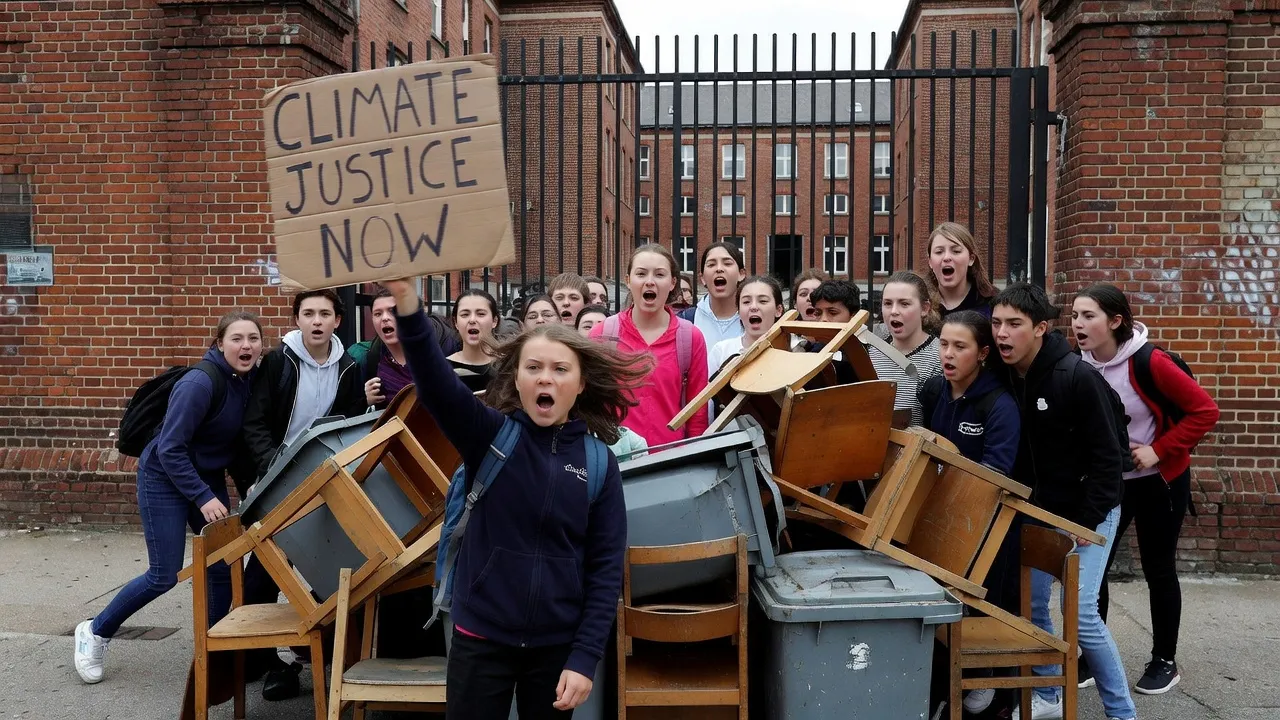
Greta Thunberg joined high school students in Paris and Saint-Denis, a working-class neighborhood where students denounce the lack of funding.
- 03
Jean-Luc Mélenchon joined the marches; Marine Le Pen, leading in the polls, condemns the gatherings that damage schools.
ANALYSIS
Canberra, October 14, 2026. The Sydney Morning Herald and The Age published the same account, dated London, on the French high school mobilization. They initially framed it as a school issue: more than 161,500 protesters marched across the country, according to the text, to demand more resources for education, despite the government's commitment last Friday to hire more teachers and address student concerns.
The account recalled the origin of the movement. Students began protesting in September to demand more teachers, better school facilities, and the repair of basic equipment, such as toilets. The presence of Greta Thunberg, who came to support the high school students in Paris and then in the Saint-Denis suburb, a popular neighborhood where students said their school lacked funding, was presented as a sign of growing international attention. The climate activist launched a broader call for "a better fate" for the young generation and invited young people from other countries to imitate the French in their demand for social justice. The title cited a phrase attributed to the scene: "The whole world is watching with awe."
The riots were given measured coverage. The processions were described as "largely peaceful," but some turned violent: masked protesters threw projectiles at the police and set fires in the streets, and the authorities fired tear gas to contain the crowds.
The text primarily placed the protests in the political calendar, six months from the next election. Jean-Luc Mélenchon, candidate for La France insoumise, joined the rallies to support young voters. Marine Le Pen, from the Rassemblement national, whom the account described as leading in the polls, condemned the rallies that damaged schools or degenerated. She stated last week: "Those who vandalize our schools, and their parents when they are minors, must pay for the damage they cause."
From an Australian perspective, the protests are thus seen as a test for the presidential campaign, with two opposing responses from the left and the far right, rather than as a budgetary or security issue. The account, very synthetic, did not detail the quantified demands or the position of the unions.