DOMINANT ANGLE
Athens sees the high school surge as a symptom of France's permanent political crisis, eighteen months from the 2027 presidential election, while detailing the balance of violence.
Dominant angle identified — does not reflect unanimity of this country’s media
KEY POINTS
- 01
According to Laurent Nuñez, 625 people were arrested and 83 police officers and gendarmes injured; Édouard Geffray puts the number of injured students and staff at 119, including 34 education employees (Protothema EN, October 1).
- 02
356 institutions were affected on Wednesday, September 30, including 75 high schools in the Paris region, 36 of which were the scene of violence or vandalism.
- 03
To Vima links the mobilization to the 2027 presidential election: a poll puts Marine Le Pen and Jean-Luc Mélenchon on a path to the second round.
ANALYSIS
Athens, October 2, 2026. The Greek press is following the mobilization of French high school students on two levels: the numerical toll of the clashes and the political reading of a country deemed to be durably unstable.
Protothema, in its English version, published an official count on October 1: 625 arrests and 119 injuries since the beginning of the troubles. Interior Minister Laurent Nuñez reported 625 people detained and 83 police officers and gendarmes injured. Education Minister Édouard Geffray estimated the total number of students and staff injured at 119, including 34 education employees. This figure exceeds previous counts, including one of 76 injuries. According to Nuñez, around 440 people, mostly minors, were arrested on Tuesday, September 29 alone.
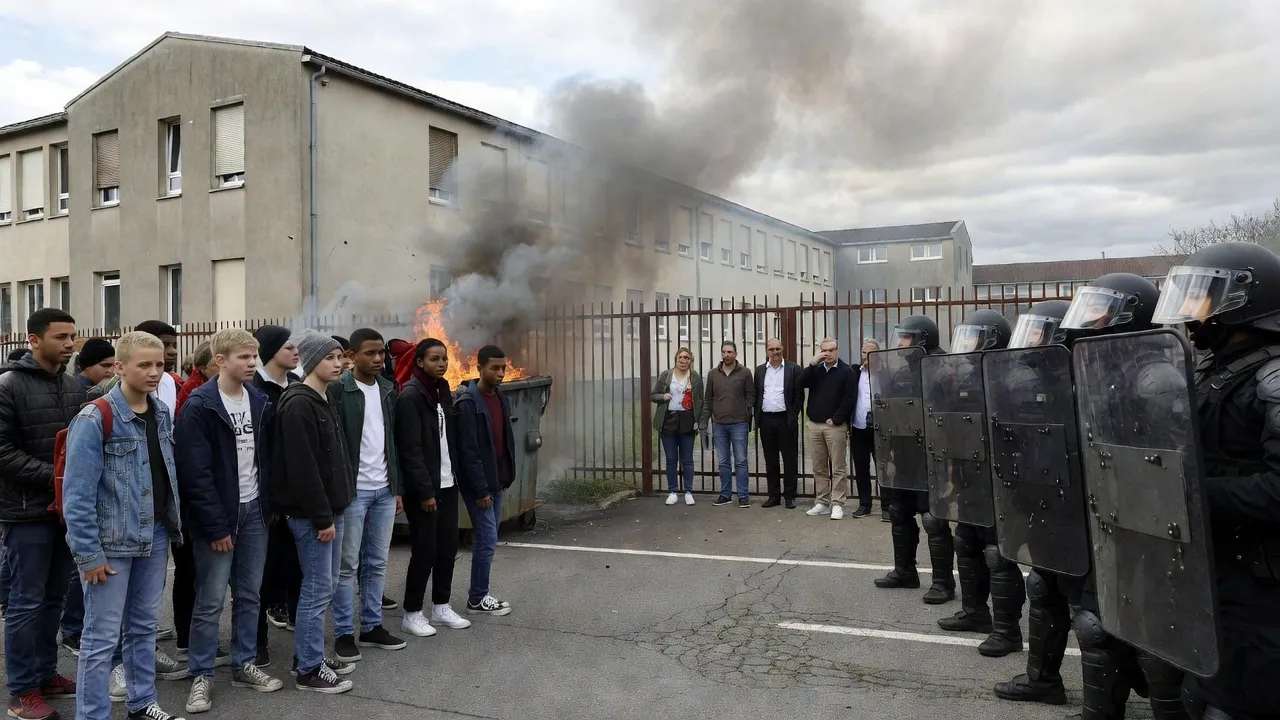
The movement, which originated in the Île-de-France region, now affects the entire country: 356 establishments were affected on Wednesday, September 30. In the Paris region, 75 high schools were disrupted, including 36 scenes of violence, clashes, or vandalism, according to regional authorities. The newspaper mentions Lille, Lyon, Marseille, Bordeaux, Nantes, and Rennes. In Lille, masked students set fire to trash cans; in Rennes, around 100 students threw projectiles at the city's largest high school. In a Parisian suburb, teachers formed a line around the protesters to protect them from the police. The article also quotes messages published on X describing fires in Bordeaux and a fire at the Nelson-Mandela high school in Nantes.
To Vima, on the same day, headlined "Γαλλία σε αναβρασμό" (France in turmoil). The daily described hundreds of blockages, fires, clashes with the police, and attacks on principals and teachers. Students and professors have joined the movement, while the government is trying to separate educational demands from the violence. The newspaper traces the crisis back to a high school in the Yvelines, around ten days earlier, over a lack of teachers.
Its analysis goes beyond the educational framework. It sees a country where the political crisis has become "permanent", against a backdrop of economic pressure, high cost of living, and distrust of institutions. The 2027 presidential election is already at the center of the debate: a recent poll puts Marine Le Pen and Jean-Luc Mélenchon on a trajectory for the second round. The youth, it writes, will be a stake in the campaign.