
DOMINANT ANGLE
Ottawa is gauging the American escalation towards Iran: the third aircraft carrier and the threat of "very strong" strikes are linked to a diplomacy deemed to be at a standstill.
Dominant angle identified — does not reflect unanimity of this country’s media
KEY POINTS
- 01
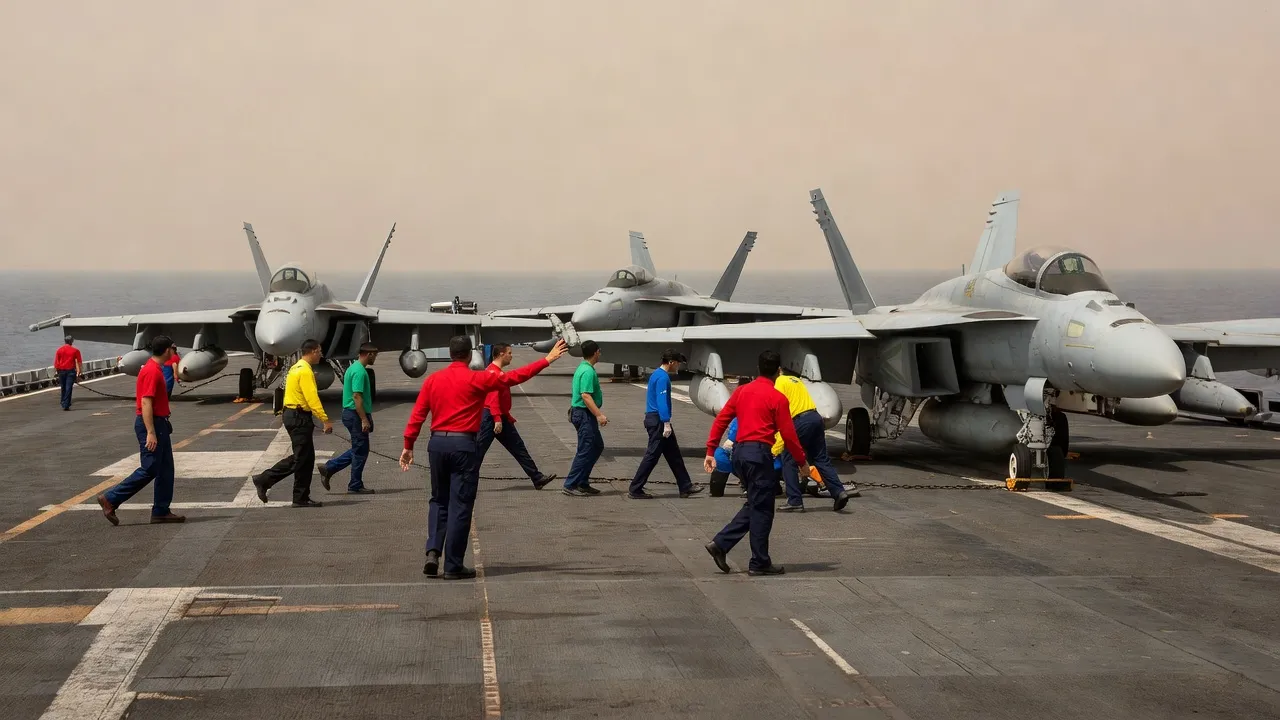
About 9,000 troops are being sent to the Middle East on a group of ships, including a third aircraft carrier, according to a US official cited Thursday (Globe and Mail).
- 02
Trump says Iran would be "hit very hard" if a link to the FlyDubai co-pilot is established, with over 180 people on board the flight (CBC).
- 03
Iranian officials say they received a US response to their proposal to end the war on Wednesday, without revealing its content (CBC).
ANALYSIS
Ottawa, October 3, 2026. In the Canadian press, the American announcement is first a military fact. The Globe and Mail reports that the United States is sending approximately 9,000 troops on board a group of ships to the Middle East, according to an American official cited on Thursday, October 1. The movement includes a third aircraft carrier and, the daily writes, highlights "the rapidly evolving dynamics" of Trump's war against Iran, as the midterm elections "weigh heavily".
The second thread is the attack on board the FlyDubai flight bound for Israel. CBC recalls that the co-pilot stabbed the captain, that the plane plunged before other people on board stopped the attack and landed the plane in Saudi Arabia, with over 180 people on board. Questioned at the White House, Donald Trump said that the answer to a link with Tehran was "yes", based on what he heard, while specifying: "we're working on it". On retaliation, he launched: "They will be hit very hard, don't worry." He gave no details. The Globe and Mail adds that Benjamin Netanyahu mentioned, on Fox News, a "radical Islamist indoctrination" of the suspect, without further clarification.
CBC devotes a subheading to "diplomacy at a standstill". Iranian officials indicated on Wednesday, September 30, that they had received an official American response to Tehran's latest proposal to end the seven-month war, which Trump had publicly rejected a few days earlier. They did not say if this response was a refusal. In an interview with Time magazine published on Thursday, Trump claims not to accept proposals that he "would not have approved a year ago" and leaves open the possibility of resuming bombings after the elections.
The Globe and Mail insists on the contradiction with the initial promises: a campaign of a few weeks, now extended, with an escalation after the November 3 election presented as a viable option. The daily also notes "new signs" that the nature of the conflict is becoming more complex, and relays a title on a 4% jump in oil after reports that China would suspend its fuel exports.
In total, the Canadian reading remains factual and sourced, centered on Trump's statements and troop movements, with few Iranian voices and no reaction from Ottawa in the available excerpts.







