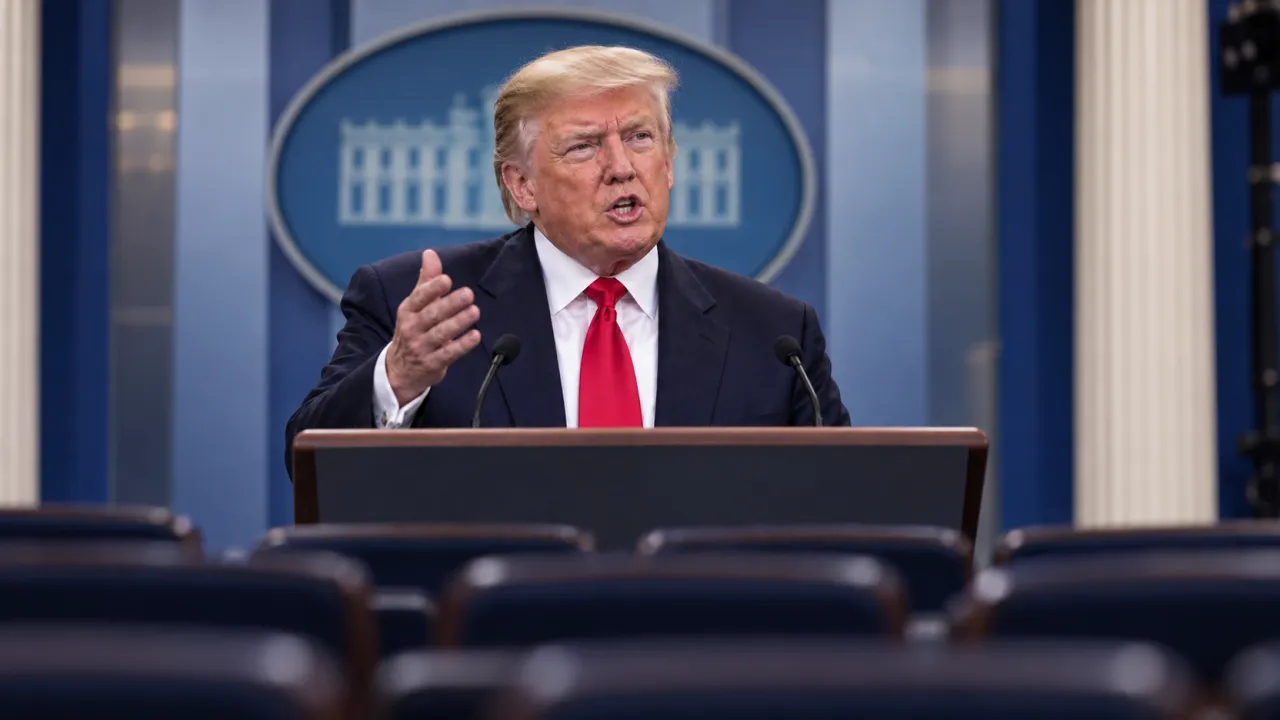
12 perspectives, each in the voice of that country's press.
Australia first measures a domestic risk: SBS warns that the exclusion of CNN, Politico and MS NOW could disrupt the image-sharing agreements linking Australian newsrooms to the banned American channels.
3 sources
Quito sees in this episode a showdown between the US executive and its own editorial boards, where the launch of "Trump TV" with a three-month-old speech is just as significant as the veto opposed to CNN, MS NOW and Politico.
2 sources
Paris sees Donald Trump's offensive against CNN, MS NOW and Politico as a calculation of domestic politics, fueled by electoral frustration as the midterms approach and extended by the launch of a home channel, "Trump TV".
4 sources
Budapest gauges the launch of "Trump TV" by one figure: 29% popularity, deemed historically low by the American Research Group, released as the White House opens its own channel.
2 sources
New Delhi sees the confrontation between Donald Trump and major American networks as a shift where the White House's internal chain is replacing the shared coverage between competitors.
2 sources
Abuja is gauging the unprecedented scale of the united front formed by American channels that are normally rivals, rather than just the launch of "Trump TV"
Lima is particularly focused on the unprecedented united front of major American networks, from Fox News to the New York Times, rather than the legal argument presented in federal court.
Lisbon sees the launch of "Trump TV" as the logical outcome of an unprecedented showdown between the White House and major American networks, including Fox.
Stockholm is examining the security argument cited by the Ministry of Justice to justify the exclusion of CNN, MS NOW and Politico, as a federal judge is set to rule on the matter this Wednesday.
London breaks down hour by hour the mechanics of the banishment of CNN, Politico and MS NOW by Donald Trump, between collective suspension of the television pool and chaotic launch of "Trump TV".
The United States is witnessing an unprecedented showdown between the White House and its own press corps, as the Department of Justice argues before a federal judge that White House access is a privilege, not a right.
Pretoria is deciphering a legal battle where the Ministry of Justice is defending before a federal judge the exclusion of CNN, MS NOW, and Politico, while American jurists deem the measure doomed to fail in court.
2 sources
Cross-media analysis
What the comparison reveals
Common ground and differences in coverage across the media analysed.
What the media report in common
1
Donald Trump excluded CNN, MS NOW, and Politico from the White House, announcing the measure on Friday, September 18, and revoking their credentials as of the following day, Saturday, September 19.
2
In a show of solidarity, several major competing networks, including Fox News, ABC, CBS, and NBC, suspended their participation in the shared coverage system ("pool") of presidential events.
3
The White House launched "Trump TV", a channel continuously broadcasting content favorable to the administration, including, first and foremost, the speech delivered by Donald Trump on July 3, 2026, at Mount Rushmore.
Where media coverage diverges
Judicial Issue of Exclusion
The Ministry of Justice defends exclusion as a legitimate presidential privilege, citing national security, while jurists quoted by the press deem the measure poorly engaged before the courts, a precedent having already blocked a comparable exclusion.
Coverage aligned with this reading
Coverage that diverges
Dominant Angle of the Narrative
Part of the press focuses its narrative on the judicial argument before the federal judge, while another part primarily retains the unprecedented solidarity between competing channels that have suspended their joint coverage.
Coverage aligned with this reading
Coverage that diverges
This grouping describes the publications analysed, not the position of these countries’ populations or of their governments.
Australia first measures a domestic risk: SBS warns that the exclusion of CNN, Politico and MS NOW could disrupt the image-sharing agreements linking Australian newsrooms to the banned American channels.
KEY POINTS
Trump banned CNN, Politico, and MS NOW from the White House last week, citing "fake news" and a threat to national security without evidence.
The three media outlets have filed a lawsuit citing the First Amendment; other major networks have suspended pool coverage in solidarity.
SBS notes that the decision could affect Australian media organisations, including SBS, which are linked by sharing agreements with US media outlets.
ANALYSIS
Canberra, 23 September 2026. The showdown between Donald Trump and a portion of the American press has made its way into Australian newsrooms. According to SBS News, the president banned CNN, Politico, and MS NOW (formerly MSNBC) from the White House last week, accusing them of spreading "fake news" and citing a "threat to national security" without providing evidence. The three media outlets have filed an appeal citing the First Amendment, which protects press freedom. In a show of solidarity, other major networks have suspended their participation in the pool coverage of presidential events, a system where images are shared between competing newsrooms.
It is precisely this mechanism that is causing concern in Australia. SBS notes that the decision could affect Australian media organisations, including SBS, which have sharing agreements with American media outlets. In other words, the exclusion decreed in Washington could deprive some Australian newsrooms of access to images they had previously been able to access.
The Sydney Morning Herald and The Age, in an article by a correspondent based in New York, are downplaying the image of openness that the White House has cultivated. The journalist recalls being able to, as a "foreigner representing a foreign media outlet", question the president on the South Lawn during each departure by Marine One helicopter, an access deemed unprecedented, even compared to the Biden administration. However, he notes that this level of access has mainly benefited a growing number of supporters close to power, while the press room has been opened up to "new media" favourable to the president's line, as the White House has taken control of the daily pool allowed into the Oval Office.
On the ground, the tension is also taking a sonic turn: during the inauguration of a new heliport on the White House lawn, Trump's speech was covered by the noise of the helicopters, according to The Age.
For the Australian press, the episode therefore goes beyond a mere American quarrel: it questions the solidity of the information-sharing mechanisms that foreign newsrooms rely on to cover Washington, and the ability of American courts to settle a dispute that affects, by extension, global access to presidential information.
Ecuador
DOMINANT ANGLE
Quito sees in this episode a showdown between the US executive and its own editorial boards, where the launch of "Trump TV" with a three-month-old speech is just as significant as the veto opposed to CNN, MS NOW and Politico.
KEY POINTS
On Saturday, September 19, MS NOW had its credentials confiscated, CNN teams were denied entry, and a Politico reporter was briefly detained.
ABC, CBS, Fox News, and NBC suspended their participation in the "pool" system after the White House prevented CNN, whose turn it was, from covering a trip.
Trump TV launched on Monday, September 21, at 7:00 p.m. with the speech delivered on July 3 at Mount Rushmore, nearly three months before its broadcast.
ANALYSIS
Quito, Wednesday, September 23, 2026. The Ecuadorian press is detailing the escalation between Donald Trump and the American editorial offices he has banned from the White House. El Comercio recalls that the president accuses CNN, MS NOW, and Politico of spreading "false news" about his administration and that he warned that other media outlets could suffer the same fate. On Saturday, September 19, the measure became tangible: MS NOW journalists had their accreditation confiscated during a security check, CNN teams were unable to enter the White House grounds, and a Politico reporter was detained before recovering her pass later. The White House Correspondents Association described the veto as a "prohibition on a free press," recalling the protections that the First Amendment grants to the practice of journalism. The three media outlets announced that they would defend their rights, even as the dispute continued during Trump's trip to New York for the high-level week of the United Nations General Assembly.
El Universo is emphasizing another front, that of the "pool" system that shares images of presidential trips between competing channels. CNN was participating, but since its exclusion, ABC, CBS, Fox News, and NBC have suspended their participation, after the White House prevented CNN, whose turn it was, from covering the event. It is in this climate that the new platform of the presidency, Trump TV, went on the air on Monday, September 21, at 7:00 p.m. local time. The choice of the first program intrigues the Ecuadorian press as much as the veto itself: rather than a new presidential event, the channel opened with a speech delivered three months earlier, on July 3, at Mount Rushmore, for the 250th anniversary of American independence, in which Trump stated that "America will never be a communist country" and called on his supporters to defend American identity and character. El Universo sees this as a way to offer, from the first day, a direct alternative to the coverage of traditional media rather than simply rebroadcasting a new event. The confrontation, the local press summarizes, now opposes two logics: conditional press access based on editorial line, and an unprecedented boycott between historically rival channels.
France
DOMINANT ANGLE
Paris sees Donald Trump's offensive against CNN, MS NOW and Politico as a calculation of domestic politics, fueled by electoral frustration as the midterms approach and extended by the launch of a home channel, "Trump TV".
KEY POINTS
On Friday, September 18, Donald Trump banned CNN, MS NOW, and Politico from the White House "with immediate effect" via Truth Social, citing "national security".
On Monday, September 21, CBS, ABC, NBC, and Fox News suspended their joint coverage ("pool") in solidarity, leaving the broadcast of a presidential inauguration without sound.
On the same Monday, the White House launched "Trump TV" on YouTube, a free channel continuously broadcasting "the best moments" of the administration, including a July speech at Mount Rushmore.
ANALYSIS
Paris, September 23, 2026. For the French press, the episode that began on Friday, September 18, with the banishment of CNN, MS NOW, and Politico from the White House is first and foremost a gesture of domestic politics. On Truth Social, Donald Trump had announced "with immediate effect" the ban on access for the three media outlets, accused of "accumulating" unfavorable coverage and threatening "national security" with their "false information". He had promised that "other media outlets spreading false information will follow".
Interviewed by RFI, journalist Olivier Knox, former president of the association of White House correspondents, situates the decision in "a context of frustration": plummeting polls on economic management and the war in Iran, a proposed $5,000 check that was poorly received, difficulty in mobilizing Republican candidates ahead of the November midterm elections. This interpretation places the media showdown in the electoral calendar rather than in a simple editorial dispute.
The response from the newsrooms was surprising in its scope: on Monday, September 21, the four other members of the White House "pool" - CBS, ABC, NBC, and notably Fox News, a channel usually conciliatory towards the president - suspended their joint coverage. "From today, the TV pool will not cover events attended by the president," announced Fox representative Bryan Boughton. Immediate consequence: the inauguration of a helicopter platform at the White House, on the same Monday, was broadcast without sound, due to the lack of a microphone provided by a journalist.
Hungary
DOMINANT ANGLE
Budapest gauges the launch of "Trump TV" by one figure: 29% popularity, deemed historically low by the American Research Group, released as the White House opens its own channel.
KEY POINTS
Trump TV, a YouTube channel launched by the White House on Monday, first aired a speech from July 3 given by Donald Trump at Mount Rushmore (Telex)
California's Democratic Governor Gavin Newsom called the state television channel and its actions "autocratic behavior" in a message posted on X on September 22, as cited by HVG
HVG reported a popularity rating for Donald Trump that has fallen to 29%, a level described as historically low by the American Research Group
ANALYSIS
Budapest, September 23, 2026. The Hungarian press first recalls an image: that of a July speech, delivered at Mount Rushmore, chosen as the first program broadcast on "Trump TV", the channel the White House launched on YouTube on Monday. Telex describes a 24/7 service presented as "the essential station", promising to show "the most important moments, major speeches and must-see moments, updated in real time". The US government website now redirects to this stream, with the comment: "not all important moments could fit on TV, now they can".
The launch comes just a few days after the exclusion of CNN, Politico, and MS NOW journalists from the White House, a measure the Justice Department is defending in federal court as legal, while Donald Trump claims he would let the media back in if a court decided so. HVG links the two episodes to a third figure: a 29% popularity rating, deemed "historically low" by the American Research Group, and suggests that the launch of the channel is a response to these criticisms and poor polls.
The Hungarian press extensively quotes the reaction of California Democratic Governor Gavin Newsom, published on X: "First, Trump banned independent press from the White House. Now, he's launching what is literally a state TV to try to drown out the fact that he and his corrupt administration are failing the American people. This is truly autocratic behavior from a failed president." HVG repeats the word "autocratic" and explicitly attributes it to Newsom, without making it its own.
India
DOMINANT ANGLE
New Delhi sees the confrontation between Donald Trump and major American networks as a shift where the White House's internal chain is replacing the shared coverage between competitors.
KEY POINTS
The White House launched "Trump TV: The Essentials Station" on Monday, a platform airing past speeches by the president, including his inauguration as 47th president.
Bryan Boughton, head of the television pool and Fox News bureau chief in Washington, announced the end of shared coverage of the president, specifying that no replacement would be put in place.
CNN, MS NOW, and Politico sued the Trump administration on Monday, citing a violation of the First Amendment, after their White House credentials were revoked.
ANALYSIS
New Delhi, Tuesday, September 22, 2026. The Indian press is framing the crisis between Donald Trump and major American media outlets as an institutional shift rather than a simple editorial spat. The Free Press Journal details how the White House went live on Monday with "Trump TV: The Essentials Station", a continuous streaming platform featuring past speeches by the president, including footage of his inauguration as the 47th president. The official White House X account welcomed the launch: "IT'S LIVE. TRUMP TV IS STREAMING NOW." The exclusion of CNN, MS NOW, and Politico, decided on September 18 on the grounds of "fake news" in Trump's words, immediately had a concrete effect: during the inauguration of a new helipad at the White House on Monday, major networks refused to provide the usual pooled coverage typically assigned to CNN, leaving the president's remarks barely audible over the sound of Marine One. Trump did not respond to questions shouted by journalists before boarding for New York.
The daily also reports that Bryan Boughton, the television pool manager in Washington from Fox News, informed subscribers that "the television pool will no longer cover events designated as pooled presidential coverage", specifying that "no replacement will be put in place". CNN was one of the five networks, along with ABC, CBS, Fox News, and NBC, that traditionally took turns providing this coverage. Direct consequence: Trump's trip to the United Nations General Assembly took place without a pooled video feed, the three targeted media outlets having meanwhile sued the administration in the name of the First Amendment.
Nigeria
DOMINANT ANGLE
Abuja is gauging the unprecedented scale of the united front formed by American channels that are normally rivals, rather than just the launch of "Trump TV"
KEY POINTS
"Trump TV: The Essentials Station" started broadcasting on Monday, with its first image being a July 3 speech by Trump at Mount Rushmore
After CNN was excluded from the television pool, ABC, CBS, Fox News, and NBC refused to replace it, suspending shared coverage of presidential events
CNN, MS NOW, and Politico have taken the matter to federal court and, in a joint statement, say they want to "defend the principle that the government does not decide what the press reports"
ANALYSIS
Abuja, September 23, 2026. In Nigerian newsrooms, the confrontation between the White House and a portion of the American press is first seen through the extent of the united front it has formed among usually rival competitors. On Monday, the government channel "Trump TV: The Essentials Station" began continuous broadcasting on YouTube and the White House website, with its first image being a speech delivered by Donald Trump on July 3 at Mount Rushmore, followed by images of his inauguration in January 2025. According to the White House, the channel brings together "the greatest moments" of the administration, "updated in real time." The launch comes on the heels of the exclusion, decided on Friday by the president, of journalists from CNN, MS NOW, and Politico, accused of having published "fictions or lies" about his team. Their teams were denied access to the building on Saturday.
The most notable consequence for the Nigerian press is the fate of the rotating television pool, which for over a century has organized video coverage of presidential events among major networks. CNN was to ensure its turn on Monday; prevented from doing so, it was not replaced: ABC, CBS, Fox News, and NBC refused to provide a substitute team, effectively suspending this shared coverage on the eve of the United Nations General Assembly in New York. In a joint statement, the concerned newsrooms say they want to "defend the principle that the government does not decide what the press reports."
Peru
DOMINANT ANGLE
Lima is particularly focused on the unprecedented united front of major American networks, from Fox News to the New York Times, rather than the legal argument presented in federal court.
KEY POINTS
Trump TV started broadcasting on Monday, September 21 at 7pm (Washington time), first airing a July 3 speech from Mount Rushmore and images of the January 2025 inauguration
ABC, CBS, Fox News, and NBC suspended their participation in joint White House coverage; the Washington Post and the New York Times stopped distributing photos from the press group ("pool")
The New York Times announced on Tuesday, September 22 that it would maintain this boycott "until a court reviews the appeals" filed against the exclusion of CNN, MS NOW, and Politico
ANALYSIS
Lima, September 23, 2026. In the Peruvian press, the exclusion of CNN, MS NOW, and Politico from the White House is seen less as a judicial saga than as a test of solidarity between usually competing American media outlets. Diario Correo and RPP Noticias report in parallel two symmetrical gestures: the launch by the White House of an official channel, "Trump TV", and the collective withdrawal of major newsrooms.
Trump TV began broadcasting on Monday, September 21, at 7:00 p.m. Washington time, promising institutional content available 24 hours a day, seven days a week, via the official platform of the presidency. Its first broadcast: a speech delivered by Donald Trump on July 3 at Mount Rushmore, complemented by images of his inauguration in January 2025. RPP and Diario Correo note that this launch follows the decision to bar journalists from CNN, MS NOW, and Politico, a veto that RPP Noticias dates back to Friday, September 18.
The response from major networks is described as unusual in its cohesion: ABC, CBS, Fox News, and NBC have suspended their participation in joint coverage of the presidency, while the Washington Post and the New York Times have stopped distributing photographs from the press pool that usually accompanies Trump. RPP describes this long-standing system: one network accompanies the president and redistributes its images to other newsrooms; photographers have agreed, in solidarity with the excluded media, to no longer distribute their photos individually.
Portugal
DOMINANT ANGLE
Lisbon sees the launch of "Trump TV" as the logical outcome of an unprecedented showdown between the White House and major American networks, including Fox.
KEY POINTS
"Trump TV" was launched on the night of Tuesday, September 22, hosted on the White House website and continuously broadcasting "the best moments" of the administration (Observador).
Trump had announced on Truth Social, last weekend, the ban "with immediate effect" of CNN, MS NOW, and Politico from the White House, citing their "news" deemed false.
On Monday, September 21, CBS, NBC, ABC, and Fox showed solidarity with CNN by refusing to replace it in the coverage pool and suspending the common broadcast of presidential events.
ANALYSIS
Lisbon, September 23, 2026. This is the paradox with which the Portuguese press sums up the episode: deprived of its usual coverage by the major American channels, the White House has equipped itself with its own television. According to Observador, "Trump TV" was launched on Tuesday night, hosted on the official website of the presidency and already streaming continuously, presented as bringing together "os melhores momentos, anúncios e o mais recente e importante da administração, tudo num só lugar" — the best moments, announcements, and the latest and most important news from the administration, all in one place. On the White House's social media, the message accompanying the launch was straightforward: "Nem todos os grandes momentos chegaram à sua televisão, agora podem chegar" — all the great moments were not arriving on your television, now they can.
For the Portuguese media, this initiative is above all a response. It comes after the unprecedented decision by the major American channels to suspend their joint coverage of presidential events, in support of CNN, which was itself targeted along with MS NOW and the Politico website by a ban on access to the White House. Last weekend, Donald Trump announced on Truth Social the immediate ban of these three newsrooms, citing their "notícias" which he deemed false. The judicial response was not long in coming: the three targeted media outlets announced that they would take legal action to, according to their joint statement, defend the principle that the government does not decide what the press reports or publishes.
Sweden
DOMINANT ANGLE
Stockholm is examining the security argument cited by the Ministry of Justice to justify the exclusion of CNN, MS NOW and Politico, as a federal judge is set to rule on the matter this Wednesday.
KEY POINTS
The Justice Department claims that certain media coverage of the war in Iran and the construction of a reception hall at the White House could threaten national security, according to CNN and the New York Times as cited by the press.
Trump accuses CNN, MS NOW, and Politico of spreading "fake news" to justify their exclusion from the White House since last Friday.
A federal judge in Washington DC is to rule this Wednesday on the complaint from the three media outlets, which deem the exclusion contrary to press freedom.
ANALYSIS
Stockholm, September 23, 2026. The Swedish press is focusing on the central argument submitted late Tuesday evening by the US Department of Justice to a federal judge in Washington: according to Svenska Dagbladet and Aftonbladet, the Trump administration claims that certain media coverage of the war in Iran, as well as the construction of a reception room within the White House, could pose a threat to national security. This is the basis on which Washington justifies to the court the exclusion of CNN, MS NOW, and Politico, an argument reported by CNN and the New York Times and taken up by the two Swedish dailies.
The American president himself has stated that these three media groups spread "fake news", a justification he has invoked since their ban from the presidential enclosure last Friday. The affected editorial offices have taken the matter to court, estimating that this exclusion is contrary to the Constitution and freedom of the press. A federal judge in the American capital is to rule on their request, filed since the exclusion on Friday.
For the Swedish press, the issue goes beyond a simple dispute between an administration and three editorial offices: it is the very solidity of the national security argument invoked by the executive power that will be tested before a federal court. By linking the exclusion of journalists to two sensitive subjects for Donald Trump, the conduct of the war in Iran and the work carried out in his official residence, the Department of Justice chooses a terrain that obliges it to demonstrate a concrete risk, and not just a political inconvenience, before the courts.
United Kingdom
DOMINANT ANGLE
London breaks down hour by hour the mechanics of the banishment of CNN, Politico and MS NOW by Donald Trump, between collective suspension of the television pool and chaotic launch of "Trump TV".
KEY POINTS
On Friday, September 18, 2026, Trump bans CNN, Politico, and MS NOW, accused of spreading "fake news" and "fictions and lies"; their access badges are deactivated the next day.
On Monday, September 21, 2026, the five channels of the television pool (CNN, ABC, CBS, Fox News, NBC) suspend their joint coverage of presidential events.
Trump TV, launched on the same Monday, peaks at 8,000 viewers before dropping to 4,000, then 1,600 on Tuesday morning, according to the Independent.
ANALYSIS
London, 23 September 2026. The British press is reconstructing hour by hour the mechanics of a crisis between Donald Trump and American editorial teams. The BBC first details a little-known institution, the White House "pool", a grouping of media outlets that have been sharing coverage of presidential trips for decades; on the television side, it brings together CNN, ABC, CBS, Fox News, and NBC. The dispute begins on Friday, 18 September 2026, when Trump announces that he is banning CNN, Politico, and MS NOW, which he accuses of spreading "fake news" and "fictions and lies" about his team. On Saturday, 19 September 2026, the journalists from these three outlets discover that their badges have been deactivated. On Monday, 21 September 2026, the five television channels in the pool suspend their coverage of presidential events en bloc, including Fox News — a rally that the BBC judges to have "constitutional implications".
The Independent is also reporting in parallel the launch, on the same Monday, of "Trump TV", broadcast continuously on the White House's official YouTube channel. The communications service, through the voice of Kaelan Dorr, presents it as "a 24/7 livestream of the Administration's greatest successes, without a filter", reproaching the press for having "reported inaccurately, or not at all, the historic successes" of the government. The newspaper notes a slow start: 8,000 viewers at the peak on Monday evening, falling to 4,000, then 1,600 people on Tuesday morning in front of archive images of the decree renaming the Gulf of Mexico. Democratic elected officials and internet users are comparing the channel to a state television channel, citing North Korea, China, and Russia.
United States
DOMINANT ANGLE
The United States is witnessing an unprecedented showdown between the White House and its own press corps, as the Department of Justice argues before a federal judge that White House access is a privilege, not a right.
KEY POINTS
The DOJ writes in its brief that "access to the White House is a privilege — not a right" and invokes national security to justify the ban on CNN, MS NOW, and Politico.
The ban took effect on Saturday, September 19, when the Secret Service removed the badges of journalists from the three media outlets, and the DOJ letter sets a deadline of September 25 at 5pm for the plaintiffs to respond.
"Trump TV: The Essentials Station" was launched on September 22 with its first image being the speech from July 3 at Mount Rushmore; Axios reports 8,500 viewers during the first hour of broadcasting.
ANALYSIS
Washington, September 23, 2026. The US Department of Justice filed a memo on Tuesday, September 22, in the evening, before Federal Judge Timothy Kelly — a magistrate appointed by Donald Trump —, requesting the rejection of the petition filed on Monday, September 21, by CNN, MS NOW, and Politico. The three newsrooms are demanding an order to restore the accreditation of their journalists, which was withdrawn by the secret services on Saturday, September 19, in the morning. For the DOJ, "access to the White House is a privilege — not a right"; it invokes national security, stating that the president has judged that the three organizations had published classified or sensitive information. A teleconference hearing is scheduled for this Wednesday, and the DOJ has given the plaintiffs until September 25, 5:00 PM, to contest the initial decision.
The standoff played out live on Tuesday at the UN: when questioned by Trump — "you shouldn't be here to cover me" —, CNN correspondent Kaitlan Collins replied that it was the UN, not the White House, that had accredited her. CNN, ABC, CBS, NBC, and Fox were not included in the press pool responsible for covering the president's departure to the UN; The New York Times, NPR, and The Washington Post announced that they would suspend the use of photos and recordings from the pool "until further notice".
South Africa
DOMINANT ANGLE
Pretoria is deciphering a legal battle where the Ministry of Justice is defending before a federal judge the exclusion of CNN, MS NOW, and Politico, while American jurists deem the measure doomed to fail in court.
KEY POINTS
The Justice Department has asked a federal judge to reject the request from CNN, MS NOW, and Politico to restore their White House credentials.
Professor Lucy Dalglish asserts that a government having opened a space to the press cannot condition access on favorable coverage, and that Judge Timothy Kelly had already blocked a previous exclusion.
The editorial oversight committee created for CNN and CBS News as part of the Paramount Skydance acquisition is deemed "toothless" by former journalist Dan Gillmor and called a "fig leaf" by Kara Swisher.
ANALYSIS
Pretoria, Wednesday, September 23, 2026. The American justice system is dealing with a dispute that, according to the South African press, goes beyond a mere media coverage quarrel. Before a federal judge in Washington, the Department of Justice is defending the legality of Donald Trump's decision to exclude CNN, MS NOW, and Politico from the White House, after the president deemed their reports "fake news". The three newsrooms, in a complaint filed on Monday, denounce "a direct attack on the First Amendment" and a violation of their right to due process.
Four legal experts cited believe the government's position is fragile. Professor Lucy Dalglish, from the University of Maryland, recalls a consistent jurisprudence: "They don't have to let anyone in, but once they have, they can't decide who enters based on their viewpoint or content." Federal Judge Timothy Kelly, who had already blocked a previous exclusion decided by Trump, is in charge of the case. The White House, however, maintains that the banned media outlets "are perfectly capable of reporting from the outside", adding that "these lies are tearing apart the very fabric of our democracy". Trump also warned on Saturday that he could ban other media outlets.
Explore every perspective on this subject across 12 countries.
The Justice Department defends the barring of CNN, MS NOW and Politico from the White House in court
published on
September 23, 2026
12
countries
31
sources
36
articles
Beyond the accusations of "fake news", the case hinges on a legal point: once a press space is opened by the government, can it be closed based on the tone of the articles published? American jurists believe this question was settled long ago by jurisprudence, to the detriment of the executive.
The dispute remains open: the targeted media outlets have until Friday, September 25, 5:00 PM, to respond to the letters from the Department of Justice.
The legal crux of the case
The Justice Department is defending its decision before a federal judge, but the outcome of the case depends less on accusations of "fake news" than on an old legal principle invoked by the lawyers of CNN, MS NOW, and Politico.
« They don't have to let anyone in, but once they do, they can't decide who gets in based on viewpoint or content. »
Lucy Dalglish, professor at the University of Maryland, quoted by TimesLIVE (South Africa), September 22, 2026
According to Swedish daily newspapers Svenska Dagbladet and Aftonbladet, which cite CNN and the New York Times, the Justice Department's brief links the national security argument to two specific topics: coverage of the war in Iran and coverage of the construction work on a reception room within the White House.
Former CNN correspondent Jim Acosta, who was banned in 2018 and then reinstated by the courts, considers the current measure to be of a different nature, according to remarks reported by NPR: it targets three organizations by name, rather than an isolated journalist.
Trump TV, a critical reception
The launch of "Trump TV: The Essentials Station" was accompanied by a statement from White House spokesperson Kaelan Dorr, describing a "24/7 livestream of the Administration's greatest accomplishments, unfiltered," and criticizing traditional media for reporting "inaccurately, or not at all, the historic achievements" of the government.
« First, Trump banned independent press from the White House. Now, he is launching what is literally a state television to try to drown out the fact that he and his corrupt administration are dropping the American people. This is truly autocratic behavior from a failing president. »
Gavin Newsom, Democratic Governor of California, message posted on X on September 22, 2026, cited by HVG (Hungary)
To promote the channel, the White House broadcast clips from the series Breaking Bad and The Simpsons, before rebroadcasting, Tuesday morning, archival footage of the decree renaming the Gulf of Mexico — an editorial choice noted by the British daily The Independent.
Democratic lawmakers and internet users have compared the channel to a state television network, citing North Korea, China, and Russia. Democratic Governor of California Gavin Newsom repeated this comparison in a message posted on X.
Repercussions beyond Washington
In Australia, SBS News reports a rarely mentioned collateral effect: the image-sharing agreements that link some Australian newsrooms, including SBS itself, to American channels now banned. An exclusion decided in Washington could thus deprive foreign newsrooms of images they accessed indirectly.
In the United States, the shockwave has also affected the print press: according to RPP Noticias, which cites an announcement from the New York Times, the newspaper specified on Tuesday, September 22, that it would stop distributing photographs from the White House pool until a court evaluates the appeals filed by CNN, MS NOW, and Politico. The Washington Post followed the same line.
The South African press links this episode to a second, distinct but concurrent dossier: the editorial oversight committee promised for CNN and CBS News as part of the acquisition of Warner Bros Discovery by Paramount Skydance, whose members will be appointed and paid by shareholder David Ellison. Former journalist Dan Gillmor judges it in advance as "toothless", and Kara Swisher, who says she wants to leave CNN, calls it a "fig leaf".
The domestic electoral climate
Interviewed by RFI, journalist Olivier Knox, former president of the White House Correspondents' Association, places the decision in an electoral context: declining polls on managing the economy and the war in Iran, and a proposal for a $5,000 check that was poorly received by public opinion.
According to Knox, the administration is also struggling to mobilize Republican candidates as the November midterm elections approach, which, he says, fuels a climate of frustration within the administration.
To justify its decision, the White House cites a study by the Media Research Center, which claims that 92% of the coverage of the first 100 days of Donald Trump's second term was negative — a figure that none of the consulted perspectives link to an independent methodology.
Judge Kelly
Timothy Kelly, a magistrate appointed by Trump, presides over the hearing on Wednesday, September 23.
The 2018 precedent
The same judge had already ordered the return of CNN journalist Jim Acosta's press badge.
On the same day, the White House launched "Trump TV", a free YouTube channel broadcasting continuously, promising "the best moments from the past" of the administration. An official message summarizes the ambition: "Not all the big moments have been on your TV. Now it's possible." For HuffPost, the setup evokes George Orwell's "1984" and its telescreen. CNN, MS NOW, and Politico, on their part, have filed a complaint, citing a "direct attack on the First Amendment". On Tuesday, at the UN, Donald Trump was annoyed by the presence of a CNN journalist who came to question him about an unfavorable poll concerning Iran: "You shouldn't be here."
Neither Telex nor HVG elaborates on the Justice Department's argumentation in court, nor the position of the jurists cited by the American press on the jurisprudence related to correspondents' access. The Hungarian angle remains that of the symbol: a presidential channel that replaces, for part of the public, the coverage now suspended by the major American channels themselves, including Fox News.
The Times of India focuses on another angle: the confrontation on Tuesday in New York between Trump and CNN correspondent Kaitlan Collins, accredited by the UN and not by the White House. Asked about the war with Iran, the president retorted: "You should not be here covering me. You said you weren't going to cover me." Collins responded on X that her journalists had UN accreditation, distinct from the White House access regime.
For the Indian press, the episode illustrates less a punctual dispute than a revamp of the presidential information channel, where the in-house channel replaces the sharing of images between historical competitors.
CNN, MS NOW, and Politico have also seized federal justice to have their journalists' accreditation reinstated, invoking the First Amendment; a hearing was scheduled for Wednesday. The administration responds that this text protects press freedom without guaranteeing access for a particular title. Trump has described the targeted organizations as "third-rate clowns" and "corrupt and dishonest press." The episode is part of a series: in February, the White House had taken back management of the press pool from the Association of Correspondents, before sidelining the Associated Press for its use of the term "Gulf of Mexico" instead of "American Gulf." For Nigerian newsrooms accustomed to tensions between power and the press, the episode illustrates that in the United States as well, access to the executive can be negotiated channel by channel.
The New York Times specified on Tuesday, September 22, that it would maintain this abstention "until a court evaluates the appeals" filed against the measure, which, according to RPP, puts the next step in the hands of the justice system rather than the White House. The veto has jeopardized coverage of the president's trips to New York this week, with CNN being the network in charge of accompanying the pool.
In this Peruvian reading, the question is not primarily about who is right on a legal level, but whether competition between American media outlets can give way to corporate solidarity in the face of the executive. Nothing in the two reports consulted details the argumentation of the Justice Department before the federal judge or the case law invoked by CNN, MS NOW, and Politico.
It was then, on Monday, that the front expanded: CBS, NBC, ABC, and Fox — the latter being close to the administration — solidarized with CNN, refusing to replace it in the rotating coverage pool and suspending in turn the shared broadcast of presidential events. It is this solidarity between historical competitors, including Fox, that the Lisbon press highlights as the real turning point: a usually divided sector is uniting against the executive, which is responding by freeing itself from traditional channels.
No date for the opening of a lawsuit before a judge is mentioned in the Portuguese reports, which remain focused on the mechanics of the media response rather than its judicial outcome.
Stockholm is also taking note of the tight schedule of the case: the brief was filed on Tuesday evening, on the eve of the hearing, leaving little time for the three media outlets to respond before the judge rules. The two Swedish titles consulted reproduce a virtually identical account, word for word, a sign that the dispatch has circulated widely in the Swedish national press, without any distinct editorial commentary coming to enrich the account from the United States for the time being. Neither of the two articles cites any Swedish or European reaction to this dispute between the American executive and part of the Washington press, nor any official position of the Swedish government on the issue of journalists' access to the White House.
The Daily Mail is documenting the president's personal tension: arriving at the UN with Melania Trump on Tuesday, he tells a CNN journalist "you shouldn't be here", before adding that the network had promised to no longer cover him. The three excluded media outlets have, according to The Independent, filed a complaint against the administration, estimating the ban to be contrary to the Constitution.
This accumulation of facts — the mechanics of the pool, audience figures, presidential altercation — outlines, from a London perspective, a conflict that is primarily political between the American executive and its editorial teams, rather than a case that has yet to be settled by the justice system.
On the same day, "Trump TV: The Essentials Station" was launched, a continuous channel broadcast on YouTube, WhiteHouse.gov, and the official application. Its first image: the speech from July 3 at Mount Rushmore, followed by images of the 2025 inauguration. According to Axios, 8,500 people were following the stream at its launch, about 1,200 on Tuesday afternoon — while Trump was speaking at the UN, the channel was rebroadcasting an old speech.
Former CNN correspondent Jim Acosta, who was banned in 2018 before being reinstated by a judge, considers the current measure to be more extensive: "it's targeted against three specific organizations, and we can't let that happen." The White House cites a study by the Media Research Center, which claims that 92% of the coverage of the first 100 days of the second term was negative. With 40 days to go before the midterms and a popularity rating below 40%, Republican lawmakers are pushing Trump to refocus on voters rather than his journalistic grievances.
The South African press is linking this episode to a second case: the editorial oversight committee promised for CNN and CBS News as part of the acquisition of Warner Bros Discovery by Paramount Skydance, owned by David Ellison, following an agreement concluded on Monday with a coalition of twelve US states and a union of Hollywood screenwriters. This committee, composed of five seasoned journalists, is to "establish guiding journalistic principles" for the merged entity; but its members will be appointed and paid by Ellison himself, and the binding nature of its decisions remains unclear. Here as well, skepticism prevails. Former journalist Dan Gillmor already judges it "toothless", while journalist Kara Swisher, who says she wants to leave CNN "as soon as possible", describes the body as a "fig leaf". Both cases, the lawsuit against the White House and editorial governance, raise for South African readers the same question: who in the United States still guarantees the independence of newsrooms confronted simultaneously with political power and their own shareholders.