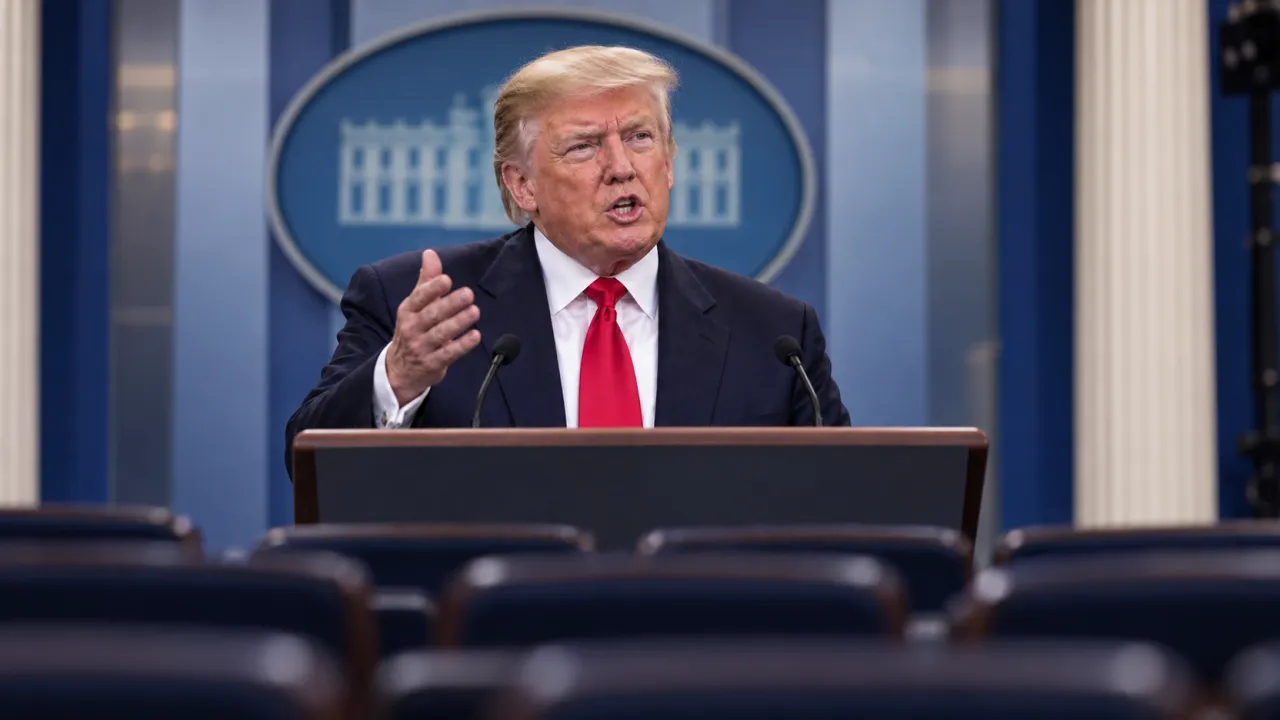

DOMINANT ANGLE
Stockholm is examining the security argument cited by the Ministry of Justice to justify the exclusion of CNN, MS NOW and Politico, as a federal judge is set to rule on the matter this Wednesday.
Dominant angle identified — does not reflect unanimity of this country’s media
KEY POINTS
- 01
The Justice Department claims that certain media coverage of the war in Iran and the construction of a reception hall at the White House could threaten national security, according to CNN and the New York Times as cited by the press.
- 02
Trump accuses CNN, MS NOW, and Politico of spreading "fake news" to justify their exclusion from the White House since last Friday.
- 03
A federal judge in Washington DC is to rule this Wednesday on the complaint from the three media outlets, which deem the exclusion contrary to press freedom.
ANALYSIS
Stockholm, September 23, 2026. The Swedish press is focusing on the central argument submitted late Tuesday evening by the US Department of Justice to a federal judge in Washington: according to Svenska Dagbladet and Aftonbladet, the Trump administration claims that certain media coverage of the war in Iran, as well as the construction of a reception room within the White House, could pose a threat to national security. This is the basis on which Washington justifies to the court the exclusion of CNN, MS NOW, and Politico, an argument reported by CNN and the New York Times and taken up by the two Swedish dailies.
The American president himself has stated that these three media groups spread "fake news", a justification he has invoked since their ban from the presidential enclosure last Friday. The affected editorial offices have taken the matter to court, estimating that this exclusion is contrary to the Constitution and freedom of the press. A federal judge in the American capital is to rule on their request, filed since the exclusion on Friday.
For the Swedish press, the issue goes beyond a simple dispute between an administration and three editorial offices: it is the very solidity of the national security argument invoked by the executive power that will be tested before a federal court. By linking the exclusion of journalists to two sensitive subjects for Donald Trump, the conduct of the war in Iran and the work carried out in his official residence, the Department of Justice chooses a terrain that obliges it to demonstrate a concrete risk, and not just a political inconvenience, before the courts.
Stockholm is also taking note of the tight schedule of the case: the brief was filed on Tuesday evening, on the eve of the hearing, leaving little time for the three media outlets to respond before the judge rules. The two Swedish titles consulted reproduce a virtually identical account, word for word, a sign that the dispatch has circulated widely in the Swedish national press, without any distinct editorial commentary coming to enrich the account from the United States for the time being. Neither of the two articles cites any Swedish or European reaction to this dispute between the American executive and part of the Washington press, nor any official position of the Swedish government on the issue of journalists' access to the White House.