
DOMINANT ANGLE
Canberra measures the range of the Russian strike at just two kilometres from the Polish border, a signal that the Australian press reads as a test of NATO's limits rather than a simple railway incident.
Dominant angle identified — does not reflect unanimity of this country’s media
KEY POINTS
- 01
The targeted train was carrying 206 civilian passengers, all evacuated before the impact; no casualties were reported according to Ukrzaliznytsia
- 02
The strike occurred at the Yahodyn station, in the Volyn province, less than two kilometres from the Polish border
- 03
Ukrzaliznytsia considers it "highly probable" that the actual target was the diplomatic train that left earlier than planned, carrying Boris Johnson, Carl Bildt and European security advisors, while another convoy with David Petraeus remained at the station
ANALYSIS
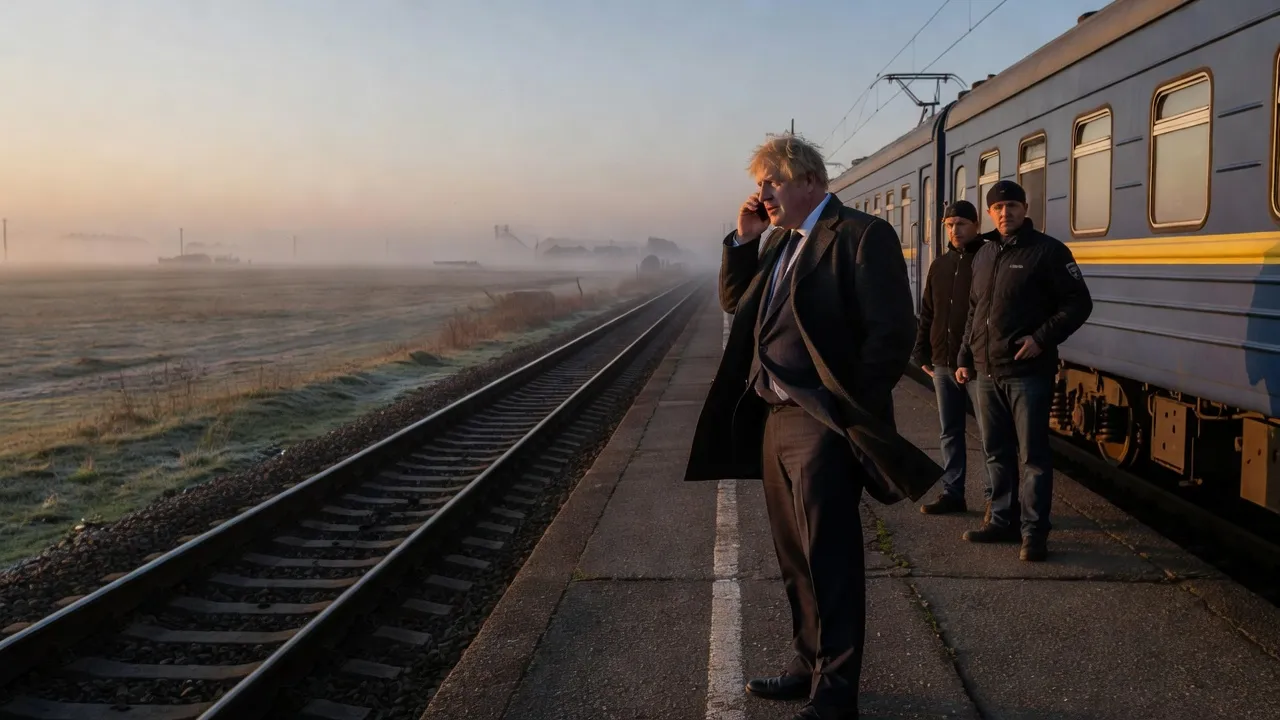
Canberra, 14 September 2026. In the Australian press, the Yahodyn episode is told primarily through Boris Johnson. The former British Prime Minister was returning from the Kyiv security conference when he was woken up at 5 am by guards asking him to prepare for evacuation, just minutes after a Russian drone had struck another convoy right behind his, in the Volyn province, less than two kilometres from the Polish border.
According to Ukrainian railway operator Ukrzaliznytsia, the targeted train was carrying 206 civilian passengers, who were evacuated before the impact; no casualties were reported. The company believes it is "highly probable" that the drone's actual target was the diplomatic train that had left Yahodyn station earlier than planned, the same train that was carrying Johnson, former Swedish Prime Minister Carl Bildt, and security advisors from several European Union countries, all returning from the Yalta European Strategy Conference. Another train, with former CIA director David Petraeus on board, was still at the station at the time of the strike.
Bildt, who was present on the scene, confirmed on social media: "It was not our train, but the one right after us, near the Polish border crossing. It was evacuated as the Russian drone approached, and no one was injured."
Australian media highlight that this strike, which occurred just minutes after the passage of former Western leaders and only two kilometres from Polish territory, revives concerns about the ability of Russian drones to reach areas increasingly close to NATO's eastern flank. It is this geographical proximity, more than the diplomatic controversy between Kyiv and Moscow over the nature of the target, that structures the Australian treatment of the event.