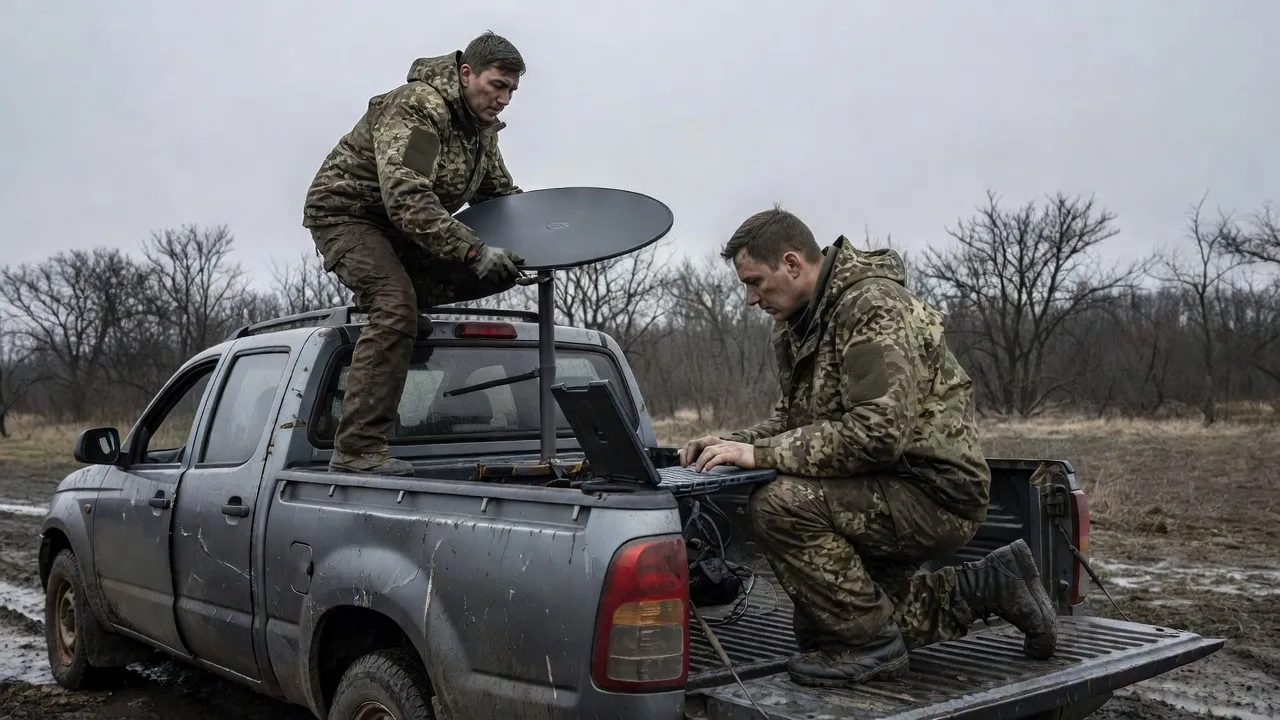

DOMINANT ANGLE
Moscow sees the Starlink case as an American sanction related to Ukrainian strikes on Russian refineries, and emphasizes Kiev's denial following Trump's announcement.
Dominant angle identified — does not reflect unanimity of this country’s media
KEY POINTS
- 01
Trump, Thursday, October 22: "Whether I called or someone else, it doesn't matter. In the end, he returned it" (TASS, Vedomosti).
- 02
The Economist, as quoted by TASS, suggests that Musk wanted to "punish Ukraine for its strikes on Russian refineries".
- 03
A Ukrainian official, quoted by TASS (via the Kyiv Independent): "Overall, nothing has changed anywhere"; Meduza quotes AP on the still limited speed.
ANALYSIS
Moscow, October 23, 2026. The Russian press is following the Starlink case as a revelation of tensions between Washington and Kiev, rather than as a technical incident. TASS, citing The Economist, reports that the decision to restrict access "seems to come from a small circle around President Trump, Mr. Musk, and Steve Witkoff," and that Musk "wanted to punish Ukraine for its strikes on Russian refineries." Vedomosti quotes the Wall Street Journal: Musk would have decided to restrict Starshield without warning Trump, after new Ukrainian strikes on Russian energy infrastructure, and the two men have been criticizing Kiev in recent weeks, including for these attacks.
On Thursday, October 22, according to Interfax and Meduza, the Wall Street Journal claims that Trump called Musk to ask him to lift the limit, deemed embarrassing since the service remained capped at around 160 km/h. When asked, Trump replied: "I don't want to comment. Whether I called or someone else, it doesn't matter. In the end, he put it back." TASS and Sputnik relay these words without comment, Sputnik recalling that the restrictions disrupted Ukrainian drone strikes.
Russian media then focus on the denial. Meduza, citing Associated Press and a European official, writes that the military version of the service remains limited and that Kiev has received no explanation about the author of the order. TASS quotes a Ukrainian official in the Kyiv Independent: "Overall, nothing has changed anywhere," as well as Sergei Sternenko, former advisor to the Ukrainian Minister of Defense, who says that some operations have been disrupted again. TASS also notes a counter-narrative, a portal claiming that the Ukrainian army is using Starlink without restriction again.
Meduza notes that Musk refers decisions on Starshield to the Pentagon and the White House, while Trump denies having ordered the restriction; journalists from several publications, citing their sources, attribute the decision to Musk and Trump. The Moscow Times, a media outlet classified as "undesirable" in Russia, adds that Rubio judged that access was the responsibility of SpaceX and not the White House, and that Zelensky hopes to speak with him in the coming days.
The common thread: a conditional American-Ukrainian alliance, where a private actor and the White House pass the buck, and where strikes on Russian refineries serve as an explanation.
SOURCES (6)
- Moscow TimesMEDIUM
- SputnikMEDIUM
- InterfaxMEDIUM
- VedomostiMEDIUM