
DOMINANT ANGLE
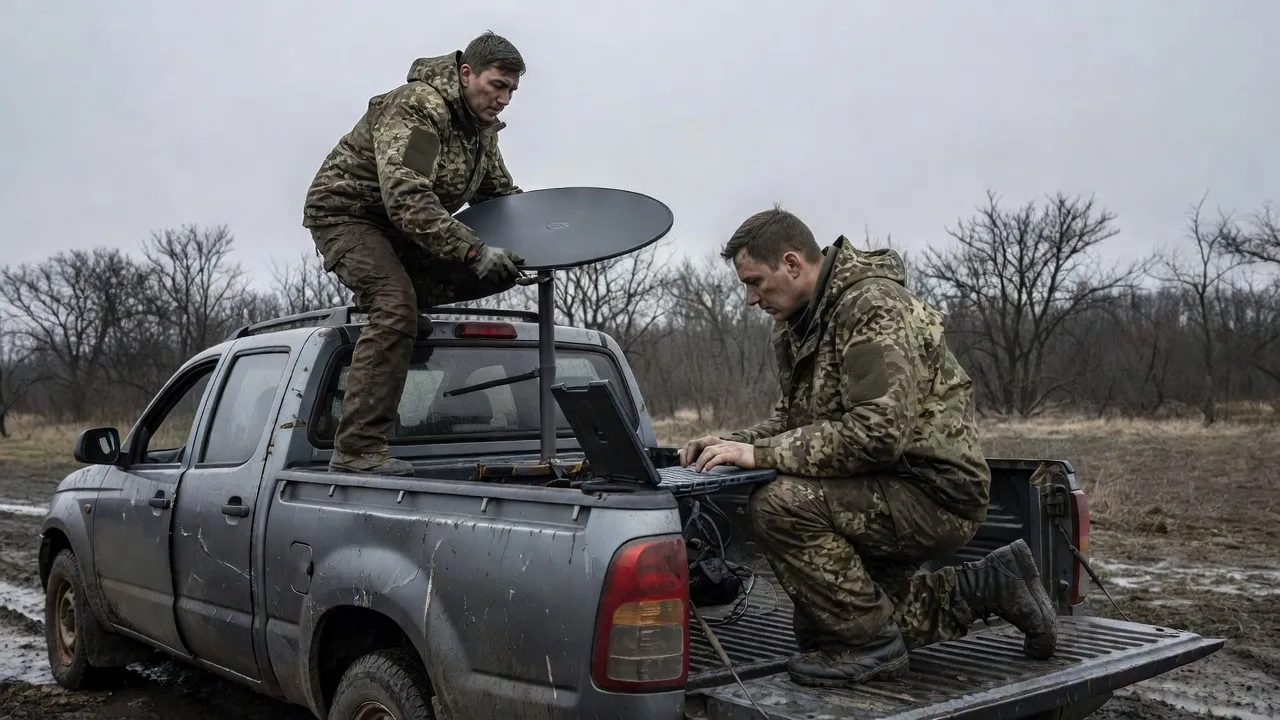
The United States is untangling the chain of responsibility for the jamming of Starlink, between the White House and Elon Musk, under pressure from investigations demanded in Congress before the midterm elections.
Dominant angle identified — does not reflect unanimity of this country’s media
KEY POINTS
- 01
Trump said Thursday that Musk "cleared it" without confirming he called the SpaceX boss, according to the Wall Street Journal which reported a call Wednesday.
- 02
California Democrats asked Susie Wiles on Friday for a "government-wide" investigation into Starshield restrictions.
- 03
Ukrainian officials told CNN on Friday that the restrictions remained in place, despite Trump's claim.
ANALYSIS
In America, the Starlink affair is first and foremost a story of accountability at the highest levels of government. On Thursday, before heading to a meeting in Iowa, Donald Trump stated that Musk had restored the service: "the fact is that he put it back." When asked if he had called the SpaceX CEO, he replied that he did not want to comment: "Whether I called or someone else did, it makes no difference." According to the Wall Street Journal, cited by CNBC and The Hill, he called Musk on Wednesday, frustrated that speeds were still capped at around 100 miles per hour.
The same Journal had reported on Tuesday that Musk had himself ordered the slowdown. Trump repeats: "I don't know who did it, but I was not involved." Marco Rubio speaks of a "private commercial contract", Pete Hegseth of terms of use, which The Hill describes as a change in tone after initial denials. Musk attributes the decision to the US military and, "ultimately", to the president. Time sees less an all-powerful oligarch than an entrepreneur dependent on Washington: a fifth of SpaceX's revenue comes from federal agencies.
The political front dominates. The slowdown has been criticized by Republicans and Democrats alike; Texas Senator John Cornyn does not believe that Musk would act without at least some acquiescence from the White House. On Friday, three California Democratic lawmakers, Sam Liccardo, Ro Khanna, and Jimmy Panetta, wrote to White House Chief of Staff Susie Wiles to demand a government-wide investigation. They promise to make it a priority if they win the House on November 3. Robert Weissman, of Public Citizen, evokes an "extreme danger" and an antitrust issue.
The military consequences are present but secondary. Ukrainian officials told CNN that the restrictions were still in place and hindering fast drones. A commander told the New York Times that the throttling had cost his unit over a million dollars and delayed missions by three days. Evelyn Farkas, a former Pentagon official, speaks on Bloomberg of a "moral problem" for the United States. Canadian Mark Carney sees it as a reason to reduce dependencies.
SOURCES (4)
- CNBCMEDIUM
- TimeMEDIUM
- Bloomberg PoliticsMEDIUM
- The HillMEDIUM