
DOMINANT ANGLE
Ankara is first concerned about the fate of a capital that the Dnieper risks cutting in two and the Russian warning addressed to diplomats and foreigners.
Dominant angle identified — does not reflect unanimity of this country’s media
KEY POINTS
- 01
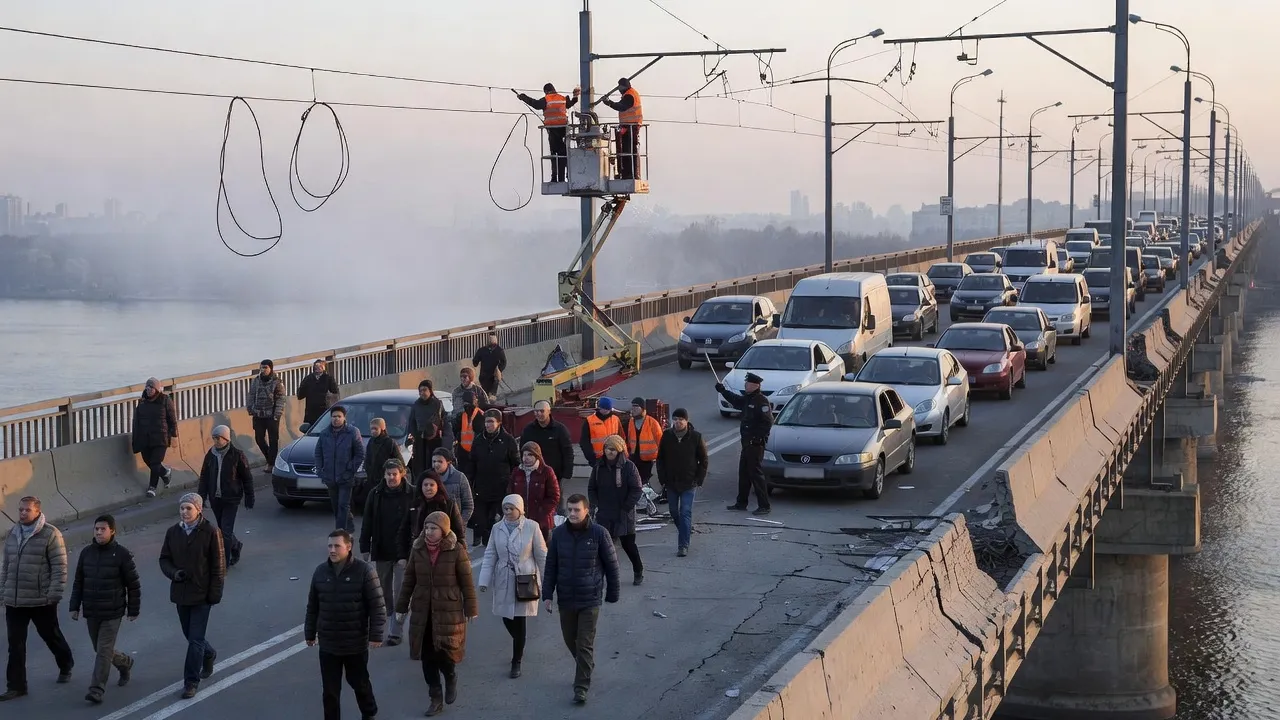
According to Vitali Klitschko, the strike on Saturday, October 3, injured two people and damaged the road and trolleybus lines of Kiev's North Bridge, after drone attacks on the South Bridge.
- 02
Russian attacks have cut off road, rail, and trolleybus links across the Dnieper, and most of the roughly three million inhabitants rely on the metro (BBC Türkçe).
- 03
The Russian Ministry of Foreign Affairs again called on foreigners and diplomats to leave Kiev on Saturday, October 3, and announced large-scale retaliatory strikes (Cumhuriyet).
ANALYSIS
Ankara, October 4, 2026. Turkish media outlets are covering the strike on the North Bridge in Kiev from the angle of its consequences for residents and foreigners present in the Ukrainian capital.
BBC News Türkçe reports, according to Mayor Vitali Klitschko, that the attack on Saturday, October 3, in the morning injured two people and damaged the road and trolleybus lines on the North Bridge. This comes after repeated drone strikes on the South Bridge earlier in the week. Klitschko states that "the enemy is tearing Kiev apart." The media outlet notes that the two bridges over the Dnieper River, which connect the western and eastern parts of the city, had not been attacked before Thursday. Traffic on the North Bridge has been closed in one direction, and emergency services have been dispatched to the scene.
The account highlights daily life: the strikes have cut off road, rail, and trolleybus links over the river, and the ongoing threat of drones is causing restrictions on other routes and traffic jams. Most of the city's approximately three million inhabitants rely on the metro to get around. According to BBC Türkçe, there are fears that this new Russian tactic, based on continuous attacks, will effectively divide the city in two. Moscow claims that its drones targeted two bridges used to transport Ukrainian troops and military equipment.
Cumhuriyet focuses on the communication from the Russian Ministry of Foreign Affairs, which again called on Saturday, October 3, for foreign nationals, including diplomats, not to be in Ukraine or travel there, and to avoid Kiev and the surroundings of military sites. The ministry announces the continuation of "large-scale retaliatory strikes" against military targets in Kiev and other cities. It presents these strikes as a response to "terrorist acts" that Ukraine is allegedly committing against civilians and civilian infrastructure in Russia. It adds that the responsibility for the consequences "lies with those who ignore this warning."
Cumhuriyet recalls that this is not the first warning: a similar message was published on May 25, 2026, accompanied by diplomatic notes sent to foreign countries, and then commented on by Deputy Minister Mikhail Galuzin on May 27.
The two articles in the corpus do not address Volodymyr Zelensky's statements on Russian refineries or US-Russian discussions.