
DOMINANT ANGLE
Copenhagen is quietly relaying, via a Ritzau dispatch picked up by Berlingske, DR, and Politiken, the judicial lifting of the ban on deportations to third countries, adding to it the alert from UN experts.
Dominant angle identified — does not reflect unanimity of this country’s media
KEY POINTS
- 01
Migrants can be deported to third countries without notice if they provide credible diplomatic guarantees against persecution or torture (Berlingske, DR, Politiken).
- 02
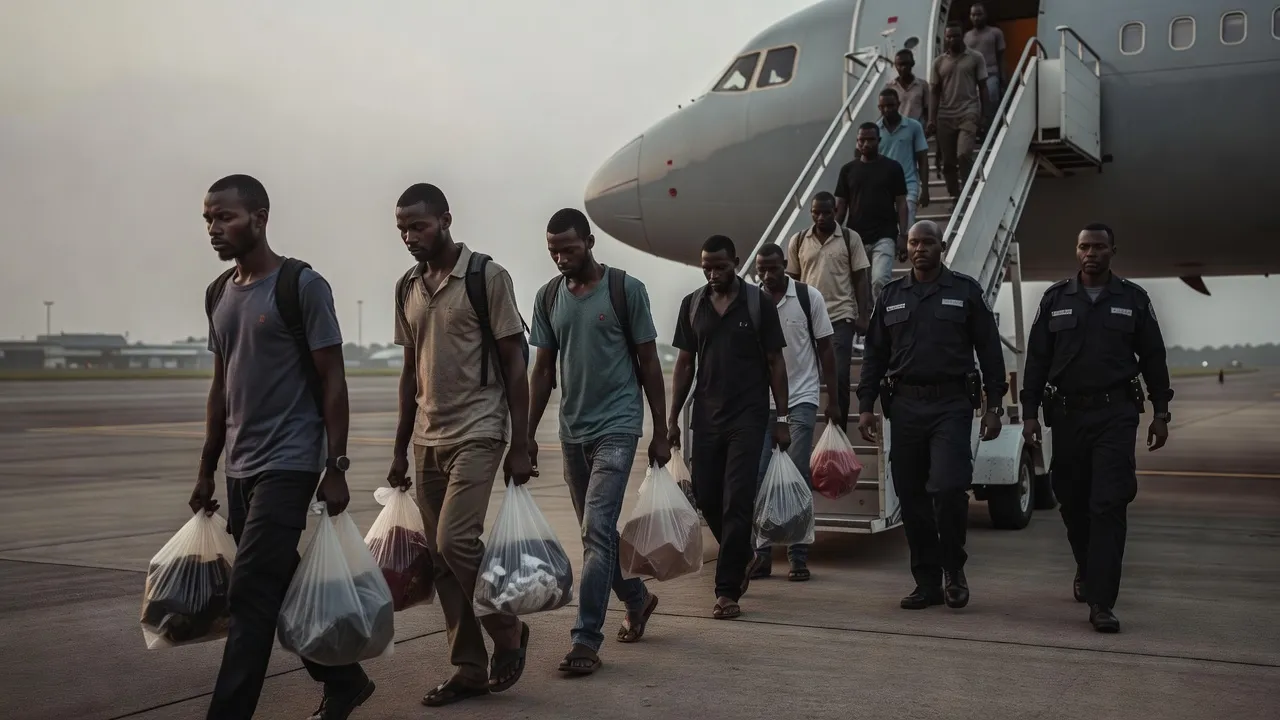
Most migrants have been sent to Mexico, but also to South Sudan, Uganda, Equatorial Guinea, Liberia, and the Central African Republic.
- 03
On Monday, Reuters reported that twelve UN experts called for an end to these deportations, which are a source of "a wave of human rights violations" (Berlingske).
ANALYSIS
Copenhagen, September 30, 2026. The Danish press is covering the decision of the US Supreme Court via the Ritzau wire, which cites the Reuters agency, and is publishing it almost verbatim in Berlingske, DR Nyheder, and Politiken. The headline is the same everywhere: "Højesteret lader Trump genoptage deportationer til tredjelande", or the Supreme Court allows Trump to resume deportations to third countries.
The substance of the story is contained in a few lines. The Supreme Court has given the Donald Trump administration permission to deport migrants again to countries other than their country of origin. These deportations can take place without notice if the host country has provided a "credible diplomatic guarantee" that the individuals will not be persecuted or tortured. The articles recall that at the beginning of 2025, a federal judge in Massachusetts had estimated that deporting migrants to third countries without notice violated the constitutional guarantee of due process and immigration law. This judgment is now suspended by the Court.
The texts also detail the destinations. Most migrants have been sent to Mexico. Others have been sent to South Sudan, which the US State Department advises its own citizens against traveling to due to crime, kidnappings, and armed conflicts. Also cited are Uganda, Equatorial Guinea, Liberia, and the Central African Republic. Berlingske and DR highlight this contrast with the US travel advisory without commenting further.
Berlingske and Politiken add a reminder from Reuters dated Monday: more than a dozen UN human rights experts, twelve according to the editorial staff's precision, have written to Washington to demand the cessation of these deportations, which they say are causing "a wave of human rights violations". Berlingske specifies that the most exposed would be children, women, people with disabilities, victims of trafficking, LGBT+ individuals, and stateless persons.
The account remains brief and factual. It does not mention the three progressive judges who disagree, the schedule for the hearing in December, the figure of more than 25,000 deportees, or the reaction of the Ministry of Homeland Security. The Danish reader therefore receives primarily the announcement, the list of countries, and the UN warning.






